
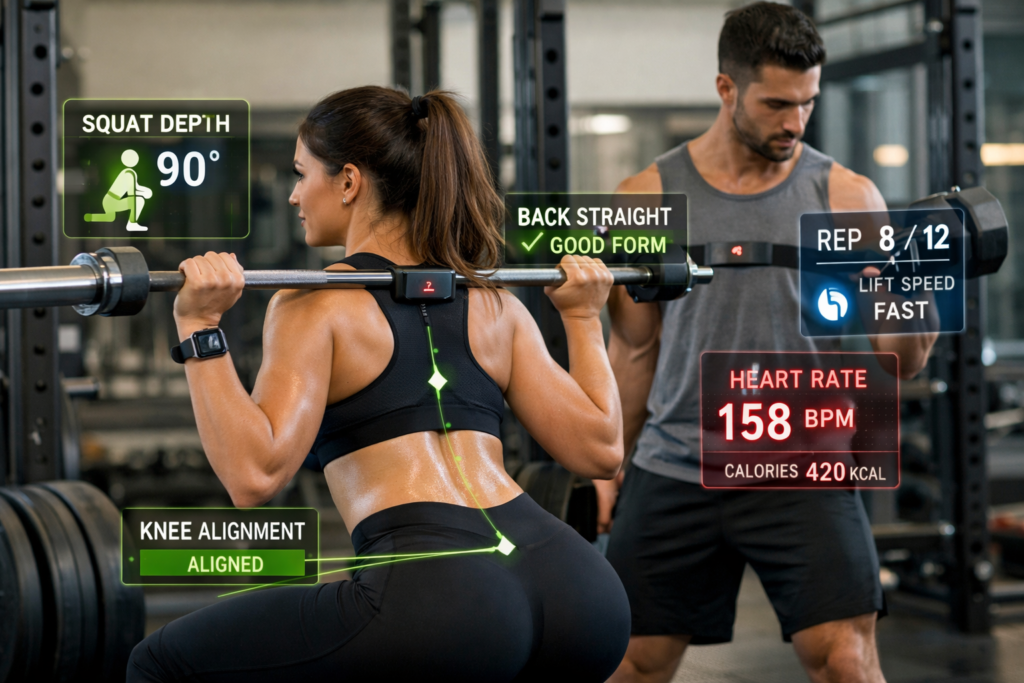
The evolution of wearables for gym training has redefined how performance, safety, and measurable progress are achieved inside modern fitness environments. Precision-driven data is no longer reserved for elite athletes. Today’s intelligent devices deliver real-time metrics that improve form, enhance neuromuscular awareness, and reduce injury risk during resistance and functional training.
Organizations and serious fitness enthusiasts now recognize that advanced wearable technology is not an accessory—it is a strategic performance tool. With accurate biomechanical feedback, heart rate analytics, muscle activation insights, and movement pattern tracking, wearable systems provide objective data that transforms how strength training is executed and refined.
What Are Wearables for Gym Training?
Gym tracker for training are sensor-based devices worn on the body that track movement, physiological output, and exercise performance in real time. These include smartwatches, chest straps, smart rings, motion-tracking bands, and advanced compression garments embedded with sensors.
Unlike traditional fitness trackers that primarily measure steps or calories, gym-focused wearables analyze form accuracy, rep tempo, range of motion, joint alignment, bar path, muscle symmetry, and exertion levels. This granular data ensures that every repetition contributes to strength development instead of reinforcing flawed technique.
In professional training settings, wearable data is integrated into coaching dashboards, enabling evidence-based corrections rather than subjective assessments.
How Real-Time Metrics Improve Exercise Form
Real-time feedback bridges the gap between intention and execution. Many individuals believe they are performing exercises correctly until high-resolution tracking reveals compensatory movements. Health devices eliminate guesswork by delivering immediate corrections.
Instant Biomechanical Feedback
Modern wearables use accelerometers, gyroscopes, and magnetometers to measure joint angles, velocity, and movement symmetry. If a squat shifts excessively to one side or a deadlift bar path deviates from optimal alignment, the wearable flags it immediately.
Corrective adjustments can be made during the set rather than after the workout, reducing the accumulation of poor movement patterns.
Tempo and Time Under Tension Monitoring
Strength development is heavily influenced by eccentric control and tempo precision. Wearables track how long each phase of a repetition lasts, ensuring consistent cadence.
When tempo slows due to fatigue or accelerates beyond control, the device signals a deviation. Maintaining optimal time under tension improves hypertrophy outcomes and motor control efficiency.
Muscle Activation Insights
Some advanced wearables incorporate electromyography (EMG) sensors to monitor muscle engagement levels. If primary muscle groups are underperforming and secondary muscles compensate, the imbalance becomes measurable.
This is particularly valuable in compound lifts, rehabilitation settings, and corrective exercise programming where muscle recruitment quality matters more than load alone.
Heart Rate and Cardiovascular Load Integration
While strength training focuses on resistance, cardiovascular strain significantly impacts form. Elevated heart rate without adequate recovery reduces neuromuscular precision.
Wearables continuously measure heart rate variability (HRV), recovery intervals, and cardiovascular load, ensuring athletes do not compromise technique due to systemic fatigue.
When heart rate remains excessively elevated between sets, recovery time can be extended strategically to preserve technical integrity.
AI-Driven Form Correction in Gym Wearables
Artificial intelligence integration has elevated wearable technology beyond passive tracking. AI-powered systems compare movement patterns against optimal biomechanics databases.
If a bench press shows uneven bar descent or shoulder instability, the wearable’s AI engine identifies the deviation pattern and recommends immediate correction cues.
This capability is transforming gym floors into data-driven performance labs, where machine learning enhances human movement precision.
How Wearables Prevent Injuries During Strength Training
Injury prevention is one of the most critical advantages of wearable integration.
Load Monitoring and Fatigue Detection
Progressive overload is essential for growth, but unmanaged fatigue increases injury risk. Wearables detect velocity loss, rep degradation, and force output decline.
A significant drop in rep speed often indicates muscular exhaustion. Instead of pushing into compromised mechanics, the athlete can stop at a safer threshold.
Joint Stress Tracking
Excessive valgus knee movement, lumbar flexion during deadlifts, or shoulder internal rotation during pressing movements can be quantified.
By identifying repetitive stress patterns early, wearables enable proactive correction before microtrauma develops into chronic injury.
Wearables and Strength Progress Optimization
Beyond form correction, wearables like bleo.ai enhance measurable progress tracking.
Velocity-Based Training Metrics
Bar speed tracking enables velocity-based training (VBT), allowing athletes to adjust loads dynamically. Instead of relying solely on percentage-based programming, training intensity adapts to daily readiness levels.
Velocity thresholds ensure strength gains without excessive strain, aligning effort with physiological capacity on any given day.
Power Output Analysis
Explosive lifts such as Olympic movements and plyometric drills require precise force application. Longevity wearables measure peak power output, force curves, and acceleration rates, offering direct insight into performance efficiency.
This data is invaluable for athletes aiming to enhance vertical jump, sprint speed, or explosive strength.
Data-Driven Coaching and Accountability
In commercial gym environments and corporate wellness programs, wearables create transparent accountability systems.
Trainers no longer rely solely on observation. Instead, they analyze session reports detailing rep quality, muscular balance, fatigue accumulation, and progression trends.
For business-driven fitness facilities, this data supports measurable client results, improving retention and satisfaction rates.
Real-Time Metrics That Improve Squat Form
Squats remain one of the most technically demanding movements in strength training. Wearables track depth consistency, hip drive symmetry, spinal alignment, and bar path verticality.
If anterior pelvic tilt increases during heavy sets, immediate alerts prompt corrective cues. Maintaining a neutral spine and balanced knee tracking becomes quantifiable rather than subjective.
Improved squat mechanics lead to greater quadriceps and glute engagement while reducing lumbar strain.
Real-Time Metrics That Improve Deadlift Form
Deadlifts require optimal hinge mechanics. Longevity trackers detect early hip rise, rounding of the thoracic spine, and uneven force distribution.
Velocity tracking ensures controlled lift-off and consistent lockout mechanics.
By preventing jerky acceleration and compensatory pulling patterns, these devices reinforce safe lifting mechanics across progressive overload phases.
Real-Time Metrics That Improve Bench Press Technique
During pressing exercises, minor imbalances can limit strength output. Wearables monitor bar descent symmetry, elbow flare angle, and wrist stability.
If one side produces less force, asymmetry becomes measurable. Balanced muscle recruitment improves chest activation and protects shoulder joints from unnecessary strain.
The Role of Recovery Analytics in Form Preservation
Recovery quality directly influences technique sustainability. Poor sleep, inadequate hydration, and high stress reduce coordination accuracy.
Wearables analyze HRV, resting heart rate trends, and sleep cycles to determine readiness scores.
Training sessions aligned with optimal recovery states maintain superior movement quality and reduce overtraining risks.
Wearables in Functional and Cross-Training Environments
Functional training involves multi-planar movement patterns that are difficult to evaluate visually in real time. Devices capture rotational torque, ground contact time, and acceleration forces.
This data improves agility drills, kettlebell movements, and metabolic conditioning sessions where speed and coordination interact dynamically.
For high-intensity interval training, fatigue detection metrics prevent breakdown of technique under metabolic stress.
Integration with Smart Gym Ecosystems
Modern gyms are transitioning toward connected ecosystems where wearables sync seamlessly with smart equipment.
Treadmills adjust incline automatically based on heart rate zones. Strength machines adapt resistance according to rep velocity. Digital dashboards compile weekly performance summaries.
This integration fosters a fully synchronized training environment where performance decisions are data-driven rather than estimated.
Corporate Fitness and Enterprise Wellness Applications
For corporate wellness programs, wearables provide measurable ROI. Aggregated anonymized data highlights participation rates, cardiovascular improvements, and strength progression across employee populations.
Executives gain insight into workforce vitality trends, while individuals receive personalized performance dashboards.
This scalable accountability model elevates gym engagement within organizational structures.
Psychological Benefits of Real-Time Feedback
Objective data strengthens motivation. When improvements in bar velocity, muscle symmetry, or endurance metrics are visible, consistency increases.
Real-time corrections also build confidence. Athletes know their form aligns with optimal standards, reinforcing disciplined execution.
The reduction in uncertainty eliminates hesitation under load, enhancing performance output.
Future Trends in Gym Wearable Technology
The next generation of gym wearables will incorporate enhanced AI modeling, predictive injury analytics, and deeper integration with augmented reality coaching systems.
Smart glasses may overlay alignment cues during lifts. Advanced EMG fabrics could monitor full-body muscle mapping. Biometric fusion algorithms will combine cardiovascular, hormonal, and neuromuscular data into a unified performance index.
The convergence of biomechanics and artificial intelligence is creating unprecedented opportunities for precision training.
Why Wearables Are Essential for Modern Gym Training
Wearables for gym training represent the intersection of science and performance. They transform strength sessions into measurable, optimized systems.
Real-time metrics improve form by eliminating subjective bias, preventing injuries, and accelerating progression through objective analysis.
In competitive and commercial environments alike, data-backed training delivers consistent, replicable outcomes.
Athletes refine technique with every repetition. Trainers validate coaching decisions with measurable evidence. Organizations track performance trends with confidence.
The era of blind repetition is over. Precision, accountability, and intelligent adaptation define the future of gym training. Wearable technology stands at the center of this transformation, delivering the real-time metrics that elevate strength, protect movement integrity, and maximize physical performance potential.
Frequently Asked Questions
1. How do wearables improve gym training form in real time?
Wearables use motion sensors, accelerometers, gyroscopes, and AI-driven analysis to track joint angles, movement symmetry, rep tempo, and bar path. When improper mechanics are detected, they provide immediate feedback through vibrations, app alerts, or on-screen prompts. This allows instant correction during the set rather than after the workout.
2. Are gym wearables accurate enough for serious strength training?
High-quality gym wearables designed for performance tracking provide highly reliable data on velocity, force output, heart rate, and movement patterns. While consumer-grade devices may vary in precision, advanced performance wearables used in strength training and athletic conditioning deliver data accurate enough for professional-level programming and velocity-based training.
3. Can wearable devices help prevent gym injuries?
Yes. Wearables monitor fatigue levels, velocity loss, joint alignment, and asymmetrical movement patterns. By identifying breakdown in technique early, they reduce the risk of overuse injuries, muscle imbalances, and strain caused by improper lifting mechanics.
4. Do wearables replace personal trainers?
Wearables do not replace trainers but enhance coaching effectiveness. They provide objective performance data that trainers can use to make more precise adjustments, optimize programming, and track measurable progress. The combination of human expertise and real-time data produces superior outcomes.
5. What metrics should I look for in a gym training wearable?
For strength training, prioritize devices that track rep velocity, range of motion, movement symmetry, heart rate variability, recovery status, and muscle activation if available. These metrics directly influence form correction, performance optimization, and long-term progress.