Your body is constantly sending you signals. The problem is, most of us have never learned how to read them. Heart Rate Variability (HRV) tracking is changing that, giving everyday people access to one of the most powerful biomarkers ever discovered for understanding and improving how the body handles stress. If you have ever wondered why some people seem to bounce back from pressure effortlessly while others crumble, HRV might hold the answer.
This guide breaks down exactly how HRV tracking improves stress resilience, what the science says, how to use it practically, and why it is becoming one of the most important tools in modern wellness and performance optimization.
What Is HRV and Why Does It Matter?
Heart Rate Variability refers to the variation in time between consecutive heartbeats. If your heart beats at 60 beats per minute, that does not mean it beats exactly once every second. In reality, the time between each beat fluctuates slightly, and those tiny fluctuations carry enormous information about the state of your nervous system.
A higher HRV generally indicates that your body is adaptable, recovered, and capable of handling stress. A lower HRV often signals fatigue, chronic stress, poor recovery, or a nervous system that is stuck in a state of high alert.
The reason HRV matters so deeply is that it reflects the balance between the two branches of your autonomic nervous system: the sympathetic system (responsible for the fight-or-flight response) and the parasympathetic system (responsible for rest and recovery). When these two systems are working in harmony, your HRV tends to be high. When stress dominates, the sympathetic branch takes over, and your HRV drops.
The Science Behind HRV and Stress
Understanding the link between HRV and stress is not just theoretical. Decades of research have established that HRV is one of the most reliable non-invasive indicators of how the autonomic nervous system is functioning. Studies published in journals like Frontiers in Neuroscience and Psychophysiology have consistently shown that individuals with higher baseline HRV demonstrate better emotional regulation, lower levels of perceived stress, and more effective recovery from both physical and psychological challenges.
How Stress Suppresses HRV
When you experience stress, whether from a work deadline, a difficult conversation, or a hard workout, your sympathetic nervous system fires up. Cortisol and adrenaline flood your body. Your heart rate rises and, critically, the natural variability between your heartbeats decreases. The heart essentially loses its flexibility, beating in a more rigid, mechanical pattern.
This is a natural and even useful response in short bursts. The problem is that modern life keeps many people in a near-constant state of sympathetic activation. Chronic stress means chronically suppressed HRV, which over time weakens your ability to bounce back and increases your vulnerability to burnout, anxiety, and even cardiovascular disease.
How a Resilient Nervous System Maintains HRV
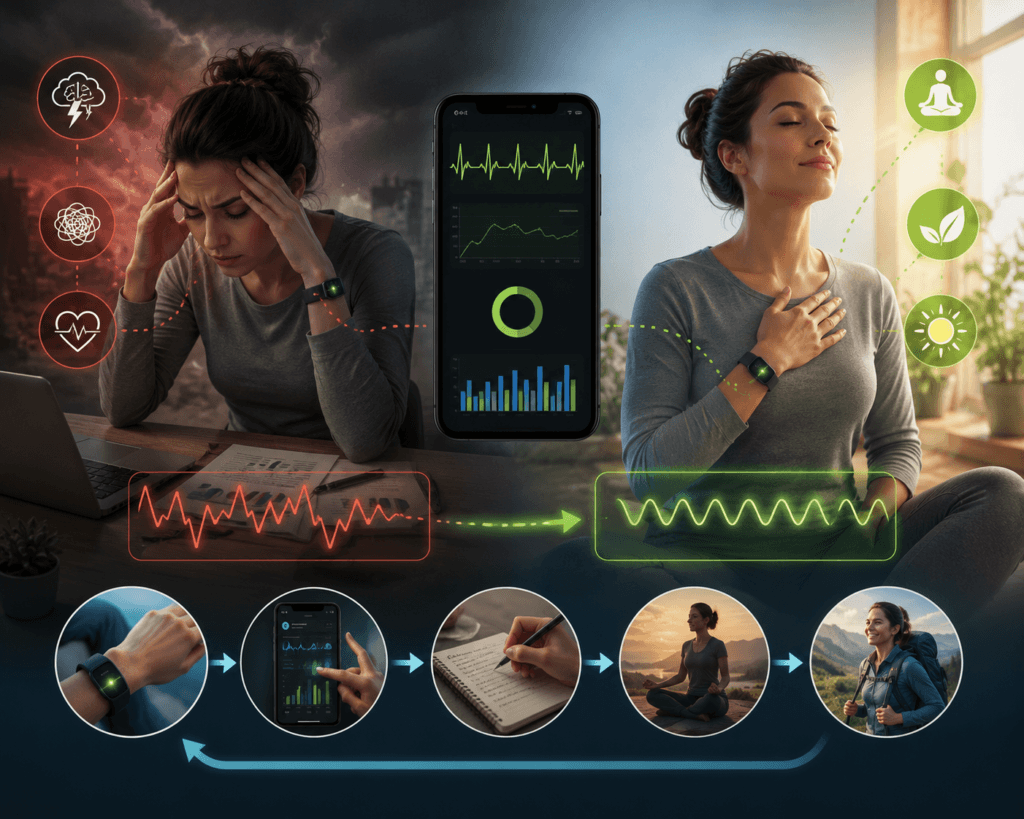
Stress resilience is not about avoiding stress. It is about recovering from it quickly. People with strong stress resilience show a characteristic pattern: their HRV drops when stressors hit, but it returns to baseline rapidly once the stressor passes. This recovery speed is exactly what HRV tracking can help you train and optimize.
How HRV Tracking Improves Stress Resilience
This is the core question, and the answer is both practical and deeply biological. HRV tracking improves stress resilience through four primary mechanisms: awareness, feedback, behavioral change, and nervous system training.
1. Building Stress Awareness Through Data
One of the most underrated aspects of HRV tracking is what it does for your self-awareness. Most people have a vague sense that they are stressed, but they lack objective data to understand when it is affecting their physiology. When you track HRV consistently, patterns begin to emerge.
You might notice that your HRV drops sharply after nights with less than seven hours of sleep. You might observe that certain social situations or work environments correlate with lower morning readings. You might see that alcohol, even in moderate amounts, significantly suppresses your HRV the following morning.
This data-driven awareness is transformative. It converts abstract feelings into measurable feedback, which gives you the ability to make smarter decisions before stress accumulates to damaging levels.
2. Using HRV as a Real-Time Stress Gauge
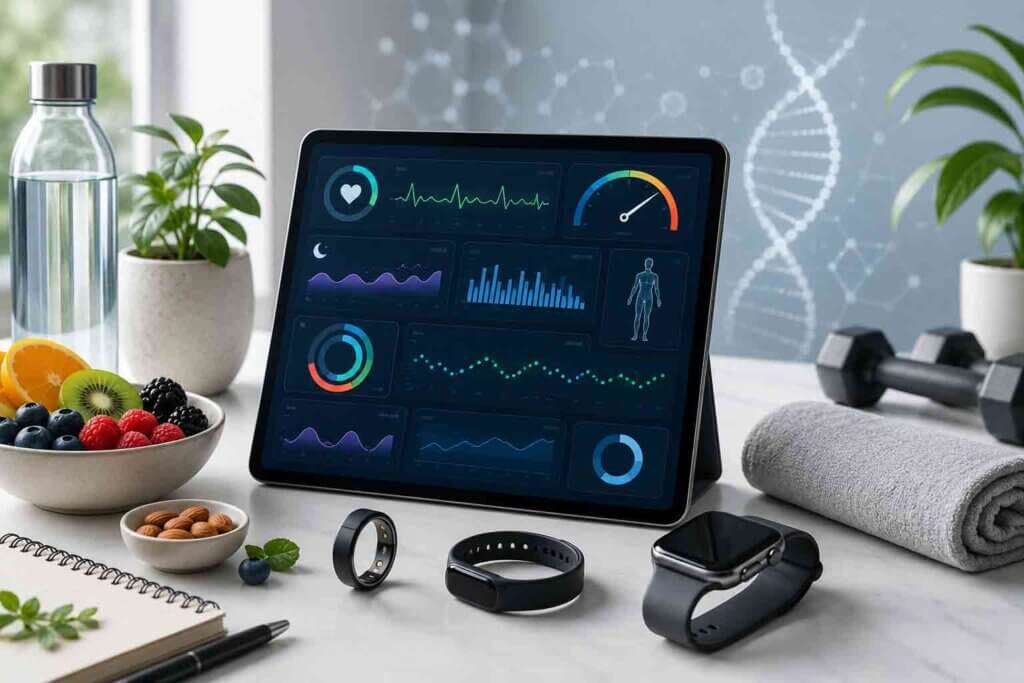
Modern HRV tracking devices and apps, including wearables like WHOOP, Garmin, Polar, and Apple Watch with third-party apps, allow you to monitor HRV trends daily. Many platforms provide a readiness score or recovery score that integrates HRV data with sleep, heart rate, and other variables.
When your HRV is low, your body is telling you that its stress load is already high. This is a cue to pull back: reduce training intensity, prioritize rest, practice breathing exercises, or rearrange your schedule to lower cognitive demands. When your HRV is high, you know your nervous system is primed and resilient, and you can push harder without tipping into overtraining or burnout.
This kind of responsive self-management is at the heart of how HRV tracking builds resilience over time.
3. Guiding Nervous System Training Techniques
Perhaps the most powerful application of HRV tracking is its role in nervous system training. Specific interventions have been shown to directly increase HRV and, by extension, improve the body’s stress response capacity.
Resonance Frequency Breathing
Also known as coherence breathing or slow diaphragmatic breathing, this technique involves breathing at a rate of approximately five to six breaths per minute, which is slower than most people’s natural resting pace. This breathing rate naturally maximizes HRV by synchronizing respiration with heart rate cycles. Studies have shown that consistent practice of resonance frequency breathing can raise baseline HRV within weeks, meaning your nervous system becomes measurably more resilient.
HRV biofeedback apps like Elite HRV, HeartMath Inner Balance, and Polar H10 with compatible platforms allow you to see your HRV in real time during breathing sessions, helping you dial in the exact pace that drives the highest variability. Watching your HRV rise as you breathe slowly is both motivating and instructive, teaching your nervous system what a calm, regulated state feels like so it can return there more easily under pressure.
Mindfulness and Meditation
Research has repeatedly confirmed that regular mindfulness meditation increases HRV. When you meditate, you activate the parasympathetic nervous system, which raises HRV. Over time, with consistent practice, the baseline shifts upward. Your nervous system learns that it does not need to stay on high alert all the time. Tracking HRV while building a meditation habit gives you concrete evidence that the practice is working, which dramatically improves adherence.
Cold Exposure
Cold showers and ice baths have gained popularity partly because of their effect on HRV. Brief cold exposure activates the vagus nerve, which is the primary driver of parasympathetic activity and the key nerve responsible for raising HRV. When done consistently and combined with HRV tracking, cold exposure becomes a measurable tool for improving vagal tone, which is essentially the long-term capacity of your parasympathetic system to counter stress.
HRV Tracking and Recovery Optimization
Stress resilience is not built only in the moments of stress. It is built in recovery. How well you recover between stressors determines how much capacity you have for the next challenge. HRV tracking gives you an objective window into your recovery quality that no other consumer metric can match.
Sleep and HRV
Sleep is the single most important recovery tool humans have, and HRV reflects sleep quality with remarkable sensitivity. A night of poor sleep, whether due to noise, stress, alcohol, or simply insufficient hours, will typically produce a lower morning HRV reading. Tracking this relationship helps you understand exactly how much sleep your nervous system needs to stay resilient, which is not the same for everyone.
Many high performers who track HRV discover that they need more sleep than they previously gave themselves. Seeing the objective HRV data drop after short nights provides the motivation to prioritize rest in a way that generic advice never could.
Exercise Load and HRV
Overtraining is one of the most common ways that well-intentioned people undermine their own stress resilience. Hard physical training is itself a stressor, and if recovery is insufficient, HRV declines. Athletes who use HRV to guide training load consistently report better performance outcomes and fewer injuries than those who follow fixed programs regardless of recovery status.
The principle here applies beyond athletes. If you are managing significant life stress and also pushing hard in the gym, your HRV will tell you when the combined load is too high. That information can save you from the cumulative exhaustion that leads to burnout.
Psychological Benefits of HRV Tracking
The benefits of HRV tracking extend beyond the purely physical. There is a powerful psychological dimension to understanding your own stress physiology.
Reducing Anxiety Through Objectivity
Anxiety thrives in ambiguity. When you feel “off” but do not know why, the mind often catastrophizes. HRV tracking replaces that ambiguity with data. When you feel anxious and your HRV confirms that your nervous system is under load, you can respond practically: rest more, breathe more intentionally, reduce stimulants. The data gives you agency, which is one of the most effective antidotes to anxiety.
Building Confidence in Your Resilience
Seeing your HRV trend upward over weeks and months as you implement positive habits is deeply motivating. It provides tangible proof that you are building a more resilient nervous system. That confidence itself changes how you approach stress. Instead of viewing it as something that overwhelms you, you begin to see it as something your body is equipped to handle and recover from.
How to Start HRV Tracking: A Practical Approach
Getting started with HRV tracking does not need to be complicated. Here is what you need to know.
Choosing an HRV Device
The most accurate consumer HRV measurements come from chest strap heart rate monitors like the Polar H10, which measure electrical signals directly. Wrist-based wearables like WHOOP, Garmin watches, Apple Watch, and Bleo Ring use optical sensors and are slightly less precise but still highly useful for tracking trends over time. For most people, a wrist-based device with a dedicated HRV app is the most practical starting point.
Measuring HRV Consistently
For HRV data to be meaningful, consistency matters more than precision. Measure at the same time each day, ideally first thing in the morning before getting out of bed. This baseline measurement reflects how well your nervous system recovered overnight and gives you the cleanest signal of your current stress and recovery status.
Interpreting Your HRV Numbers
Do not compare your HRV numbers to other people. HRV is highly individual and influenced by age, fitness level, genetics, and many other factors. What matters is your own trend over time. Is your HRV stable? Is it trending upward as you improve your habits? Is it dropping in response to specific stressors? These questions are far more valuable than comparing your score to a population average.
Common Mistakes People Make With HRV Tracking
Even with the best intentions, it is easy to misuse HRV data. One of the most common mistakes is becoming obsessive about a single reading. HRV fluctuates naturally, and one low day does not mean something is wrong. Look at weekly averages and longer trends rather than reacting to every daily shift.
Another mistake is ignoring the data. Some people track HRV but continue pushing through red flag readings out of habit or stubbornness. The data is only as useful as your willingness to act on it. The whole point of the tool is to make smarter decisions, not to collect numbers for their own sake.
HRV Tracking for Long-Term Stress Resilience
The real payoff of HRV tracking is not what it tells you today. It is what it teaches you over months and years. As you observe the connection between your behaviors and your HRV, you naturally begin to make choices that protect and grow your nervous system’s capacity. You sleep more consistently, you breathe more intentionally, you manage your training load more intelligently, and you develop a relationship with your own physiology that most people never access.
That sustained, data-informed relationship with your body is what genuine stress resilience looks like. It is not about being invincible to stress. It is about having a nervous system that knows how to absorb pressure, recover effectively, and come back stronger.
Conclusion
HRV tracking improves stress resilience by turning an invisible physiological process into visible, actionable data. It connects you to your autonomic nervous system in a way that nothing else can, helping you understand when your body is under load, when it is recovered, and what habits are genuinely moving the needle. By combining consistent HRV measurement with proven nervous system training techniques like coherence breathing, mindfulness, adequate sleep, and smart exercise, you can measurably raise your baseline HRV over time and build a body and mind that handle stress with greater ease. Whether you are an athlete chasing peak performance, a professional managing high-pressure demands, or simply someone who wants to live with less anxiety and more vitality, HRV tracking offers one of the most evidence-based, personalized paths to getting there. Start tracking, stay consistent, and let the data guide you toward a more resilient version of yourself.
Frequently Asked Questions
Q1: What is a good HRV score for stress resilience?
There is no universal “good” score since HRV is highly individual. What matters most is your personal baseline trend. A consistently rising HRV over weeks indicates improving stress resilience, regardless of the actual number.
Q2: How long does it take for HRV tracking to improve stress resilience?
Most people notice meaningful HRV improvements within four to eight weeks of consistently practicing habits like coherence breathing, better sleep, and reduced alcohol. Long-term resilience builds over several months of sustained effort.
Q3: Can I track HRV without an expensive device?
Yes. Affordable options like the Polar H10 chest strap paired with a free app like Elite HRV offer highly accurate readings. Even mid-range wearables like budget Garmin models provide useful trend data without a large investment.
Q4: Does stress always lower HRV?
Short-term stress temporarily lowers HRV, which is normal. The key sign of strong resilience is how quickly your HRV returns to baseline after the stressor passes. Chronic, unrelenting stress is what causes persistently low HRV over time.
Q5: Is HRV tracking suitable for people with anxiety?
Absolutely. Many people with anxiety find HRV tracking empowering because it replaces vague worry with objective data. Practices like slow breathing, guided by HRV biofeedback, have strong clinical evidence for reducing anxiety symptoms over time.