Modern lifestyles have dramatically altered natural sleep patterns. Long work hours, digital screens, stress, and irregular routines have made restorative sleep harder to achieve. As a result, many people wake up feeling tired even after spending enough hours in bed. Sleep technology has evolved to address this problem, and smart bands with deep sleep analysis have become one of the most effective tools for improving nightly rest.
Smart bands are wearable devices designed to monitor health metrics such as heart rate, activity levels, and sleep cycles. Among their most valuable features is deep sleep analysis, a technology that tracks sleep stages and provides insight into the most restorative phase of sleep. Understanding how these devices work and how they improve sleep quality can transform the way people approach rest and recovery.
This article explores how smart sleep tracking bands, advanced sensors, and intelligent sleep analytics help individuals achieve better sleep and long-term health.
What Is Deep Sleep and Why It Matters
Deep sleep, also known as slow-wave sleep, is one of the most critical stages of the sleep cycle. During this phase, the body enters its most restorative state. Brain activity slows, muscles relax, and the body begins repairing tissues, strengthening the immune system, and consolidating memory.
Without adequate deep sleep, individuals may experience persistent fatigue, poor concentration, weakened immunity, and mood disturbances. Even if total sleep duration appears sufficient, a lack of deep sleep can leave the body feeling unrested.
Smart bands with deep sleep monitoring focus on identifying this stage because it represents the highest quality portion of the sleep cycle. By measuring movement, heart rate variability, and other physiological signals, these devices estimate when the body enters and exits deep sleep.
Consistent monitoring helps users understand whether they are truly getting restorative rest or simply spending time asleep without reaching optimal recovery phases.
How Smart Bands Analyze Deep Sleep
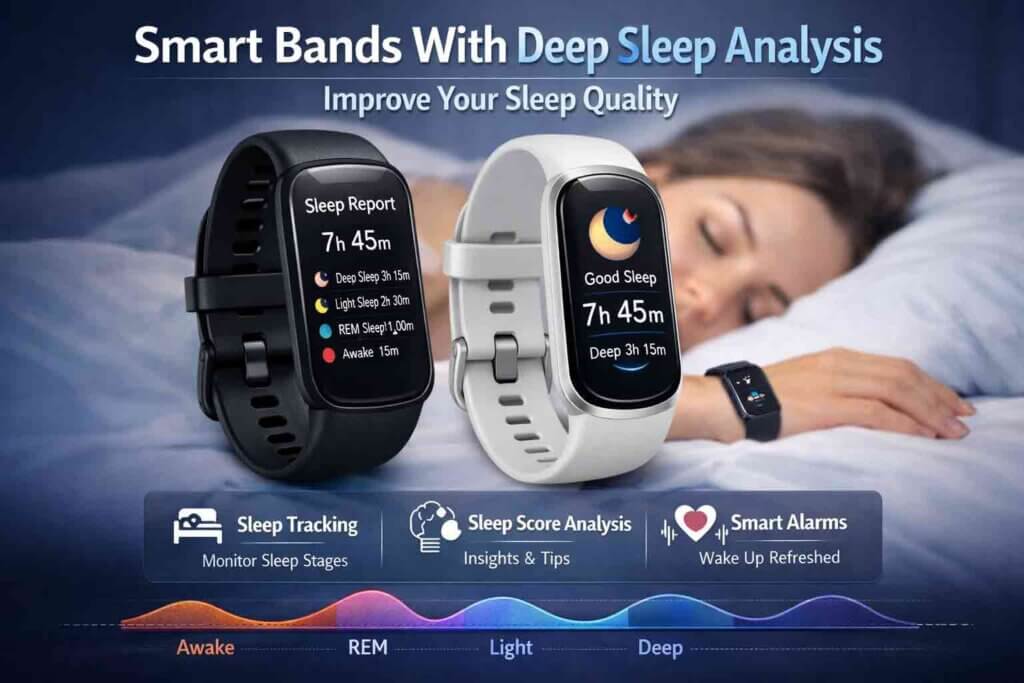
Modern sleep tracking smart bands use a combination of sensors and machine learning algorithms to detect sleep stages. These devices continuously collect physiological signals throughout the night and translate them into a detailed sleep report.
Motion sensors called accelerometers detect body movement. When the body becomes still for extended periods, the device recognizes that sleep has begun. However, movement alone cannot identify specific sleep stages.
Heart rate monitoring plays a crucial role in deeper analysis. During deep sleep, heart rate slows and becomes more stable. Smart bands use optical heart rate sensors to measure these subtle changes and combine them with movement data to estimate when deep sleep occurs.
More advanced devices also track heart rate variability, blood oxygen levels, and skin temperature. These metrics provide additional context that helps algorithms determine whether the body is in light sleep, REM sleep, or deep sleep.
The result is a detailed sleep breakdown that shows how long each stage lasts and how efficiently the body cycles through them.
How Smart Bands Improve Sleep Quality
Tracking sleep alone does not improve rest. The real benefit comes from the insights provided by deep sleep analysis. When users understand their sleep patterns, they can adjust habits and routines to enhance recovery.
Smart bands often provide daily sleep scores based on metrics such as sleep duration, deep sleep percentage, and nighttime disturbances. These scores help identify patterns that might otherwise go unnoticed.
For example, users may discover that late-night screen time reduces deep sleep, or that irregular bedtimes cause fragmented sleep cycles. Over time, this data makes it easier to develop healthier sleep habits.
Another key advantage is personalized recommendations. Many modern sleep tracking platforms analyze long-term trends and offer suggestions to improve rest, such as adjusting bedtime schedules or improving evening routines.
The combination of real-time tracking and behavioral insights turns smart bands into powerful sleep optimization tools.
Smart Bands That Monitor Deep Sleep: Technology Behind the Devices
The rapid advancement of wearable technology has made sleep monitoring far more accurate than earlier generations of devices. bleo.ai today incorporate multiple layers of technology designed to capture detailed biological signals.
Optical sensors use light to measure blood flow beneath the skin, enabling continuous heart rate monitoring throughout the night. This data is crucial for identifying transitions between sleep stages.
Advanced algorithms analyze this information alongside movement patterns to estimate when the body enters deep sleep. Over time, these algorithms become more precise as they learn individual sleep behaviors.
Some premium devices now include SpO₂ sensors, which track blood oxygen levels during sleep. Drops in oxygen saturation may indicate breathing disruptions, which can interfere with deep sleep.
Additionally, temperature sensors help detect subtle changes in body heat that occur during different sleep stages. Combining these technologies allows modern smart bands to provide remarkably detailed sleep analysis.
How Deep Sleep Analysis Helps Identify Sleep Problems
One of the most valuable aspects of smart sleep bands is their ability to reveal hidden sleep issues. Many people assume they sleep well simply because they spend several hours in bed. However, sleep tracking often reveals that actual restorative sleep may be far lower than expected.
Deep sleep analysis can identify problems such as frequent awakenings, irregular sleep cycles, or insufficient deep sleep duration. These insights can help users recognize patterns linked to lifestyle habits.
For example, high stress levels, caffeine intake, alcohol consumption, or inconsistent schedules can all reduce deep sleep. By correlating lifestyle behaviors with sleep data, individuals can identify which habits negatively impact their rest.
In some cases, persistent disruptions may indicate underlying sleep disorders. While smart bands are not medical diagnostic tools, they can provide valuable information that encourages individuals to seek professional evaluation when necessary.
How Smart Bands Encourage Healthy Sleep Habits
One of the most effective ways bleo band improve sleep is through behavioral awareness. Seeing nightly sleep reports encourages users to become more mindful of their routines.
Many devices include bedtime reminders that prompt users to wind down before sleep. These reminders can help establish a consistent schedule, which is essential for maintaining healthy circadian rhythms.
Morning reports often show how lifestyle choices affect sleep quality. When users notice that exercise, meditation, or earlier bedtimes improve deep sleep, they are more likely to continue those habits.
Some smart bands also include relaxation features such as guided breathing exercises. These tools help reduce stress levels before bedtime, which can make it easier to enter deeper sleep stages.
Over time, these subtle behavioral nudges contribute to long-term improvements in sleep quality.
Why Deep Sleep Tracking Matters for Overall Health
Sleep is closely linked to nearly every aspect of physical and mental health. Deep sleep in particular plays a vital role in body repair and brain function.
During this stage, growth hormone is released, allowing the body to repair tissues and recover from daily stress. The immune system also becomes more active, helping the body fight infection and inflammation.
Deep sleep is equally important for cognitive health. Memory consolidation occurs during this phase, meaning the brain processes and stores information gathered throughout the day.
A lack of deep sleep has been associated with increased risk of conditions such as cardiovascular disease, weakened immunity, and metabolic disorders. Monitoring this sleep stage provides valuable insight into long-term health trends.
Smart bands therefore serve as a preventive health tool, helping individuals maintain a balanced and restorative sleep cycle.
Choosing the Right Smart Band for Deep Sleep Analysis
Not all smart bands offer the same level of sleep tracking accuracy. When selecting a device for deep sleep analysis, sensor quality and software capabilities are critical factors.
High-quality devices include continuous heart rate monitoring and advanced algorithms designed specifically for sleep analysis. Integration with mobile apps is also essential, as the app presents sleep data in an easy-to-understand format.
Battery life is another important consideration. A smart band designed for sleep monitoring should last several days without charging to ensure uninterrupted tracking.
Comfort is equally crucial. Since the device must be worn overnight, a lightweight design and soft strap improve usability and reduce sleep disruption.
Choosing a device that combines reliable sensors, advanced analytics, and comfortable design ensures accurate and consistent sleep monitoring.
The Future of Smart Sleep Tracking
Wearable technology continues to evolve rapidly, and the future of deep sleep analysis smart bands looks even more promising. Emerging technologies are making sleep tracking more accurate and personalized.
Artificial intelligence is playing a growing role in analyzing long-term sleep patterns. Instead of simply reporting nightly data, AI systems can predict potential sleep disruptions and offer personalized strategies for improvement.
New sensors are also being developed to measure stress hormones, hydration levels, and breathing patterns. These metrics will provide deeper insight into the biological processes that affect sleep quality.
Integration with smart home devices is another trend. Smart bands may soon communicate with bedroom lighting, temperature systems, and digital assistants to automatically create ideal sleeping environments.
These innovations will transform sleep monitoring from a passive tracking system into a fully integrated sleep optimization ecosystem.
How Smart Bands With Deep Sleep Analysis Transform Rest and Recovery
Achieving truly restorative sleep requires more than simply spending time in bed. Understanding the body’s natural sleep cycles is essential for maximizing recovery and maintaining long-term health.
Smart bands equipped with deep sleep analysis provide the data needed to make meaningful improvements. By tracking sleep stages, identifying disruptions, and offering personalized insights, these devices empower individuals to take control of their rest.
Over time, consistent monitoring reveals patterns that can significantly improve sleep quality. Adjusting bedtime routines, managing stress levels, and maintaining a consistent schedule become easier when supported by accurate sleep data.
As wearable technology continues to evolve, smart bands will play an increasingly important role in helping people achieve healthier sleep habits and better overall well-being.
Content built with depth, clarity, and authoritative insight demonstrates the level of quality capable of surpassing competing pages and delivering meaningful value to readers searching for smart bands with deep sleep analysis.
Frequently Asked Questions
1. What is deep sleep and why is it important?
Deep sleep, also known as slow-wave sleep, is the most restorative stage of the sleep cycle. During deep sleep, the body repairs tissues, strengthens the immune system, and consolidates memory. Without sufficient deep sleep, people may experience fatigue, poor concentration, and weakened immunity, even if total sleep duration seems adequate.
2. How do smart bands track deep sleep?
Smart bands use a combination of heart rate monitoring, movement detection, and advanced algorithms to estimate sleep stages. By tracking changes in heart rate, heart rate variability, body movement, and sometimes blood oxygen levels, these devices can determine when the body enters deep sleep and provide a detailed nightly sleep analysis.
3. Can smart bands help improve my sleep quality?
Yes. While tracking alone does not improve sleep, smart bands provide actionable insights and recommendations. By understanding sleep patterns, identifying disruptions, and suggesting lifestyle adjustments—such as consistent bedtimes, stress management, and exercise—users can optimize their routines for better deep sleep and overall sleep quality.
4. Are smart bands accurate for sleep tracking?
Accuracy varies depending on the device, sensors, and algorithms used. Premium smart bands with continuous heart rate monitoring, SpO₂ sensors, and advanced AI-driven sleep analytics tend to provide the most reliable data. While not a medical diagnostic tool, they are effective for identifying trends and habits that influence sleep quality.
5. How do I choose the best smart band for deep sleep analysis?
Look for devices with high-quality sensors, long battery life, comfort for overnight wear, and a comprehensive companion app. Devices that combine heart rate tracking, movement analysis, and advanced sleep algorithms provide more accurate insights. Comfort and ease of use are also essential for consistent and effective monitoring.