
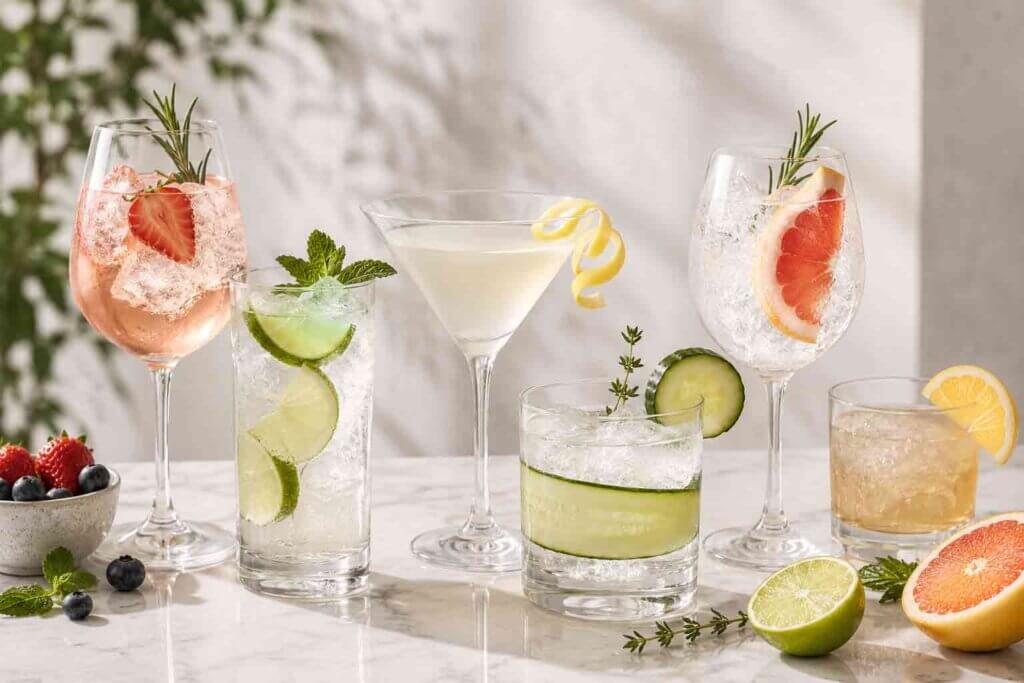
Most people do not realize how many hidden calories are lurking inside their favorite cocktails. A single margarita can carry over 300 calories, and a creamy piña colada may tip the scale past 500. If you enjoy a drink or two on the weekends but also care about your health goals, you do not have to choose between the two. You just need to drink smarter. This guide walks you through everything you need to know about low-calorie alcoholic drinks, from the best spirit choices to easy cocktail swaps, so you can still enjoy yourself without the regret.
What Makes an Alcoholic Drink High in Calories?
Before diving into the best low-calorie options, it helps to understand where the calories in alcohol actually come from. Alcohol itself contains 7 calories per gram, which puts it between protein and fat on the calorie density scale. Pure spirits like vodka, gin, rum, tequila, and whiskey have no carbohydrates or fat, so their calorie count comes almost entirely from the alcohol content.
The real calorie bombs show up when you start adding mixers. Sodas, fruit juices, syrups, cream liqueurs, and pre-made cocktail mixes pile on sugar and carbohydrates rapidly. A vodka-soda has around 100 calories, while a vodka-cranberry jumps to 180 or more depending on the pour. Beer adds liquid carbohydrates on top of alcohol, and wine sits somewhere in between depending on sweetness and alcohol content.
The Role of ABV in Calorie Counting
Alcohol by volume (ABV) is directly tied to calorie content. Higher ABV means more alcohol, which means more calories. A standard 1.5 oz shot of 80-proof (40% ABV) vodka contains roughly 97 calories. The same volume of a 100-proof spirit climbs closer to 123 calories. This is why choosing a slightly lower ABV drink can make a meaningful difference across an evening of socializing.
The Lowest Calorie Alcoholic Drinks You Can Order
Vodka Soda
This is arguably the gold standard of low-calorie drinking. A single shot of vodka mixed with sparkling water and a squeeze of lime comes in at around 96 to 100 calories. It is refreshing, easy to make, and widely available at any bar. There are no added sugars, no syrups, and no calorie-dense mixers. If you want something crisp without the guilt, vodka soda is your answer.
Gin and Tonic (Light Tonic Version)
A standard gin and tonic lands around 140 to 170 calories, but swapping regular tonic water for a light or slim tonic dramatically cuts that number down. Light tonic uses sweeteners instead of sugar, saving you around 50 to 60 calories per drink. Gin itself carries around 97 calories per 1.5 oz, so with light tonic you can enjoy this classic for well under 130 calories.
Tequila on the Rocks or with Soda
Tequila often gets a bad reputation, but pure blanco tequila is one of the cleanest spirits you can drink. A 1.5 oz pour contains about 97 calories with virtually no carbohydrates. Served over ice with a splash of sparkling water and a lime wedge, it becomes a refreshing, low-calorie sipper. Just skip the pre-made margarita mixes, which are loaded with sugar.
Dry White Wine or Brut Champagne
If wine is your preference, going dry is the smartest move. Dry white wines like Sauvignon Blanc, Pinot Grigio, and Albariño typically contain between 110 and 130 calories per 5 oz glass. Brut Champagne or Prosecco is even better, often coming in at around 90 to 100 calories per glass while also delivering lower sugar content than most still wines.
Light Beer
Light beers have come a long way from the watery options of the past. Many craft breweries now offer low-calorie versions of IPAs, lagers, and wheat beers. Classic light beers like Miller Lite and Bud Light clock in at around 95 to 110 calories per 12 oz can, while newer options like Michelob Ultra (95 calories) and Dogfish Head Slightly Mighty (95 calories) give drinkers more flavor without the calorie load.
Hard Seltzers
Hard seltzers exploded in popularity for a reason. Most contain between 90 and 110 calories per 12 oz can with 1 to 2 grams of carbohydrates. They are fizzy, fruity, and easy to drink, making them a crowd-pleasing low-calorie option for parties, outdoor events, and casual evenings alike.
Low-Calorie Alcoholic Drinks: Quick Calorie Comparison Table
| Drink | Serving Size | Approximate Calories | Carbohydrates |
|---|---|---|---|
| Vodka Soda | 1.5 oz vodka + soda | 96 – 100 | 0g |
| Gin and Tonic (light tonic) | 1.5 oz gin + light tonic | 120 – 130 | 3 – 5g |
| Tequila on the Rocks | 1.5 oz tequila | 97 | 0g |
| Brut Champagne | 5 oz | 90 – 100 | 1 – 2g |
| Dry White Wine | 5 oz | 110 – 130 | 3 – 4g |
| Light Beer | 12 oz | 95 – 110 | 3 – 6g |
| Hard Seltzer | 12 oz | 90 – 110 | 1 – 2g |
| Rum and Diet Cola | 1.5 oz rum + diet cola | 97 – 100 | 0g |
| Whiskey Neat | 1.5 oz | 97 – 105 | 0g |
| Regular Margarita | 6 oz | 280 – 320 | 30 – 40g |
| Piña Colada | 8 oz | 450 – 530 | 50 – 70g |
| Frozen Daiquiri | 8 oz | 250 – 350 | 35 – 50g |
Low-Calorie Cocktail Recipes You Can Make at Home
Skinny Mojito
A traditional mojito uses a significant amount of simple syrup, which adds unnecessary sugar. The skinny version swaps it out entirely. Muddle fresh mint leaves with a wedge of lime in a glass, add 1.5 oz of white rum, fill with sparkling water, and garnish with a lime slice and mint sprig. You end up with roughly 110 to 120 calories of tropical freshness.
Paloma Spritz
This Mexican-inspired cocktail is both beautiful and light. Combine 1.5 oz of blanco tequila with the juice of half a grapefruit, a splash of fresh lime juice, and top with sparkling water. A tiny pinch of salt on the rim elevates the flavors dramatically. Total calorie count: approximately 130 calories.
Cucumber Gin Fizz
Muddle two thin slices of cucumber in a glass, add 1.5 oz of gin, a squeeze of lemon, and top with sparkling water. It is bright, aromatic, and refreshing with only about 115 calories per serve. This one is especially popular in summer.
Whiskey Ginger Slim
Combine 1.5 oz of your favorite bourbon or rye whiskey with diet ginger beer and a squeeze of fresh lime over ice. The diet ginger beer keeps the calorie count near 100 to 110 total, while delivering the spicy, warming notes that make this cocktail so satisfying.
What to Avoid: High-Calorie Drinks That Sneak Up on You
Not every drink marketed as “light” or “refreshing” is actually low in calories. Some of the biggest offenders in the bar world include:
Pre-made margarita mixes are packed with high-fructose corn syrup and artificial flavors. Even a modest serving can add 150 to 200 calories before the tequila is poured.
Cream-based liqueurs like Baileys Irish Cream contain roughly 327 calories per 100ml, making them one of the most calorie-dense options behind any bar. A generous pour can match the calories of a small meal.
Flavored craft beers especially stouts, porters, and pastry beers brewed with chocolate, vanilla, or lactose, often range from 200 to 350 calories per pint. They taste extraordinary, but they are a calorie commitment.
Long Island Iced Tea is perhaps the most deceptive cocktail on any menu. With four different spirits plus cola and sweet and sour mix, a single serving can contain 350 to 450 calories.
Frozen blended cocktails like piña coladas, frozen daiquiris, and blended margaritas rely on sugary syrups, cream of coconut, or fruit concentrate. The blending process also makes it easy to consume a large volume quickly without realizing how many calories you have taken in.
How to Drink Low-Calorie at a Bar or Restaurant
Ordering smartly in a social setting requires a bit of strategy, but it is far from complicated. Start by asking for your spirit of choice with sparkling water instead of a juice or soda. Most bartenders are happy to oblige and can even add a fruit garnish to make the drink feel more festive.
When ordering wine, stick to dry varieties and avoid dessert wines, which can contain twice the sugar of a standard dry pour. If you are not sure whether a wine is dry, asking for a Sauvignon Blanc, Pinot Grigio, or Brut sparkling wine is a reliably safe bet.
For beer lovers, scan the menu for light or session beers. Session beers are low in alcohol (usually under 4.5% ABV) and therefore naturally lower in calories than full-strength IPAs or stouts.
If you are at a party where cocktails are premixed, look for the simplest option available. Sparkling water with a splash of whatever spirit is on hand is almost always your lightest choice.
Low-Calorie Drinking and Weight Management
It would be dishonest to suggest that alcohol has no impact on weight management, because it does. Even low-calorie alcoholic drinks add to your daily calorie intake, and alcohol temporarily slows fat metabolism because the body prioritizes processing alcohol over everything else.
That said, moderate drinking with smart choices does not have to derail your health goals. Research consistently shows that the key factor is total calorie balance. If you are mindful of what you drink and pair it with a generally healthy diet, a few low-calorie drinks per week are unlikely to cause significant weight gain.
Practical tips for managing alcohol within a healthy lifestyle include setting a drink limit before going out, drinking a full glass of water between alcoholic drinks, avoiding drinking on an empty stomach which can cause faster intoxication and lead to overeating, and choosing quality over quantity.
Are Low-Calorie Alcoholic Drinks Actually Healthier?
Calories Are Not the Whole Picture
Low-calorie drinks are better for your waistline, but they are not necessarily healthier in a broader medical sense. Alcohol in any quantity carries health considerations including liver health, sleep quality, hydration, and cardiovascular effects. The focus on calorie reduction is specifically about managing caloric intake, not about eliminating health risks associated with alcohol consumption.
Natural vs. Artificial Sweeteners in Light Drinks
Many light beers and diet mixers replace sugar with artificial sweeteners like aspartame or stevia. While these cut calories effectively, some people prefer to avoid artificial sweeteners due to personal preference or digestive sensitivity. If you fall into that camp, your best options are spirits with plain sparkling water, dry wine, and hard seltzers that use natural flavors without sweeteners.
Low-Calorie Spirit Comparison Table
| Spirit | Calories per 1.5 oz | Carbs | Notes |
|---|---|---|---|
| Vodka (80 proof) | 97 | 0g | Neutral flavor, mixes well |
| Gin (80 proof) | 97 | 0g | Botanical flavor, pairs with tonic |
| Tequila Blanco (80 proof) | 97 | 0g | Best served with citrus |
| Rum (White, 80 proof) | 97 | 0g | Great for mojitos and soda |
| Whiskey (80 proof) | 97 – 105 | 0g | Smooth, warming flavor |
| Dry Vermouth | 45 (per 1 oz) | 1g | Lower ABV, good for spritzes |
| Prosecco | 80 (per 4 oz) | 1g | Festive and light |
Tips for Making Any Drink Lower in Calories
You do not always need to reinvent your favorite drink entirely. Small substitutions make a meaningful difference. Using fresh citrus juice instead of pre-made sour mix eliminates a significant calorie source while actually improving flavor. Swapping simple syrup for a small amount of honey or agave nectar cuts volume while adding natural sweetness. Choosing diet or zero-sugar mixers when sparkling water feels too plain is another easy win.
Reducing portion size is also worth mentioning. Many bar pours are generous, and a 2 oz pour of spirits rather than 3 oz can save 50 or more calories per drink over the course of an evening without feeling like a significant sacrifice.
Conclusion
Enjoying a drink without sabotaging your health or calorie goals is entirely possible when you know what to look for. The best low-calorie alcoholic drinks share a few common traits: they use pure spirits without added sugars, they rely on sparkling water or other zero-calorie mixers, and they tend to be simple rather than layered with syrups and creams. Vodka soda, gin with light tonic, tequila on the rocks, brut sparkling wine, dry white wine, light beers, and hard seltzers all deliver flavor and enjoyment at a fraction of the calorie cost of their more indulgent counterparts.
The key takeaway is this: you do not have to drink less to drink smart. You just have to drink differently. With a little awareness of what is in your glass, you can enjoy social occasions fully while staying aligned with your personal wellness goals. Cheers to sipping smart.
Frequently Asked Questions
Q1: What is the lowest calorie alcoholic drink?
A vodka soda is one of the lowest calorie alcoholic drinks available, coming in at around 96 to 100 calories per serving with zero carbohydrates. It uses plain sparkling water as a mixer, which adds no sugar or additional calories.
Q2: Can I drink alcohol and still lose weight?
Yes, in moderation. Choosing low-calorie options like dry wine, light beer, or spirits with sparkling water, while staying mindful of your overall daily calorie intake, allows you to enjoy alcohol without significantly impacting weight loss goals.
Q3: Is wine or beer lower in calories?
Dry white wine generally wins, with around 110 to 130 calories per 5 oz glass. Light beer is comparable at 95 to 110 calories per 12 oz can. Regular beer and sweet wines, however, can be significantly higher in both calories and carbohydrates.
Q4: Are hard seltzers actually low in calories?
Yes. Most hard seltzers contain between 90 and 110 calories per 12 oz can with only 1 to 2 grams of carbohydrates, making them one of the most popular low-calorie alcoholic drink choices available today.
Q5: What alcoholic drinks should I avoid on a diet?
Avoid cream-based liqueurs, frozen blended cocktails, Long Island Iced Teas, and drinks made with pre-made mixes or simple syrup. These can contain anywhere from 250 to 500 or more calories per serving, often with high amounts of added sugar.