
Last updated June 30, 2026
The Wearable Revolution: Building for Tomorrow
Understanding the 2026 Wearable Landscape
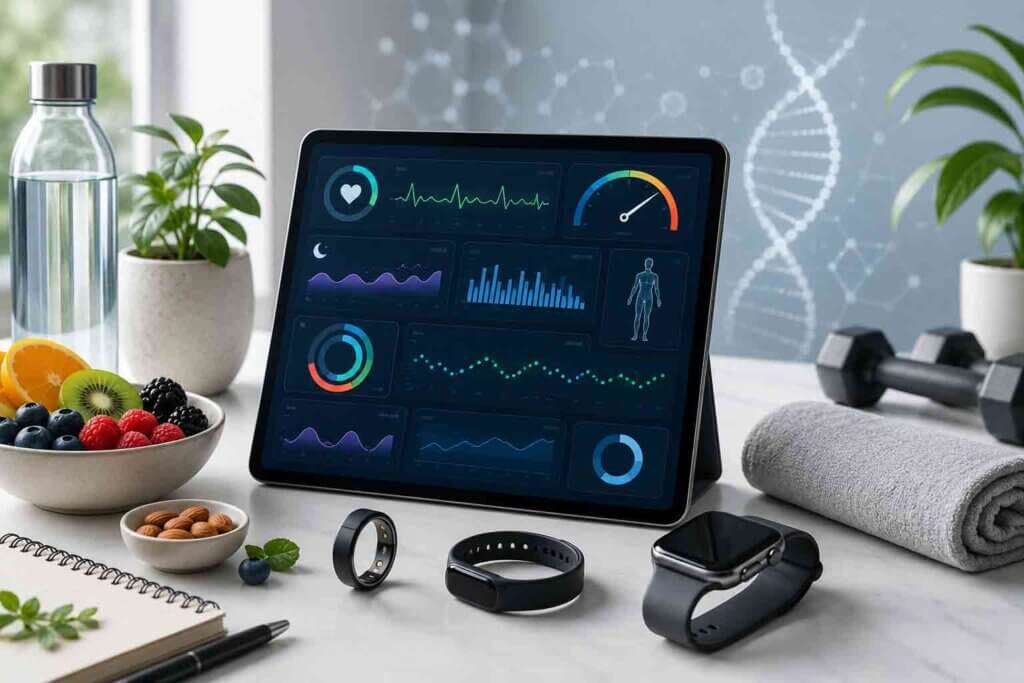
The wearable technology market has continued its rapid shift in 2026, moving well past simple step counters into sophisticated health companions that often serve as a first line of defense against potential health issues. Today’s devices don’t just track daily activity — they analyze sleep architecture, monitor stress responses, and surface predictive insights that help people make more informed decisions about their well-being. Industry analysts now describe this shift as “Wearables 2.0”: clinical-grade monitoring capability packaged inside consumer-friendly devices. The challenge for buyers hasn’t changed — how do you choose a device that won’t be obsolete within a year or two?
Future-proofing a wearable means choosing a device built to adapt to changing user expectations, integrate with emerging health platforms, and stay relevant as new sensors and AI capabilities roll out — rather than one optimized only for today’s spec sheet. That means looking beyond current specifications to consider upgradability, AI integration potential, and the manufacturer’s track record on long-term software support.

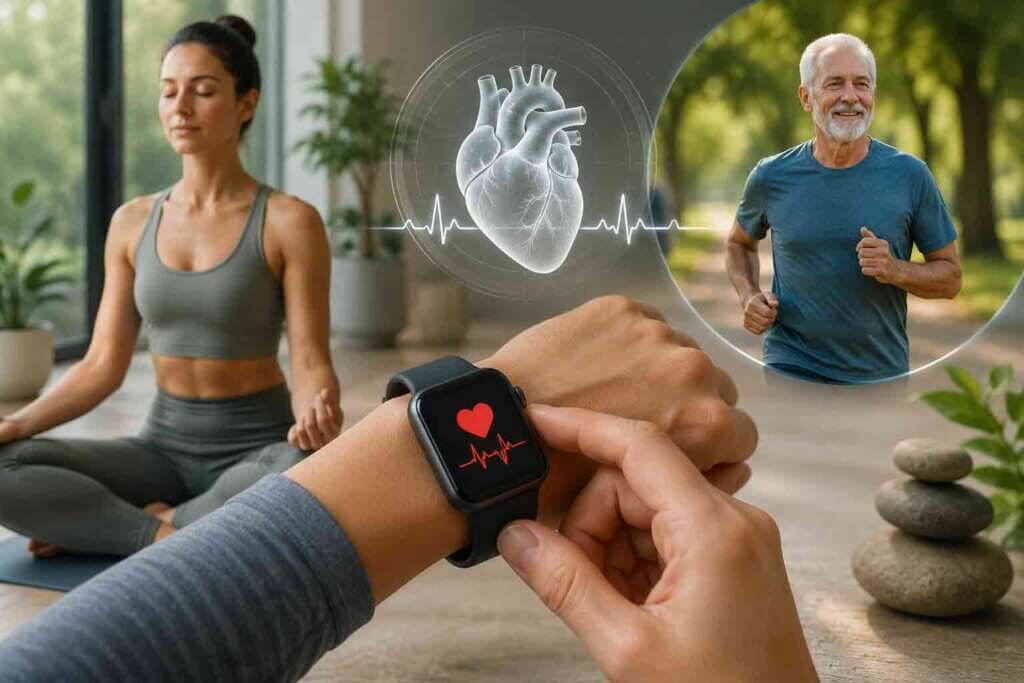
Wearables blend into the body, streaming sleep, HRV, and vital signals for long-term health insights.
Essential Features for Long-Term Value
AI and Machine Learning: The Brain Behind the Data
The biggest differentiator in modern wearables remains their ability to learn and adapt through artificial intelligence. Advanced AI capabilities transform raw biometric data into personalized health insights, acting as a virtual wellness coach that understands your unique patterns and preferences. These systems can identify subtle changes in baseline metrics that might indicate emerging health concerns or opportunities for optimization.
The most capable devices now offer predictive analytics that go beyond simple trend tracking. They can anticipate when you might be entering a period of increased stress based on heart rate variability patterns, or suggest optimal workout timing based on recovery metrics. As one industry analysis of 2026 fitness tracker trends put it, hardware sensor improvements are incremental while AI advances are exponential — the same device that delivered basic step counts a few years ago can now flag illness risk, detect arrhythmias, and coach recovery with updated algorithms alone (jointcorp.com, 2026).
Look for devices that emphasize continuous learning and regular algorithm updates. The best future-proof wearables evolve their AI coaching over time, becoming more accurate and personalized the longer they’re used.
Advanced Biometric Monitoring Beyond the Basics
While heart rate monitoring is now standard, the current generation of wearables offers a much broader range of physiological insights, including electrocardiogram (ECG) patterns, blood oxygen saturation, stress responses via galvanic skin response, and detailed sleep staging using advanced accelerometry and, in some cases, EEG technology.
Medical-grade accuracy has become a major selling point, with more devices seeking FDA clearance for specific health monitoring functions. Regulatory momentum accelerated through 2025 and into 2026: WHOOP received FDA 510(k) clearance for its ECG feature, Dexcom secured clearance for its G7 15-day continuous glucose monitor, and Biolinq earned FDA De Novo classification for a needle-free glucose-sensing patch (Rising Trends, 2026). That progress hasn’t been frictionless — in mid-2025 the FDA issued a warning letter to WHOOP over a blood pressure feature it judged to cross from “wellness” into unapproved medical-device territory, and the agency updated its general wellness guidance in early 2026 to clarify where that line sits (National Law Review, 2026; Sahha, 2026). This regulatory back-and-forth is a useful signal: clearance tends to indicate a higher standard of sensor reliability, but even cleared consumer devices have limitations and shouldn’t replace professional medical assessment for serious concerns.
When evaluating biometric capabilities, consider which metrics align with your health goals. For longevity-focused users, continuous heart rate variability monitoring, detailed sleep analysis, and stress tracking tend to provide the most actionable day-to-day insight.
Connectivity and Future Integration Potential
A wearable’s value often depends on how well it integrates with your broader digital ecosystem. Modern devices should support robust connectivity, including Bluetooth LE for efficient phone pairing and, increasingly, cellular or 5G capability for real-time sync and emergency features.
Modularity is another frontier in future-proofing. Some emerging platforms ship with upgradeable components, letting users add sensors or swap modules without buying an entirely new device. This isn’t yet widespread, but it’s likely to grow as sustainability concerns and shorter technology cycles push manufacturers toward repairable, extensible hardware. Interoperability matters just as much: look for devices that sync with major health ecosystems (Apple Health, Google Fit) and increasingly support open clinical data standards like FHIR, which makes it easier to share trends with a clinician or research platform (mipaoverseas.com, 2026).
Consider how well a device integrates with the health platforms you already use, and whether the manufacturer has a track record of maintaining compatibility with emerging services.
Power Management and Charging Innovation
Battery life remains one of the most practical day-to-day considerations. The best devices now offer multi-day battery life under typical use, with some rings and bands reaching 5–6 days between charges. Fast charging helps offset shorter battery life, with some devices offering several days of use from a 30-minute top-up.
Wireless charging is now close to standard, though it’s still less efficient than wired alternatives. Some manufacturers offer portable charging cases that extend runtime significantly — useful for travel or extended outdoor activity.
Material Quality and Sustainable Design
A wearable’s physical design matters more than buyers often expect. Premium materials like titanium, medical-grade silicone, and advanced polymer blends feel better during extended wear and tend to hold their appearance and function over time. Comfort matters especially for devices meant to be worn continuously, including overnight.
Sustainability considerations are increasingly relevant in wearable design. Some manufacturers now offer digital sizing systems to cut plastic waste from sizing kits, use recycled materials, or run take-back programs for device recycling — practices that often signal a longer-term commitment to support and environmental responsibility.
Privacy and Data Security Foundations
As wearables collect increasingly sensitive biometric data, robust privacy protection is essential, not optional. Look for transparent data policies, end-to-end encryption for sensitive information, and clear user control over sharing and deletion.
The best manufacturers explain where data is stored, how it’s used to improve algorithms, and what options exist for data portability. Some devices now offer on-device processing that keeps sensitive data local rather than requiring cloud uploads for basic functionality — an approach that’s gaining ground as edge AI matures (mipaoverseas.com, 2026).
Emerging Technologies Worth Watching
The Next Wave of Wearable Innovation
Smart clothing remains one of the more intriguing frontiers. Shirts, compression wear, and even socks embedded with sensors can deliver comprehensive movement analysis and physiological monitoring without an additional device, tracking posture, breathing patterns, and muscle activation in detail — though consumer availability is still limited.
Augmented reality integration continues to appear in specialized professional wearables, offering real-time information overlay and hands-free interaction. Current AR glasses are still bulky with limited battery life, but the category is advancing quickly and may become more practical for consumer health applications in the next couple of years.
Ultra-thin, AI-powered skin patches and biosensors are an increasingly active category, offering continuous monitoring of hydration, stress hormones, and other biomarkers that are difficult to track with traditional wearables. 2026 has also brought continued movement on biodegradable biosensing patches and early implantable sensors aimed at long-duration monitoring (mipaoverseas.com, 2026), alongside continued progress toward non-invasive glucose sensing using PPG and machine learning (Sahha, 2026).
Making the Right Choice for Your Needs
Aligning Features with Personal Goals
The key to choosing a future-proof wearable is understanding your primary use case and growth potential. For longevity-focused users, devices emphasizing comprehensive health monitoring, stress management, and sleep optimization tend to provide the most value. Consider whether you prefer the discrete monitoring of a ring-style device or the broader tracking capabilities that bands and watches offer.
Compatibility with your existing technology ecosystem matters significantly. Check how well potential devices integrate with your phone, health apps, and any smart home devices you already use.
Evaluate the manufacturer’s track record on software updates and long-term support. Devices from companies with a history of regular feature updates and multi-year support cycles are more likely to remain relevant as technology evolves.
Consider total cost of ownership beyond the purchase price. Some devices require ongoing subscription fees for advanced features; others offer full functionality with a one-time purchase. For users seeking long-term value, subscription-free options can be more economically efficient over time.
Building Your Wearable Strategy
The most future-proof wearables balance cutting-edge capability with practical, everyday usability: robust AI-driven insights, comprehensive health monitoring, reliable connectivity, and strong privacy protection, all without sacrificing the comfort needed for continuous wear.
As the wearable landscape keeps evolving, the devices that prove most valuable will be the ones that adapt to changing user needs while keeping their core functionality intact. Whether you choose a discrete ring that fits seamlessly into your lifestyle or a more feature-rich band with broader tracking, prioritize devices that show a clear, ongoing commitment to development and user support.
The future of wearable technology lies not just in better sensors and algorithms, but in devices that genuinely deepen our understanding of our bodies and support a longer, healthier life. Choosing thoughtfully today means investing in technology built to keep delivering value for years to come.
Frequently Asked Questions
Which sensors should a wearable have for long-term health monitoring?
Look for continuous heart rate (PPG), ECG, heart rate variability (HRV), SpO2, sleep tracking, skin or core temperature, respiratory rate, and reliable motion/step sensors. Longevity-focused users should also consider devices positioned to support future add-ons like continuous glucose monitoring (CGM) or biochemical patches, both of which saw notable FDA progress in 2025–2026.
How can I make sure my wearable stays useful for 5–10 years?
Choose devices with regular firmware updates, modular or upgradable hardware where available, and strong manufacturer support. Prioritize open platforms that expose raw data or sync with major health ecosystems (Apple Health, Google Fit), and favor brands with a track record of long-term software improvements and security patches.
Can a wearable detect early signs of chronic disease?
Wearables can flag early warning signs — persistent irregular heart rhythms, declining sleep quality, reduced activity, or abnormal oxygen levels — that warrant medical follow-up. They’re best used for continuous monitoring and trend detection rather than standalone diagnosis. Regulators are actively drawing this line too: in 2025–2026 the FDA clarified that features implying diagnosis (rather than general wellness insight) can trigger medical-device classification, so always share concerning trends with a healthcare professional rather than relying on the device alone.
Why do I need open APIs and data portability in my wearable?
Open APIs and portable data let you export raw metrics for deeper analysis, combine data across platforms, and switch devices without losing your history. For longevity and preventive care, that continuity supports personalized insights, research participation, and easier integration with clinical tools that increasingly rely on open standards like FHIR.
Should I choose longer battery life or more health features?
It depends on your priorities. For continuous 24/7 monitoring (HRV, sleep, arrhythmia detection), prioritize battery life and efficient sensors. For advanced clinical measurements (ECG, SpO2, temperature), you may need to accept shorter battery life. Look for devices with low-power modes and on-device processing to get the best of both.
Sources and further reading: