If you have been thinking about upgrading your wearable game, you have probably already stumbled across two of the most popular options out there right now: the smart ring and the smart band. Both promise to track your health, monitor your sleep, and keep you connected to your digital life. But which one actually delivers on those promises for a regular person living a regular life? That is exactly what this article is going to break down for you, honestly and thoroughly.
What Is a Smart Ring and What Is a Smart Band?
Before diving into the pros and cons, it is worth making sure we are on the same page about what these devices actually are.
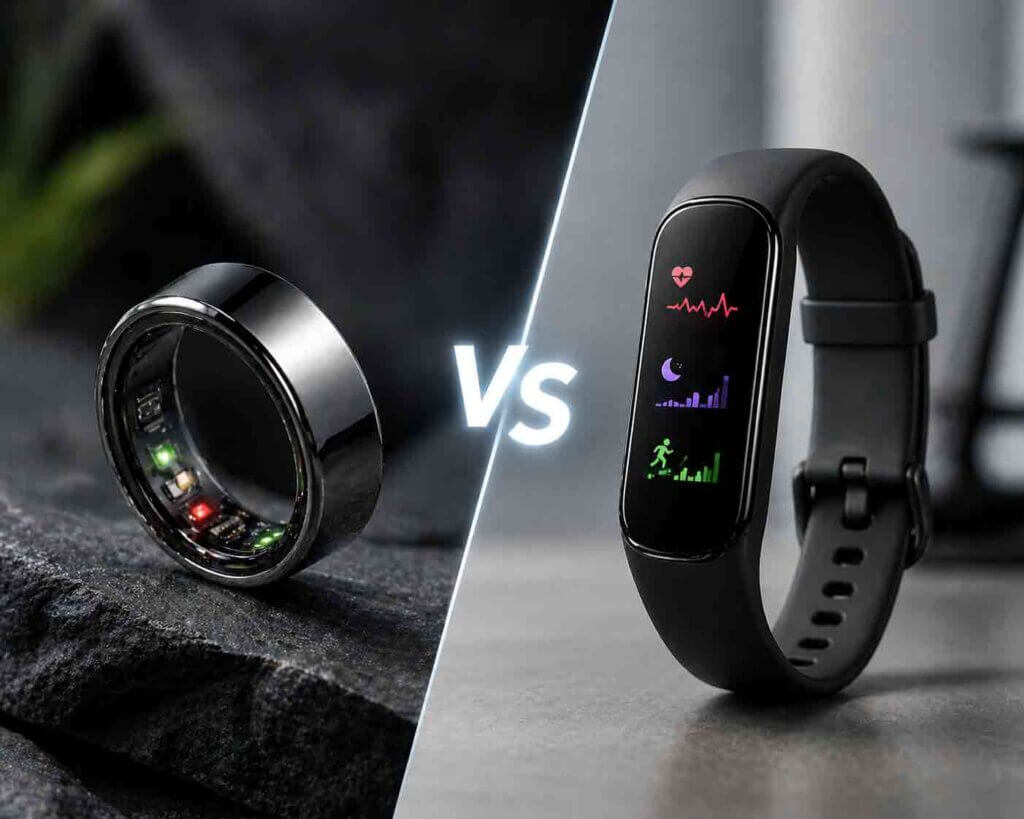
A smart ring is a small, ring-shaped wearable device that sits on your finger. It typically contains sensors that track biometric data like heart rate, blood oxygen levels, body temperature, and sleep patterns. Popular examples include the bleo Ring, Oura Ring, the Samsung Galaxy Ring, and the Ultrahuman Ring AIR. These rings are designed to be discreet, stylish, and low-profile.
A smart band (also called a fitness band or activity tracker) is a slim wristband packed with sensors and, in most cases, a small display screen. Brands like bleo, Fitbit, Xiaomi Mi Band, and Whoop have made smart bands incredibly popular over the past decade. They typically offer more real-time data display, notifications, and interactive features than a smart ring.
Understanding both of these devices at a basic level is the first step to figuring out which one is the better fit for your lifestyle.
Smart Ring vs. Smart Band: Which One Is More Accurate for Health Tracking?
This is arguably the most important question for health-conscious users. When it comes to accuracy, the answer is actually more nuanced than most people expect.
Why Smart Rings Can Be More Accurate
Smart rings sit on your finger, which happens to be one of the best spots on the human body for capturing biometric data. The blood vessels in your finger are closer to the surface of the skin, and there is less movement interference compared to your wrist. This means that heart rate variability (HRV), blood oxygen (SpO2), and sleep stage tracking can be more precise on a smart ring.
The Oura Ring, for example, has been cited in several clinical comparisons as producing sleep data that closely aligns with professional sleep lab readings. That is a genuinely impressive feat for a consumer-grade device.
Where Smart Bands Can Match or Beat Smart Rings
Smart bands, especially premium ones like the Whoop 4.0 or Fitbit Charge 6, also deliver highly reliable data. Many smart bands come with optical heart rate monitors that have been refined over years of development. For tracking steps, calories burned during workouts, and real-time heart rate during exercise, smart bands tend to perform very well because the wrist location works naturally with motion sensors built into the device.
If you are someone who exercises intensely and wants live feedback during your workout, a smart band’s screen and real-time data display give it a practical edge.
Design and Comfort: Which Device Feels Better to Wear All Day?
Comfort is something a lot of tech reviews gloss over, but it matters enormously when you are committing to wearing something 24 hours a day.
The Case for Smart Ring Comfort
Smart rings are compact, lightweight, and genuinely unobtrusive. Once you get used to wearing one, many users report forgetting it is even there. They do not snag on clothing, do not press against your wrist during sleep, and do not have a bulky screen that digs into your hand during push-ups. For people who dislike the feel of anything on their wrist, the smart ring is a genuine revelation.
Aesthetically, smart rings also win in most social settings. They look like jewelry, not gadgets. You can wear a smart ring to a job interview, a formal dinner, or a wedding without anyone batting an eye.
The Case for Smart Band Comfort
Smart bands have come a long way in terms of comfort. Modern bands like the Fitbit Luxe or the Xiaomi Smart Band 8 are slim, lightweight, and available in a wide range of band materials including silicone, leather, and woven fabric. Adjustable straps mean you can get a precise fit that is neither too tight nor too loose.
However, it is honest to say that wristbands can feel restricting during sleep for some users, and if you do physical labor or type extensively on a keyboard all day, a band on your wrist can occasionally get in the way.
Battery Life Comparison: Smart Ring vs. Smart Band
Battery life is one of the most talked about differences between these two categories, and for good reason.
Smart Ring Battery Life
Most premium smart rings offer between 4 to 8 days of battery life on a single charge. The Oura Ring Gen 3 typically achieves around 4 to 7 days, while the Ultrahuman Ring AIR pushes closer to 6 days on average. Charging is quick, usually under an hour, and many rings come with a small charging case that can top up the ring while you travel.
Smart Band Battery Life
This is where smart bands genuinely shine. Many mid-range and budget smart bands last anywhere from 7 to 21 days on a single charge. The Xiaomi Smart Band 8 can push up to 14 days, and some Fitbit models with always-on displays turned off can stretch even further. For users who do not want to think about charging frequently, a smart band is clearly the winner here.
Features and Functionality: What Can Each Device Actually Do?
What Smart Rings Do Best
Smart rings are specialists, not generalists. They excel at passive, continuous health monitoring. Features commonly found in smart rings include sleep tracking with sleep stage analysis, resting heart rate monitoring, HRV tracking, body temperature trends, SpO2 monitoring, menstrual cycle tracking, and readiness and recovery scores. The Oura Ring’s “Readiness Score” has become something of a gold standard for how to summarize a person’s overall physical state each morning.
What smart rings typically do not do is show you the time, display notifications, count your steps on a visible screen, or play music. They are background devices, quietly collecting data and delivering insights through a connected smartphone app.
What Smart Bands Do Best
Smart bands are far more interactive. Most smart bands include a display screen that shows time, notifications, heart rate, steps, and workout data in real time. Many support GPS connectivity (either built-in or connected via your phone), guided breathing exercises, menstrual health tracking, stress monitoring, and contactless payments on higher-end models. For users who want a wearable that actively communicates with them throughout the day, a smart band is the more capable device.
Price and Value: Are Smart Rings Worth the Premium Cost?
Let us talk money, because the price difference between these two categories is significant.
Smart Ring Pricing
Quality smart rings are not cheap. The Oura Ring Gen 3 starts at around $299 to $349, and that is before the monthly subscription fee Oura charges for full access to its health insights (currently around $5.99 per month). The Samsung Galaxy Ring retails for around $399. The Ultrahuman Ring AIR sits at approximately $349 with no subscription required.
Smart Band Pricing
Smart bands cover a much wider price range. You can find a solid, feature-rich smart band from Xiaomi for as little as $30 to $50, while premium options like the Fitbit Charge 6 or Whoop 4.0 run between $100 to $200 (Whoop also uses a subscription model). For budget-conscious buyers, smart bands offer significantly more value per dollar.
Durability and Water Resistance: Which Holds Up Better?
Both smart rings and smart bands are typically built to handle everyday life, including sweat and splashing water. Most devices in both categories are water-resistant to at least 50 meters, meaning you can swim, shower, and sweat in them without worry.
Smart Ring Durability
Smart rings are usually made from titanium or medical-grade resin, making them extremely durable and resistant to scratches. However, rings can get lost more easily than a wristband, especially while swimming or during activities where fingers swell or shrink. Sizing is also permanent, so if your weight fluctuates significantly, you may end up needing a resize kit or a new ring entirely.
Smart Band Durability
Smart bands are robust and replaceable in a very practical way. If the band itself wears out, most brands let you swap the band without replacing the entire device. Screens can crack if you knock them hard enough, which is a drawback that rings simply do not have.
Who Should Buy a Smart Ring?
The smart ring is ideal for you if you prioritize discreet, jewelry-style design, want deeper sleep and recovery insights, do not need real-time notifications on your wrist, work in environments where a wristband would be impractical, and are willing to invest in a premium device for passive health monitoring. Athletes, executives, shift workers, and people focused heavily on sleep optimization tend to love smart rings.
Who Should Buy a Smart Band?
The smart band is the better choice for you if you want a device with a visible screen for notifications and fitness stats, are working with a tighter budget, want longer battery life between charges, prefer to see live workout data, or are new to wearables and want a device with a proven track record. Smart bands are fantastic everyday companions for students, fitness enthusiasts, and anyone who wants a wearable that actively participates in their daily routine.
Smart Ring vs. Smart Band: The Direct Comparison Summary
To put it simply: smart rings are better at telling you about your body, while smart bands are better at interacting with you throughout your day. A smart ring is a passive, elegant health monitor. A smart band is an active, communicative fitness companion. Neither is universally better than the other. The best device is the one that matches how you actually live.
If health data depth and aesthetics matter most, go ring. If interactivity, price, and battery life matter most, go band.
Can You Wear Both a Smart Ring and a Smart Band?
Interestingly, many health-focused individuals are now wearing both. The ring handles overnight sleep and recovery tracking while the band handles daytime notifications and workout logging. Whether that approach is overkill or the ultimate wearable setup really depends on how seriously you take your biometric data and how much you enjoy wearing tech.
Some users pair a bleo band (which has no screen and focuses purely on data) with a bleo Ring to cross-reference their recovery metrics. This kind of dual-device setup is becoming more common among athletes, biohackers, and serious wellness enthusiasts.
Conclusion
Choosing between a smart ring and a smart band comes down to one essential question: what do you actually need your wearable to do for you? Both devices have made incredible strides in recent years, and both have legitimate, well-earned places in the wearable tech market. The smart ring wins on style, accuracy for passive health tracking, and comfort for people who dislike wrist-worn devices. The smart band wins on interactivity, price accessibility, battery life, and real-time feedback during exercise.
There is no wrong answer here. The best wearable is the one you will actually wear consistently, because a tracker sitting in a drawer helps nobody. Think honestly about your lifestyle, your budget, and what health metrics genuinely matter to you, and let those answers guide your decision. Whether you go with a sleek titanium ring or a versatile wristband, you are making a smart investment in understanding your own body better.
Frequently Asked Questions
Q1. Is a smart ring better than a smart band for sleep tracking?
Yes, in most cases. Smart rings sit on the finger where blood flow readings are more accurate, making them generally superior for sleep stage detection and overnight recovery monitoring compared to most smart bands.
Q2. Can a smart ring show notifications like a smart band?
No. Smart rings do not have screens, so they cannot display notifications, messages, or alerts. For real-time notifications on your wrist, a smart band is the right choice.
Q3. Which lasts longer on a single charge, a smart ring or a smart band?
Smart bands typically win on battery life, often lasting 7 to 21 days. Most smart rings last between 4 to 7 days, though charging them is quick and convenient.
Q4. Are smart rings waterproof enough for swimming?
Yes. Most quality smart rings are water-resistant up to 50 meters or more, making them fully suitable for swimming, showering, and sweating without any damage.
Q5. Is a smart ring worth the higher price compared to a smart band?
It depends on your priorities. If you value discreet design, detailed health insights, and comfort, the premium price is worth it. If you want more features at a lower cost, a smart band delivers better overall value for money.