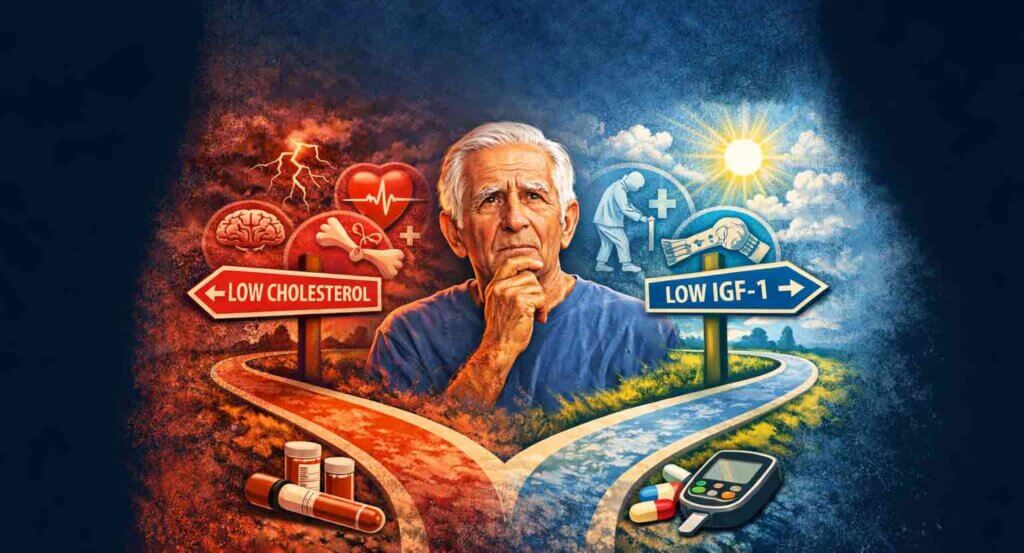
There’s a quiet frustration building in the world of preventive medicine — and it lives in the gap between what we measure and what we actually understand. You get your blood work back. Your cholesterol looks great. Your blood pressure is textbook perfect. Your fasting glucose sits in the ideal range. And yet, something isn’t adding up. Your doctor can’t quite put their finger on it, and neither can you. Welcome to the longevity paradox — the increasingly well-documented phenomenon where optimizing one biomarker can quietly degrade another, creating a biological tug-of-war that neither traditional medicine nor self-optimization culture has been fully equipped to handle. Until now.
What Is the Longevity Paradox?
The longevity paradox, in the context of biomarker optimization, refers to the counterintuitive trade-offs that emerge when you aggressively target a single health metric without accounting for the cascading effects across interconnected biological systems. Think of your body not as a checklist of independent values but as a dense web of feedback loops — hormonal, metabolic, inflammatory, and cardiovascular — all speaking to each other in real time.
When you pull one thread, others shift. Sometimes for the better. Often not.
This isn’t a niche concern reserved for elite biohackers or longevity researchers. It’s a real-world clinical challenge that affects anyone who takes their health seriously. And as wearables, continuous glucose monitors, and at-home blood testing become mainstream, more people than ever are actively managing biomarkers — often without understanding how deeply entangled those biomarkers really are.
Why Optimizing One Biomarker Can Worsen Another
The HDL–Triglyceride Tension
One of the most cited examples of biomarker conflict involves the classic cardiovascular duo: HDL cholesterol and triglycerides. Conventional wisdom says you want high HDL (the “good” cholesterol) and low triglycerides. And that’s broadly true. But aggressive dietary strategies that spike HDL — particularly very high-fat ketogenic protocols — can in some individuals simultaneously elevate LDL particle count or shift LDL particle size in ways that increase atherosclerotic risk, even as the headline numbers look favorable.
The triglyceride-to-HDL ratio may improve beautifully while something more granular and dangerous is shifting beneath the surface.
Testosterone and Hematocrit: A Hidden Risk
Men pursuing testosterone optimization — whether through lifestyle interventions or therapeutic replacement — often celebrate rising testosterone levels. But testosterone stimulates red blood cell production. When hematocrit (the proportion of red blood cells in blood) climbs too high, blood viscosity increases, raising the risk of clotting events, stroke, and cardiovascular complications.
Here you have a textbook longevity paradox: one biomarker (testosterone) trending toward an “optimal” range while another (hematocrit) quietly crosses into danger territory. Most people monitoring only testosterone would never catch this without a broader panel — or without a system smart enough to flag the relationship.
Cortisol, Sleep, and Blood Glucose: A Three-Way Conflict
Cortisol is another prime example. Many longevity-focused individuals are rightly concerned about chronically elevated cortisol, given its associations with accelerated aging, immune suppression, and metabolic dysfunction. So they double down on stress reduction, sleep extension, and adaptogens. Blood cortisol drops. Victory, right?
Not always. In some individuals, particularly those with certain HPA axis sensitivities, aggressively suppressing cortisol through extended sleep or heavy supplement protocols can worsen morning blood glucose regulation. Cortisol plays a role in gluconeogenesis — the liver’s ability to produce glucose overnight. Suppress it too hard, and you may find fasting glucose metrics paradoxically worsening even as stress biomarkers improve.
The Biological Systems Behind the Paradox
Why the Body Doesn’t Operate in Silos
Human physiology evolved under conditions of constant scarcity, threat, and environmental variability. Every regulatory system in the body was designed to balance competing demands in real time, not to optimize a single variable to its theoretical maximum. The immune system borrows from metabolic resources. The reproductive axis competes with the stress axis. Inflammatory pathways that accelerate aging in excess are the same pathways that repair tissue damage when you need them.
This systems-level complexity is precisely why optimizing for longevity is so different from optimizing for a single disease outcome. A cardiologist can legitimately focus on lowering LDL. A diabetologist can focus on HbA1c. But the longevity-oriented clinician — or the informed individual — has to hold dozens of variables simultaneously, accounting for how interventions ripple across organ systems, timescales, and genetic backgrounds.
The Role of Individual Variation
Here’s what makes this even harder: the same intervention produces different biomarker responses in different people. A Mediterranean diet lowers inflammatory markers and improves insulin sensitivity in most people. But in a subset of individuals with specific polymorphisms, the higher carbohydrate load may dysregulate blood glucose in ways that accelerate glycation — the very process that ages tissue.
High-intensity interval training reduces visceral fat and improves cardiovascular biomarkers for many. For others — particularly those with elevated baseline cortisol or compromised recovery capacity — it adds systemic stress faster than adaptation can occur, driving inflammatory markers upward even as fitness metrics improve.
This individual variation is not a bug. It’s a feature of biological complexity. But it means that population-level recommendations are structurally incapable of resolving the longevity paradox for any given individual.
How Does AI Solve the Longevity Paradox?
AI Can Model Biomarker Interactions Simultaneously
This is where artificial intelligence shifts from buzzword to genuine clinical tool. The core problem with the longevity paradox is one of multi-variable complexity — the same computational challenge that overwhelms human clinicians when managing twenty or thirty interdependent biomarkers across time.
AI systems — particularly those trained on longitudinal health data — can do something that neither the individual nor their physician can do unaided: model the likely downstream effects of optimizing any given biomarker, flagging where improvement in one area is likely to create pressure in another. Instead of looking at your lipid panel, metabolic panel, hormones, and inflammatory markers as separate reports, an AI system can treat them as a single, dynamic network.
When your testosterone rises, the AI doesn’t just note the improvement — it cross-references hematocrit trends, sleep architecture data, inflammatory markers, and cardiovascular risk scores simultaneously, surfacing interactions that would otherwise only become apparent in retrospect.
Personalized Intervention Ranking
Beyond detection, advanced AI longevity platforms can rank interventions by their net effect across your full biomarker profile — not just their effect on the single metric you’re trying to move. This is a fundamental shift in how optimization works.
Rather than asking “what raises my NAD+ levels?”, the more useful question becomes: “given my full biomarker landscape, what intervention produces the best net effect across cardiovascular health, metabolic function, inflammatory tone, and hormonal balance simultaneously?” That’s not a question any supplement company or even most clinicians are equipped to answer. It is, however, exactly the kind of question large-scale biological AI models are being built to address.
Continuous Recalibration Over Time
One of the most powerful aspects of AI-driven longevity management is temporal intelligence — the ability to track how your biomarker relationships shift over time and recalibrate recommendations accordingly. The longevity paradox isn’t static. A protocol that resolved a cortisol-glucose conflict for you at 38 may need adjustment at 44 when hormonal context has shifted.
Static annual bloodwork reviewed by a physician who sees you for fifteen minutes cannot capture this dynamism. AI systems fed continuous or frequent data can — identifying drift in biomarker relationships before they become clinical problems, and updating recommendations proactively rather than reactively.
Real-World Examples of AI Catching Longevity Paradoxes
The Athlete With “Optimal” Labs
Consider a 45-year-old endurance athlete whose standard bloodwork returns essentially perfect across the board — low triglycerides, high HDL, ideal fasting glucose, low LDL. By conventional metrics, this individual is thriving. But an AI system analyzing the same data alongside training load, heart rate variability trends, and subtle longitudinal shifts in ferritin, testosterone, and thyroid markers might identify a pattern consistent with overtraining syndrome — a state where performance and standard metabolic biomarkers look good precisely because the body is compensating through mechanisms that are quietly depleting reserves.
This is a biomarker paradox in action: surface-level optimization masking a deeper dysfunction that will eventually manifest — unless caught early.
Fasting, Autophagy, and Muscle Mass Loss
The longevity community has embraced intermittent and extended fasting with enormous enthusiasm, driven by compelling data on autophagy, insulin sensitivity, and metabolic flexibility. These benefits are real. But fasting, particularly extended fasting without adequate protein timing, can accelerate lean muscle mass loss — and muscle mass is itself one of the strongest predictors of all-cause mortality in aging populations.
Here the paradox is sharp: a protocol designed to extend healthspan by improving metabolic biomarkers may simultaneously degrade a structural biomarker (muscle mass, measured via DEXA or creatinine trends) that predicts longevity at least as strongly. An AI system tracking both fasting frequency and lean mass trends over time can catch this drift — and recommend protocol adjustments — before sarcopenia becomes established.
What AI Cannot Do (And Why Human Judgment Still Matters)
The Limits of Correlation-Based Models
It would be intellectually dishonest to present AI as a complete solution to the longevity paradox without acknowledging its real constraints. Current AI health systems — however sophisticated — are largely pattern recognition engines trained on correlational data. They can identify that biomarker X tends to negatively correlate with biomarker Y under condition Z in populations resembling yours. But they cannot yet fully model causality at the mechanistic level for every individual.
This means AI recommendations require human interpretation — ideally from a clinician who understands both the output and its limitations. The goal is not to replace clinical judgment but to extend it, giving physicians and patients alike a richer map of the terrain they’re navigating.
Data Quality Determines Output Quality
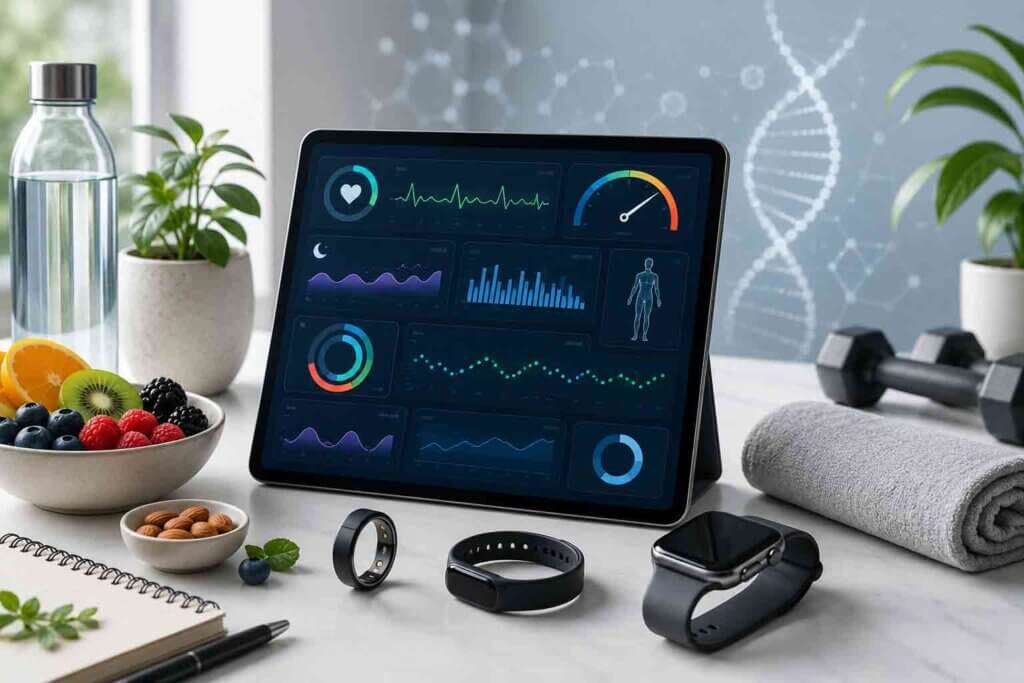
AI longevity tools are only as good as the data they receive. Infrequent, low-resolution biomarker testing — the kind most people currently have access to — limits what any AI system can do. The fuller the data stream (frequent biomarkers, continuous glucose monitoring, wearable physiological data, sleep architecture, body composition), the more accurately the AI can model your specific biomarker network and identify emerging paradoxes.
This is why the trajectory of AI-driven longevity optimization runs directly through the democratization of high-resolution health data — and why the convergence of affordable testing, wearable technology, and AI interpretation may represent the most meaningful shift in preventive medicine in a generation.
The Future of Longevity Optimization: Systems Thinking Powered by AI
We are moving — slowly but unmistakably — from an era of single-biomarker medicine to an era of systems-level health management. The longevity paradox is not a flaw in the ambition to optimize health; it is a reflection of the genuine complexity of the systems we are trying to optimize. The answer is not to stop measuring, stop optimizing, or abandon the project of extending healthspan. The answer is to get smarter about how we interpret the data we collect.
AI doesn’t eliminate the longevity paradox. But it does give us, for the first time, a tool sophisticated enough to hold the full complexity of human biology in view simultaneously — flagging trade-offs before they become crises, personalizing recommendations in ways that population data never could, and recalibrating continuously as the biological landscape shifts with age, stress, and intervention.
The future of longevity isn’t about finding the single perfect biomarker to chase. It’s about understanding the whole system well enough to move intelligently through the trade-offs — and that is precisely what AI, at its best, is learning to do.
Conclusion
The longevity paradox is one of the most underappreciated challenges in modern health optimization. As more individuals gain access to sophisticated biomarker testing and pursue evidence-based longevity strategies, the risk of improving one metric while inadvertently degrading another becomes not just theoretical but practically inevitable — unless the right analytical framework is in place. AI represents the most promising path through this complexity, not because it replaces clinical wisdom, but because it finally gives that wisdom a tool capable of matching the scale and intricacy of human biology. Optimizing for longevity means optimizing for the whole system — and the whole system, at last, may finally be something we can begin to see clearly.
Frequently Asked Questions
Q1: Why do the same health interventions produce different results in different people?
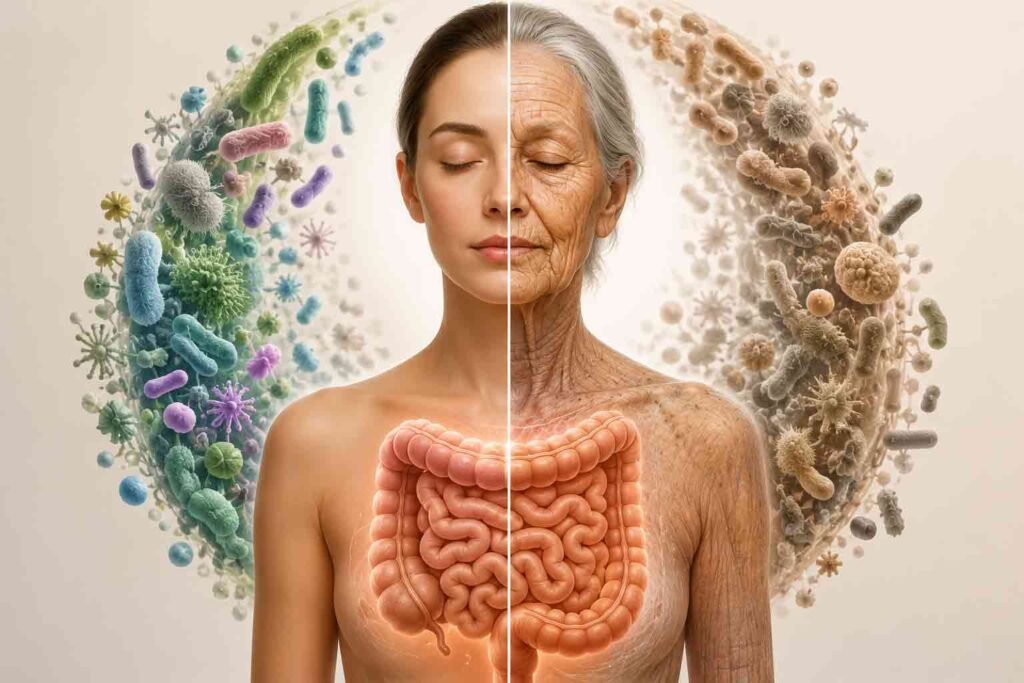
Individual biological variation plays a massive role in how your body responds to any given intervention. Genetic polymorphisms, gut microbiome composition, hormonal baselines, stress history, and even sleep patterns all influence how a diet, supplement, or exercise protocol affects your biomarkers. This is why population-level health recommendations — while useful as a starting point — are structurally incapable of resolving the longevity paradox for any specific individual. What lowers inflammation in one person may raise blood glucose in another doing the exact same protocol.
Q2: What is the connection between cortisol and blood glucose in the longevity paradox?
Cortisol plays a direct role in gluconeogenesis — the process by which the liver produces glucose overnight. When people aggressively suppress cortisol through extended sleep protocols, heavy adaptogen use, or stress reduction strategies, they may inadvertently impair overnight glucose regulation. The result is a paradox where stress biomarkers improve on paper while fasting blood glucose worsens — a trade-off that most standard health tracking approaches would completely miss without a systems-level view of both markers together.
Q3: How does hematocrit become a hidden danger during testosterone optimization?
Testosterone naturally stimulates red blood cell production in the body. When testosterone levels rise — whether through lifestyle interventions or therapeutic protocols — hematocrit levels can climb alongside them. Elevated hematocrit thickens the blood, increasing viscosity and raising the risk of clotting events, stroke, and serious cardiovascular complications. Someone monitoring only their testosterone levels would see improvement while missing the danger building in a related biomarker — making this one of the most clinically significant examples of the longevity paradox in real-world practice.
Q4: How frequently should biomarkers be tested to get the most from AI longevity tools?
The more frequent and high-resolution your data, the more accurately an AI system can model your unique biomarker network and catch emerging paradoxes early. Annual bloodwork gives only a narrow snapshot. Ideally, combining quarterly or bi-annual blood panels with continuous data sources — such as continuous glucose monitors, wearable heart rate variability tracking, sleep architecture data, and periodic body composition scans — gives AI longevity platforms the richest possible data stream to work with. The quality and consistency of your input data directly determines the accuracy and usefulness of AI-generated insights.
Q5: What is the single biggest mistake people make when trying to optimize for longevity?
The biggest mistake is treating biomarkers as independent targets rather than as parts of an interconnected system. Most people — and even many clinicians — approach health optimization by identifying a number that looks suboptimal and then aggressively intervening to move it in the desired direction. This single-variable thinking ignores the cascading effects that ripple through related systems. True longevity optimization requires holding multiple variables in view simultaneously, understanding how they influence each other, and making interventions that produce the best net outcome across the whole biological network — not just the best outcome for one isolated metric.