If you have ever assumed that VO₂ max is a metric reserved for elite cyclists, marathon runners, or Olympic swimmers, you are not alone. For decades, this number lived quietly inside sports science labs and triathlon training plans, far removed from the daily lives of everyday people. But that perception is changing fast, and Blēo is right at the center of that shift. The truth is, VO₂ max may be one of the most important health numbers you have never paid attention to, especially once you hit your 30s.
What Is VO₂ Max, Exactly?
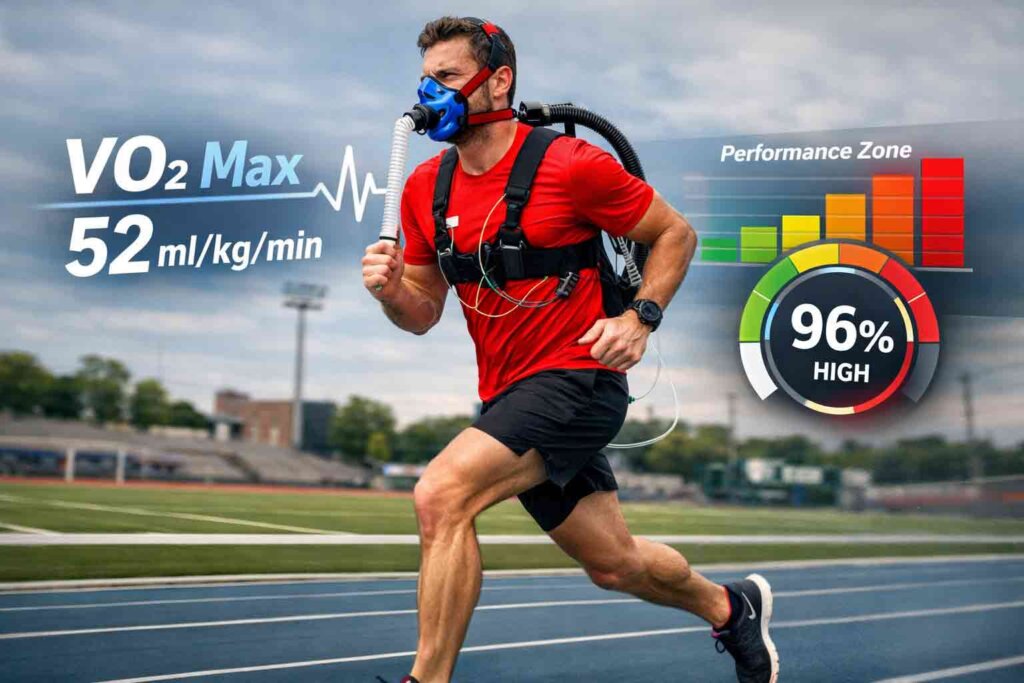
VO₂ max refers to the maximum amount of oxygen your body can consume and use during intense physical activity. The “V” stands for volume, “O₂” stands for oxygen, and “max” stands for maximum. It is measured in milliliters of oxygen per kilogram of body weight per minute (mL/kg/min). In simple terms, it tells you how efficiently your heart, lungs, and muscles work together when you push yourself physically.
Why Oxygen Efficiency Matters More Than You Think
Here is the thing most people do not realize: oxygen is the fuel your cells run on. Every organ, every tissue, and every biological process in your body depends on a steady, efficient supply of oxygen. When your VO₂ max is high, your body is essentially a well-tuned engine. When it is low, your body struggles to keep up, not just during exercise, but during everyday activities like climbing stairs, carrying groceries, or keeping up with your kids.
What Does VO₂ Max Have to Do With Aging?
This is where things get genuinely important for anyone over 30. Research consistently shows that VO₂ max begins declining at approximately 1% per year after the age of 25, and that decline accelerates significantly after 45. By the time most people reach their 60s, their cardiorespiratory fitness can be 30 to 40% lower than it was in their 20s, unless they actively work to preserve it.
The Silent Decline Nobody Talks About
The problem with this decline is that it is invisible in your daily life until it is not. You do not feel it happening year by year. But one day you notice that walking up a hill leaves you more winded than it used to. Or that a weekend of activity leaves you exhausted in a way it never did before. That is VO₂ max decline in action. And by the time you notice it, years of gradual deterioration have already taken place.
Blēo’s approach is grounded in the belief that catching and addressing this decline early, before symptoms become obvious, is one of the smartest investments you can make in your long-term health.
Why Blēo Believes VO₂ Max Belongs to Everyone
Blēo was built on a simple but powerful idea: the biomarkers that predict health outcomes should not be locked away in elite sports or expensive clinical settings. VO₂ max is one of the strongest predictors of all-cause mortality available today. A landmark study published in JAMA Network Open found that low cardiorespiratory fitness was associated with a higher risk of death than smoking, diabetes, and high blood pressure. That is not a small claim. That is a paradigm-shifting finding.
From the Lab to Your Lifestyle
Blēo translates complex physiological data into actionable, personalized insights that any person over 30 can understand and act on. You do not need to be training for an Ironman to benefit from knowing your VO₂ max. In fact, the people who benefit most from this knowledge are often the ones who have never thought of themselves as athletes at all.
VO₂ Max as a Longevity Marker
The conversation around longevity has exploded in recent years. People are reading books, listening to podcasts, and experimenting with everything from cold plunges to peptide protocols in pursuit of a longer, healthier life. Yet one of the most evidence-backed longevity markers sits quietly in the world of fitness physiology, underused and underappreciated by the general public.
What the Research Actually Says
Studies have shown that individuals in the highest quintile of cardiorespiratory fitness have mortality rates that are significantly lower than those in the lowest quintile, with some research suggesting the difference is as dramatic as a five-fold reduction in risk. Peter Attia, one of the most well-known longevity physicians in the world, has spoken extensively about VO₂ max as perhaps the single most important metric to track for long-term health. He is not alone in that view. The science is consistent and compelling.
Blēo takes this research seriously and builds it into its core philosophy. The platform is designed to help people understand where they stand, what their current VO₂ max means for their health trajectory, and what they can do to move the needle.
How Low VO₂ Max Affects Daily Life After 30
You might be thinking, “I feel fine. I am not an athlete. Why do I need to worry about this?” That is a completely understandable reaction. But consider what a declining VO₂ max actually feels like in real life over time.
The Everyday Consequences You Might Be Ignoring
When your cardiorespiratory fitness drops, your body becomes less efficient at managing energy. You may notice increased fatigue during activities that did not used to tire you out. Recovery from physical exertion takes longer. Mental clarity can suffer because the brain, which consumes about 20% of the body’s oxygen supply, becomes less efficiently fueled. Sleep quality can deteriorate. Metabolic health begins to shift in unfavorable directions.
None of these things happen because of one bad year of fitness. They happen because of gradual, cumulative decline that most people never track or address until it becomes a clinical problem. Blēo is designed to interrupt that pattern.
Can You Actually Improve VO₂ Max Without Being an Athlete?
Absolutely, and this is one of the most encouraging parts of the science. VO₂ max is highly trainable, even in people who have been sedentary for years. The body responds to cardiovascular stimulus at any age. While the ceiling may be different at 50 than it was at 25, the improvements that are possible are genuinely meaningful for health outcomes.
What Effective Training Looks Like for Regular People
You do not need to run 60 miles a week to improve your VO₂ max. Research supports the use of Zone 2 cardio (a moderate, conversational pace sustained over time) as a highly effective method for building aerobic base and improving mitochondrial function. High intensity interval training, done correctly and in appropriate doses, has also been shown to produce meaningful VO₂ max gains relatively quickly.
Blēo helps users understand which type of training is most appropriate for their current fitness level, age, health status, and goals. The platform removes the guesswork and replaces it with a structured, individualized approach that does not require you to become an athlete.
The Role of Wearables and Technology in Tracking VO₂ Max
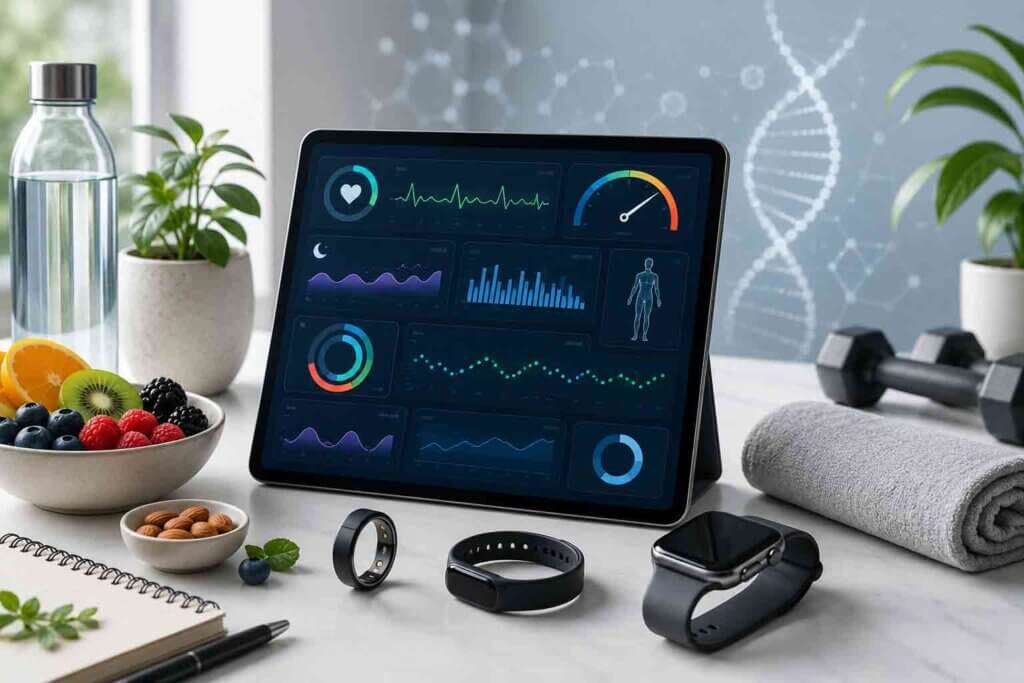
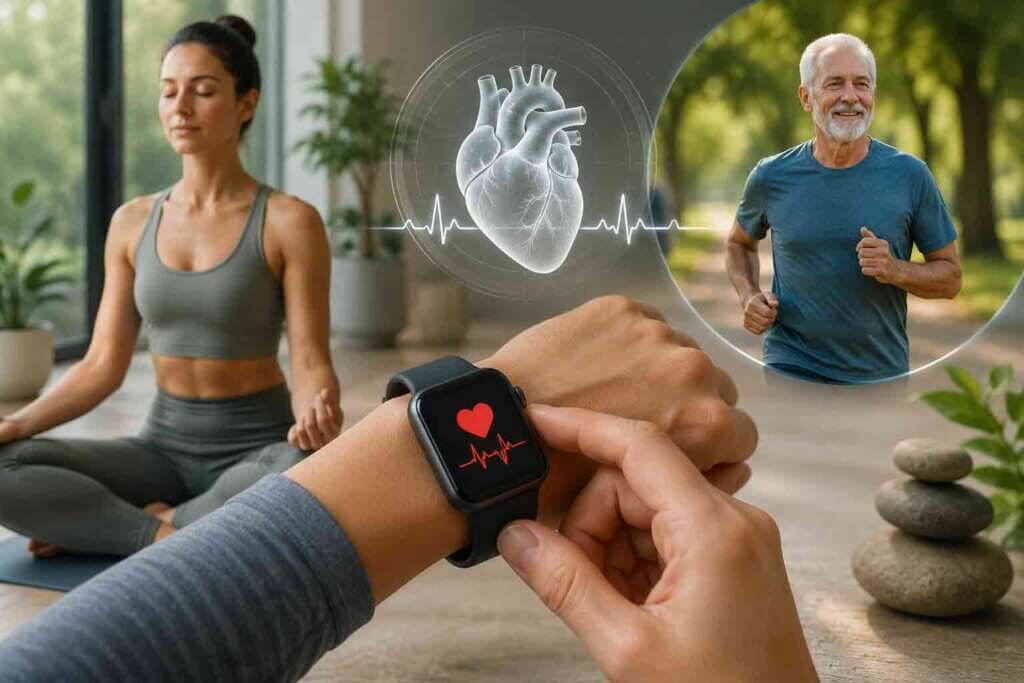
Modern consumer wearables have made VO₂ max estimation more accessible than ever. Devices from Garmin, Apple, WHOOP, and Polar now provide estimated VO₂ max readings based on heart rate data and activity patterns. These estimates are not clinically precise in the way a maximal treadmill test would be, but they are increasingly accurate and tremendously useful for trend tracking over time.
How Blēo Uses Technology Intelligently
Blēo integrates with the data generated by these devices and contextualizes it in a way that generic fitness apps simply do not. Instead of just showing you a number, Blēo explains what that number means for someone your age, your sex, and your current health profile. It tells you where you fall relative to population norms. It helps you understand whether your trajectory is moving in the right direction. And it gives you clear, concrete steps to improve.
VO₂ Max and Metabolic Health: The Connection Most People Miss
There is a deeply important relationship between VO₂ max and metabolic health that does not get nearly enough attention. Higher cardiorespiratory fitness is associated with better insulin sensitivity, healthier lipid profiles, lower levels of systemic inflammation, and more favorable body composition. These are not coincidental correlations. They reflect real, bidirectional biological relationships.
Why This Matters If You Are Over 30
After 30, metabolic health becomes increasingly central to the quality and length of your life. The conditions that develop in midlife, like type 2 diabetes, cardiovascular disease, and metabolic syndrome, are deeply intertwined with poor aerobic fitness. Addressing VO₂ max is not just about being able to run faster. It is about protecting your metabolic machinery so that it keeps functioning well as you age.
Blēo’s Philosophy: Health Metrics for the Everyday Person
At its heart, Blēo is a democratization project. It is about taking the tools and knowledge that have historically been available only to elite performers or wealthy individuals with access to cutting-edge clinics and making them genuinely useful for ordinary people living ordinary lives.
Why This Approach Is Different
Most health apps give you data. Blēo gives you understanding. There is a profound difference between knowing that your VO₂ max is 38 mL/kg/min and knowing what that actually means for your risk of cardiovascular disease over the next 20 years, and what you can realistically do about it starting this week. Blēo bridges that gap with clarity, empathy, and evidence-based guidance that respects the intelligence of its users without requiring them to have a background in exercise physiology.
What Happens When You Start Taking VO₂ Max Seriously
The improvements that come from intentionally working on your cardiorespiratory fitness are not just physical. People who improve their VO₂ max consistently report better mood, sharper mental clarity, improved sleep, more energy throughout the day, and a greater sense of physical confidence. These are not small quality-of-life upgrades. For many people, they are life-changing.
The Compounding Effect of Starting Early
One of the most powerful arguments for caring about VO₂ max in your 30s rather than your 50s is compounding. Every year that you maintain or improve your aerobic fitness is a year in which your baseline stays higher. The earlier you start, the more years you have to build from a stronger foundation. The longer you wait, the steeper the climb back becomes. Blēo wants to be the platform that helps you start before you feel like you have to.
Conclusion
VO₂ max is no longer just a number for elite athletes. It is a window into your long-term health, a predictor of how well your body will serve you into your 60s, 70s, and beyond, and one of the most actionable metrics available to anyone willing to pay attention to it. Blēo has made it its mission to bring this science out of the lab and into the lives of real people over 30, people who are not training for races but who do care deeply about how they feel, how long they live, and how well they age. The message is simple: your VO₂ max matters, you can improve it, and you do not have to be an athlete to start.
Frequently Asked Questions
Q1: What is a good VO₂ max for someone over 30 who doesn’t exercise regularly?
For non-athletes over 30, a VO₂ max between 35 and 45 mL/kg/min is considered average to above average depending on age and sex. The goal is not to hit an elite number but to stay out of the lowest fitness category, which carries the highest health risks.
Q2: How quickly can you improve your VO₂ max?
Most people begin seeing measurable improvements within 4 to 8 weeks of consistent cardio training. Significant gains typically appear within 3 to 6 months, even with moderate exercise like brisk walking or cycling a few times per week.
Q3: Can a smartwatch accurately measure VO₂ max?
Consumer wearables provide estimated VO₂ max readings that are not clinically exact but are reliable enough for trend tracking. They are most useful for monitoring whether your fitness is improving or declining over time, rather than as a precise diagnostic tool.
Q4: Does VO₂ max decline even if you stay active?
Yes, some natural decline occurs with age regardless of activity level, but staying active dramatically slows the rate of that decline. Active individuals in their 60s often have VO₂ max scores comparable to sedentary people in their 40s.
Q5: Is Blēo suitable for people with no fitness background?
Absolutely. Blēo is specifically designed for everyday people, not athletes. It translates complex health data into simple, personalized guidance that anyone can understand and act on, regardless of their fitness experience.