Aging has long been treated as something that simply happens to you. You wake up one day with more wrinkles, slower recovery, a foggy mind, and you chalk it up to time. But a growing wave of longevity science is pushing back hard on that passive narrative, and Blēo is one of the most compelling platforms making that science accessible. The central claim Blēo makes is both bold and backed by research: most of the factors that drive how fast you age are things you can actually control. Autophagy is one of them. So are your sleep zones, your glucose variability, your inflammatory load, and roughly 24 other biological levers that, when dialed in, can meaningfully slow the aging process at a cellular level.
This article breaks down what those levers are, why autophagy sits near the top of the list, how Zone training fits into the picture, and what Blēo’s framework actually means for someone who wants to age better rather than just live longer.
What Is Blēo and Why Does It Matter for Longevity?
Blēo is a longevity platform built around the concept of biological age, which is different from your chronological age. While your chronological age counts the years since you were born, your biological age reflects how well your cells, tissues, and systems are actually functioning. Two people who are both 45 years old can have biological ages that differ by a decade or more depending on their lifestyle choices, stress load, sleep quality, and metabolic health.
What makes Blēo stand out is its attempt to quantify and track the specific inputs that determine biological age. Rather than giving you vague advice to eat well and exercise, Blēo breaks aging down into discrete, measurable levers. Each lever represents a biological process or lifestyle factor that has a documented relationship with cellular aging. The platform then helps you understand where you stand on each one and what adjustments can shift your trajectory.
The list Blēo works with includes 26 core aging factors, and autophagy is consistently highlighted as one of the most powerful and most misunderstood.
Autophagy Explained: Your Body’s Built-In Anti-Aging System
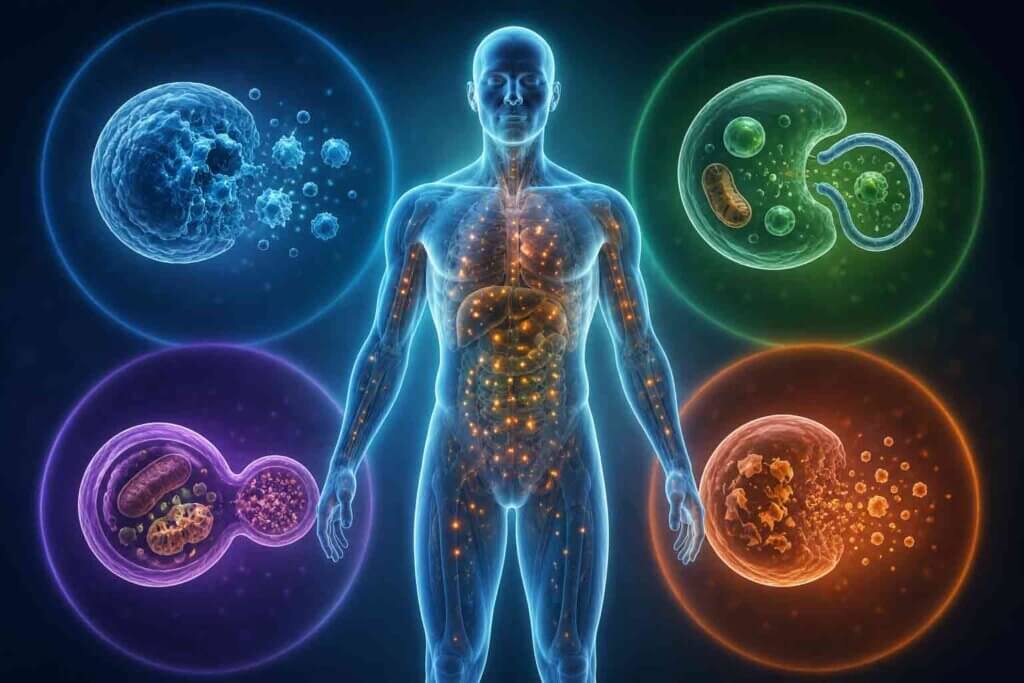
Autophagy comes from the Greek words meaning “self-eating,” which sounds alarming but is actually one of the most restorative processes your body can run. When autophagy is activated, your cells begin identifying and breaking down damaged proteins, dysfunctional organelles, and cellular debris that have accumulated over time. Think of it as your body’s internal quality control system going into overdrive, clearing out the molecular clutter that accumulates with age and would otherwise accelerate decline.
The science here is serious. Yoshinori Ohsumi won the Nobel Prize in Physiology or Medicine in 2016 specifically for his work on autophagy mechanisms. Research since then has linked robust autophagic activity to reduced risk of neurodegenerative disease, better immune function, improved metabolic health, and longer lifespan in multiple animal models. In humans, the connection to longevity is increasingly well supported, even if the field is still developing its full picture.
How Autophagy Slows Aging at the Cellular Level
At the cellular level, aging is largely a story of accumulation. Damaged proteins misfold and clump together. Mitochondria lose efficiency and start leaking reactive oxygen species. Senescent cells, sometimes called zombie cells, stop functioning properly but refuse to die and instead pump out inflammatory signals that damage neighboring tissue. Autophagy is one of the primary mechanisms the body uses to clear all of this out.
When autophagic activity is high, cells refresh more efficiently, mitochondrial quality stays higher, and the inflammatory environment inside your tissues remains calmer. When autophagy is suppressed, which happens naturally as you age and is accelerated by chronic overnutrition, poor sleep, and sedentary behavior, that accumulation speeds up dramatically.
What Triggers Autophagy?
Autophagy is primarily triggered by nutrient scarcity and cellular stress. When your body senses a drop in energy availability, autophagy activates as a survival mechanism. This is why fasting and caloric restriction are the most well-documented autophagy triggers in the research literature. Time-restricted eating, particularly windows of 16 to 18 hours without food, is frequently cited as an accessible way for most people to stimulate autophagic activity regularly.
Beyond fasting, certain types of exercise, particularly high-intensity and endurance training, are known to upregulate autophagy. Cold exposure is another studied trigger, as is heat stress through sauna use. Some compounds like spermidine, found naturally in wheat germ and aged cheese, have also been shown to activate autophagy pathways. Blēo tracks several of these inputs and helps users understand how their daily patterns are affecting autophagic activity over time.
Zone Training and Its Role in the Aging Process
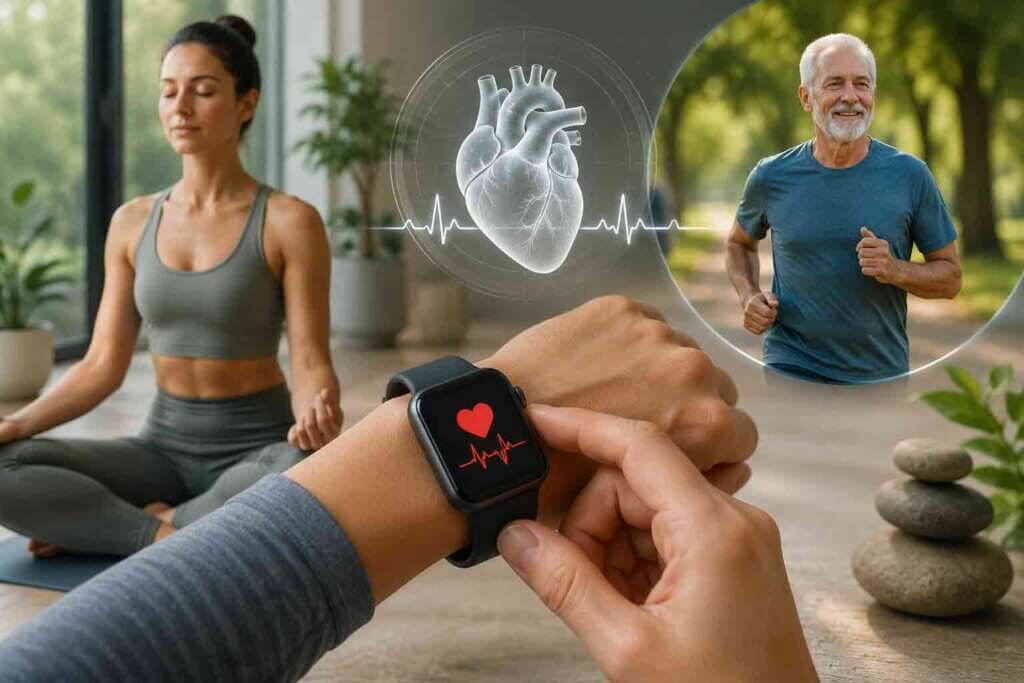
Zone training refers to structured exercise performed at specific intensity levels, typically defined by heart rate as a percentage of maximum. The zone framework, most commonly divided into five zones from very light effort to near-maximal exertion, is used by athletes and increasingly by longevity-focused individuals to optimize the physiological benefits of exercise.
Why Zone 2 Is the Longevity Workhorse
Zone 2 training, which sits at a conversational pace where you can speak in full sentences but feel a clear aerobic effort, has emerged as the most significant training zone for biological aging according to current research. At this intensity, your body is primarily burning fat for fuel, mitochondria are being stressed in a productive way, and adaptations accumulate that directly improve the metabolic machinery inside your muscle cells.
Peter Attia, one of the most prominent voices in longevity medicine, has written and spoken extensively about Zone 2 as a cornerstone of any serious longevity training protocol. The adaptations it drives include increased mitochondrial density, improved mitochondrial efficiency, better lactate clearance, and enhanced insulin sensitivity. Each of these outcomes maps directly onto aging factors that Blēo tracks.
Zone 5 and the Role of High-Intensity Work
While Zone 2 does much of the heavy lifting for metabolic health, Zone 5 training, performed at maximum or near-maximum effort for short intervals, drives a different and complementary set of adaptations. VO2 max, which is your body’s maximum capacity to use oxygen during intense exercise, is one of the strongest predictors of longevity in the research literature. Zone 5 intervals are the primary tool for raising VO2 max.
A well-structured training week for someone focused on biological age typically includes several hours of Zone 2 work combined with one or two shorter Zone 5 sessions. Blēo incorporates VO2 max as a trackable aging lever and connects exercise zone patterns to overall biological age trajectory.
The Other 24 Levers: A Broader Picture of Controllable Aging Factors
Autophagy and exercise zones are two of the most discussed factors in the Blēo framework, but the platform works with a full list of 26 levers. Understanding the breadth of that list matters because aging is not a single-variable problem.
Sleep Architecture and Biological Age
Sleep is not just rest. It is an active biological process during which your brain clears metabolic waste through the glymphatic system, your cells repair, hormones are secreted in critical patterns, and memory consolidation occurs. Blēo treats sleep not as a single metric but as a multidimensional factor that includes total duration, sleep efficiency, time in deep sleep, time in REM sleep, and consistency of sleep timing.
Disrupted sleep architecture is associated with accelerated biological aging through multiple pathways including elevated cortisol, impaired glucose metabolism, increased systemic inflammation, and reduced growth hormone secretion. Improving sleep quality, not just quantity, is one of the most powerful and underutilized aging levers available.
Glucose Variability and Metabolic Age
Chronic elevated blood glucose and, perhaps more importantly, high glucose variability are strongly linked to accelerated aging. Glucose variability refers to the swings in blood sugar that occur throughout the day in response to meals, stress, and activity. Even in people who are not diabetic, high variability is associated with increased oxidative stress, glycation of proteins, endothelial dysfunction, and elevated inflammatory markers.
Continuous glucose monitoring, which Blēo supports integration with, allows users to see their glucose responses in real time and make dietary adjustments accordingly. Keeping postprandial glucose spikes controlled and minimizing prolonged elevated glucose states is an aging lever with substantial evidence behind it.
Inflammation as a Driver of Accelerated Aging
Chronic low-grade inflammation, sometimes called “inflammaging” in the research literature, is now considered a central driver of nearly every age-related disease including cardiovascular disease, neurodegeneration, cancer, and metabolic dysfunction. Unlike acute inflammation, which is a healthy and necessary response to injury or infection, inflammaging is a persistent smoldering state that damages tissue slowly over years.
Blēo tracks inflammatory markers where available and connects lifestyle inputs to inflammatory load. Diet quality, sleep, exercise, stress management, gut microbiome health, and environmental exposures all feed into the inflammatory picture.
Stress, Cortisol, and Cellular Aging
Psychological stress drives biological aging through well-understood mechanisms. Cortisol, the primary stress hormone, when chronically elevated suppresses immune function, disrupts glucose metabolism, reduces growth hormone secretion, and promotes visceral fat accumulation. Critically, chronic stress is also associated with accelerated telomere shortening, which is one of the direct molecular markers of cellular aging.
Blēo includes stress load as a trackable factor and encourages practices like breathwork, mindfulness, and recovery prioritization as tools for managing the hormonal environment that determines how quickly your cells age.
Muscle Mass, Strength, and Longevity
Sarcopenia, the age-related loss of muscle mass and function, is a major driver of functional decline and mortality risk in older adults. Muscle tissue is metabolically active in ways that go well beyond its role in movement. It serves as a major glucose sink, improving insulin sensitivity. It produces myokines, which are hormone-like compounds that support brain health, bone density, immune function, and more.
Maintaining and building muscle through resistance training is an aging lever with some of the strongest evidence in the longevity literature. Blēo tracks muscle-related inputs and frames strength training not as optional but as fundamental to any serious biological age management strategy.
Gut Microbiome and Systemic Health
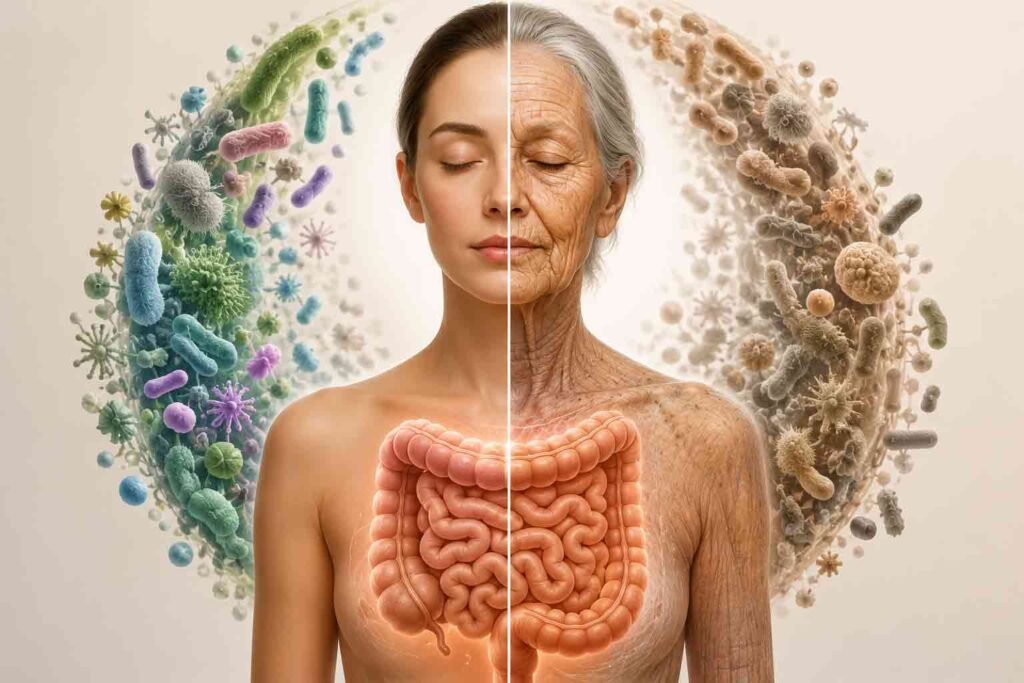
The gut microbiome has emerged as a key player in biological aging. The diversity and composition of the microbial communities living in your digestive tract influence immune regulation, neurotransmitter production, inflammatory status, metabolic efficiency, and even cognitive function. Older adults with less diverse microbiomes tend to show faster biological aging across multiple markers.
Diet is the primary lever for microbiome health. Fiber intake, fermented food consumption, polyphenol-rich foods, and avoidance of chronic antibiotic overuse all shape the microbiome in ways that feed directly into the broader aging picture Blēo tracks.
How Blēo Integrates These Levers into a Practical System
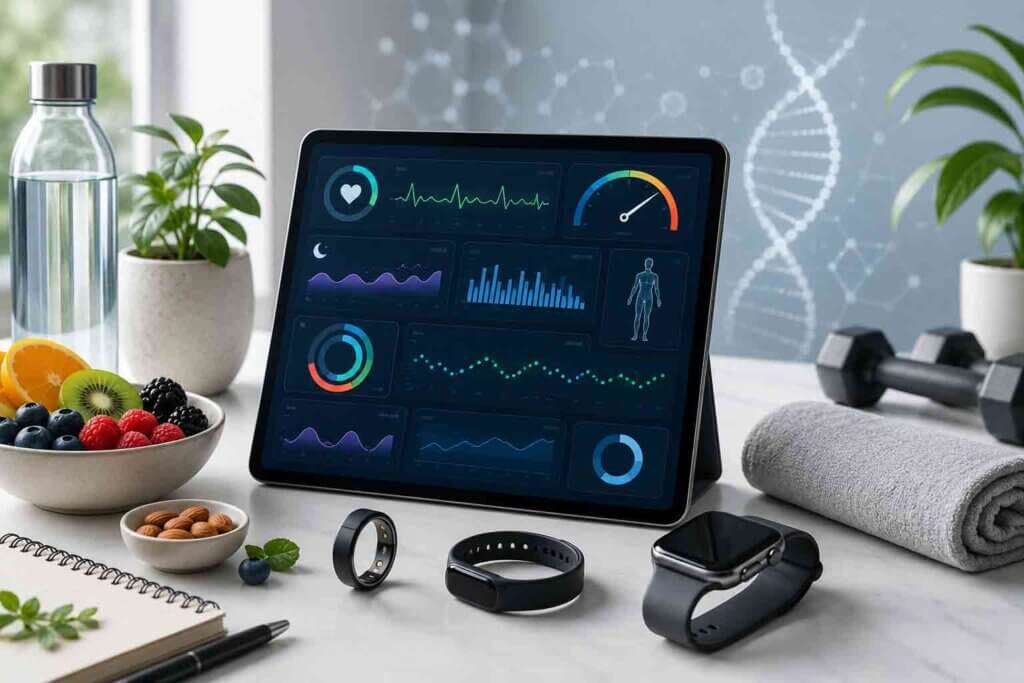
The challenge with having 26 aging levers is that most people do not know where to start, and trying to optimize everything simultaneously is a recipe for overwhelm and burnout. Blēo‘s approach is to give users visibility into their current status across all levers, identify the areas of highest leverage for their individual biology and lifestyle, and create a prioritized roadmap that makes progress feel achievable.
The platform uses biomarker integration where available, lifestyle tracking, and algorithmic modeling to compute a dynamic biological age score that updates as your inputs change. This feedback loop is motivating in a way that generic health advice rarely is, because you can see the impact of your choices reflected in a number that means something.
The Generative Science Behind the 26 Levers
What distinguishes Blēo’s framework from wellness marketing is that each lever is grounded in published research. Autophagy mechanisms are documented in peer-reviewed journals. The relationship between VO2 max and all-cause mortality is one of the most replicated findings in exercise science. The connection between sleep architecture and biological aging is supported by studies using multiple aging clocks. Glucose variability and its relationship to vascular aging is documented in both diabetic and non-diabetic populations.
This evidence base matters because it means the framework is not static. As new research emerges, the model can be updated. As biomarker technology improves and becomes more accessible, the accuracy of biological age computation increases. The 26 levers Blēo tracks today represent the current frontier of what science can measure and what lifestyle can move.
Can You Really Control How Fast You Age?
The honest answer is yes, substantially, though not completely. Genetics plays a role, and some aspects of aging remain outside individual control. But the research on identical twins, which controls for genetics perfectly, consistently shows that lifestyle factors account for the majority of variance in biological age and age-related disease risk. Studies of centenarian populations around the world reinforce the same conclusion: the people who reach extreme old age in good health tend to share lifestyle patterns that map almost exactly onto the levers Blēo tracks.
Autophagy, sleep quality, Zone 2 fitness, glucose control, inflammation management, muscle maintenance, and gut health are not just wellness buzzwords. They are the operating conditions under which your cells either age gracefully or accumulate damage at an accelerating rate.
Conclusion
Blēo’s framework represents a meaningful shift in how we can think about aging. By identifying 26 specific, measurable, and actionable levers, including autophagy, zone-based exercise, glucose variability, inflammation, sleep quality, and more, the platform translates complex longevity science into a system that individuals can actually use. Autophagy stands out as one of the most powerful levers available because it operates at the deepest level of cellular maintenance, clearing the molecular debris that would otherwise drive the diseases and functional decline we associate with getting old. Pair that with consistent Zone 2 and Zone 5 training, quality sleep, controlled glucose, managed inflammation, and strong muscle mass, and you have a lifestyle architecture that the science strongly supports as a path to a longer healthspan. Aging is real, but accelerated biological aging is, to a meaningful degree, a choice, and Blēo exists to make the better choice easier to see and easier to act on.
Frequently Asked Questions
What is autophagy and why does it matter for aging?
Autophagy is your body’s cellular cleaning process where damaged proteins and dysfunctional components are broken down and recycled. It matters for aging because when this process runs efficiently, cells stay healthier longer, inflammation stays lower, and the molecular damage that drives age-related disease accumulates far more slowly.
How do I trigger autophagy naturally?
The most effective and accessible triggers are intermittent fasting or time-restricted eating, Zone 2 and high-intensity exercise, sauna heat exposure, and cold therapy. Dietary compounds like spermidine, found in aged cheese and wheat germ, have also shown autophagy-activating effects in research.
What is Zone 2 training and how often should I do it?
Zone 2 is a moderate aerobic intensity where you can hold a conversation but feel a clear effort, typically around 60 to 70 percent of your maximum heart rate. For longevity benefits, most research and practitioners recommend three to five hours of Zone 2 training per week alongside one or two shorter high-intensity sessions.
What does Blēo actually track?
Blēo tracks 26 aging levers including autophagy activity, sleep architecture, glucose variability, inflammation markers, VO2 max, muscle mass, stress load, and gut microbiome health. It combines these inputs to calculate a dynamic biological age score that updates as your lifestyle changes.
Can lifestyle changes really reverse biological age?
Research consistently shows that targeted lifestyle changes, particularly around sleep, exercise, nutrition, and stress, can measurably lower biological age scores. Twin studies confirm that lifestyle accounts for the majority of biological age variance, meaning genetics alone does not determine how fast you age.