Key Takeaways
- Heart disease is the #1 killer of women in the United States, responsible for 304,970 female deaths in 2023 alone — roughly 1 in every 5 female deaths (CDC, 2023).
- A 2025 study found that among patients with missed angina diagnoses, 63% were women and only 37% were men (Mostafa et al., 2025, AMWA).
- Women’s heart attack symptoms are frequently atypical: nausea, jaw pain, fatigue, and upper back pain — not just chest pressure.
- Low heart rate variability (HRV) in postmenopausal women is independently associated with a 17–22% elevated risk of heart failure (Women’s Health Initiative study, PMC 2022).
- Continuous biometric tracking — through devices like the blēo ring and band — allows women to monitor HRV, resting heart rate, and sleep quality daily, creating a baseline that a single annual checkup never could.
Heart disease has been the leading cause of death for women in the United States for more than 40 years. That sentence should land with the gravity it deserves — but it often doesn’t, because the conversation around heart health has been dominated by male physiology for decades.
The result is a quiet, compounding crisis. Women experiencing cardiac events are more likely to be misdiagnosed, sent home too early, and told their symptoms are stress, anxiety, or indigestion. According to the World Heart Federation, women’s heart symptoms are “more frequently misdiagnosed, or their symptoms dismissed as anxiety-related,” partly because women continue to be underrepresented in cardiovascular clinical trials.
This isn’t about blame. It’s about a knowledge gap that persists at the clinical level — and one that every woman can begin to close by tracking the right signals in her own body, every single day.
Why Women’s Heart Disease Gets Missed
The “Classic” Heart Attack Isn’t Classic for Women
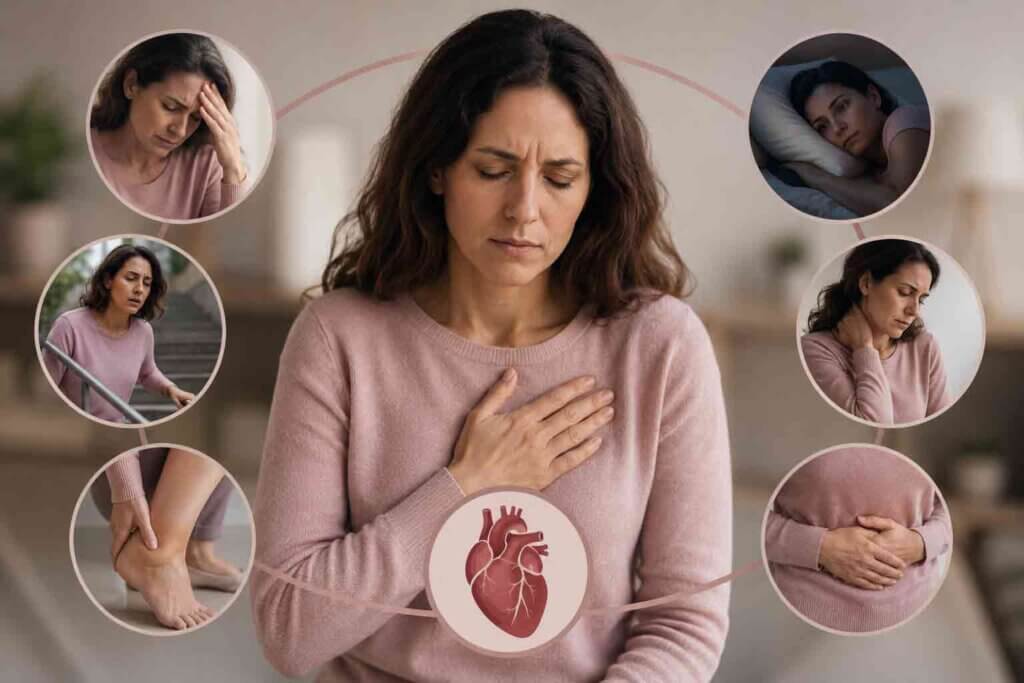
The cardiac playbook most people know — crushing chest pain radiating down the left arm — was built on research conducted primarily on men. While chest pain is the most commonly reported symptom in both sexes, women are significantly more likely to present with symptoms that don’t fit that script.
According to the Mayo Clinic, women are more likely than men to experience:
- Neck, jaw, shoulder, upper back, or upper stomach pain
- Shortness of breath
- Nausea or vomiting
- Lightheadedness or dizziness
- Unusual or extreme fatigue
- Heartburn or indigestion-like discomfort
Women are also more likely to have a heart attack while resting or asleep, and emotional stress is a more potent cardiac trigger in women than in men. These patterns make it dangerously easy to explain away early warning signs.
A 2025 study published through the American Medical Women’s Association confirmed the scale of this problem: of patients with a missed angina diagnosis, 63% were women. Women presenting with myocardial infarction (heart attack) are more likely to face delayed diagnosis, receive less aggressive treatment, and experience worse outcomes than their male counterparts.
Women Are Underrepresented in the Research That Shapes Diagnosis
The American Physiological Society noted in its March 2025 issue that for decades, “cardiovascular research overwhelmingly focused on men, and treatment guidelines — from blood pressure medication to diagnostic criteria — were simply extrapolated to women.” The risk assessment tools most commonly used in emergency departments — including HEART and TIMI scores — require an EKG and troponin levels. Research shows women are less likely to receive either of these initial tests when they present with acute chest pain.
This is the clinical gap. But there is also a physiological one.
The Biological Differences That Change the Risk Picture
Women are relatively protected from cardiovascular disease before menopause, largely due to estrogen’s cardioprotective effects. Around midlife, that changes sharply. Research cited by the American Physiological Society shows that at younger ages, men have a four- to five-fold higher risk of heart disease compared to women — but around perimenopause, “we see this dramatic increase in women.”
The numbers on the horizon are stark. According to an American Heart Association scientific statement released in early 2026, 6 in 10 U.S. women are projected to have at least one type of cardiovascular disease by 2050. The AHA identifies diabetes as “a particularly potent risk factor for women,” putting them at greater cardiovascular risk than diabetes does for men — including higher rates of heart failure, stroke, and coronary heart disease.
Women also face a higher lifetime incidence of a specific type of heart failure — heart failure with preserved ejection fraction (HFpEF) — which is related to stiffness of the heart rather than blockages. It is harder to diagnose and, historically, less researched.
Over 60 million women — 44% of the U.S. female population — are currently living with some form of heart disease. And only 56% of U.S. women recognize that heart disease is their number one cause of death.
The Biomarkers Women Should Be Tracking — and Why
The good news in all of this: many of the earliest warning signals from the cardiovascular system are continuous and trackable. They don’t require a hospital visit. They require attention.
Heart Rate Variability (HRV)
HRV — the variation in time between consecutive heartbeats — is one of the most sensitive non-invasive markers of cardiovascular health available. It reflects how well the autonomic nervous system is regulating the heart, with higher variability generally indicating a more adaptable, resilient cardiovascular system.
For women specifically, HRV carries distinct clinical significance across the lifespan.
Research published in the Women’s Health Initiative study cohort (PMC, 2022), which followed 28,603 postmenopausal women, found that low HRV was independently associated with a statistically significant 17–22% elevated risk of heart failure. Importantly, the association was strongest for HFpEF — the type of heart failure that disproportionately affects women.
A separate meta-analysis published in EP Europace found that low HRV is associated with a 32–45% increased risk of a first cardiovascular event in populations without known cardiovascular disease.
Women’s HRV changes with hormonal status. Research published in PMC (2022) found that menopausal status and the high-estradiol phase in premenopausal women are both associated with reduced HRV — which the researchers identified as “a marker of cardiovascular risk.” This means HRV is not a static number. It shifts across the menstrual cycle, across perimenopause, and across the aging process. Tracking it over time gives a richer, more actionable picture than any single reading.
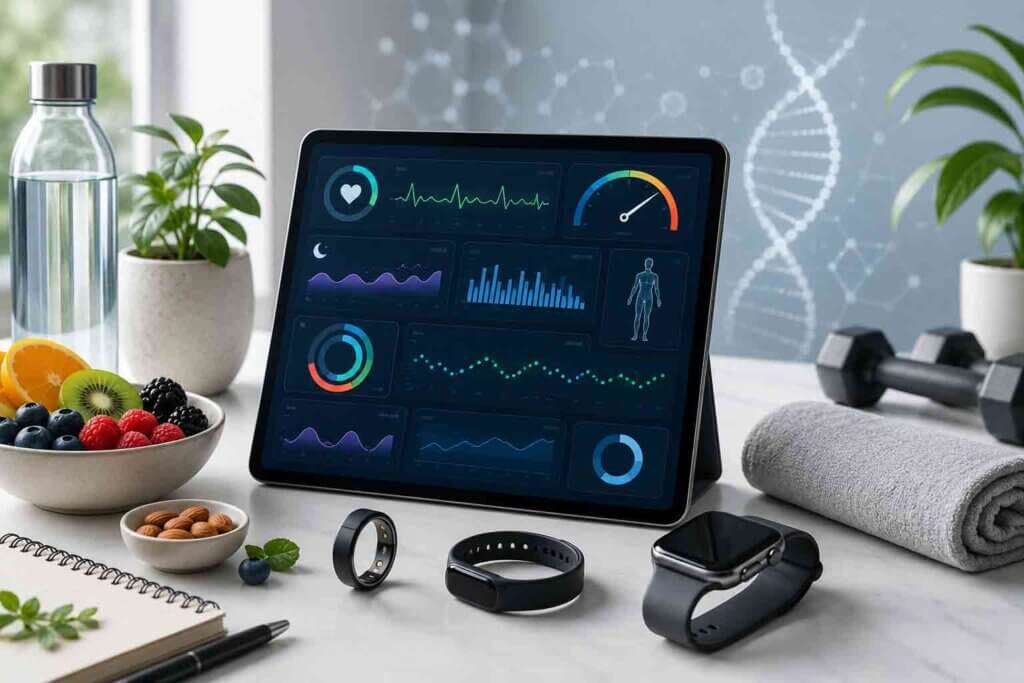
The blēo ring and band both track HRV continuously. The Longevity AI processes these readings daily against your personal baseline and population-level reference data, flagging meaningful deviations before they surface as symptoms. This is precisely the type of early signal that clinical research says is most valuable — and most often missed in a once-a-year checkup.
Resting Heart Rate
Resting heart rate (rHR) is a straightforward but powerful indicator of cardiovascular efficiency. A lower resting heart rate generally reflects a stronger, more efficient heart. Tracking trends over weeks and months — not just single-day readings — reveals whether your cardiovascular system is improving, stable, or under silent stress.
Women who are experiencing early-stage cardiovascular decline, chronic psychological stress (a documented independent risk factor for ischemic heart disease in women, per a 2025 study in Clinical Physiology), or the hormonal transitions of perimenopause may see their resting heart rate gradually creeping upward before any other symptom appears.
A wearable that captures rHR every night during sleep — when the body is at genuine rest — provides the most accurate baseline. blēo’s medical-grade sensors are designed to capture exactly this kind of precision during sleep, when your heart tells its clearest story.
Sleep Quality and Architecture
Sleep is not a passive state for the heart. During deep sleep, heart rate and blood pressure drop, giving the cardiovascular system the recovery time it needs. Poor sleep — fragmented sleep, inadequate deep sleep, or untreated sleep apnea — is a significant and underappreciated cardiac risk factor.
The U.S. Office on Women’s Health explicitly lists sleep apnea as a risk factor that “often goes undiagnosed and can lead to sudden cardiac death.” Women are less likely than men to be diagnosed with sleep apnea, in part because their symptoms differ from the classic presentation. They are more likely to report fatigue, insomnia, mood disturbances, and morning headaches — symptoms that are, again, easy to attribute to stress.
Tracking sleep cycles with clinical precision — monitoring how much time you spend in light sleep, deep sleep, and REM — gives you a concrete picture of cardiovascular recovery quality. blēo maps sleep architecture nightly, and the Longevity AI uses those data to contextualize your HRV and resting heart rate trends, building a composite picture of cardiovascular resilience over time.
Stress Biomarkers
Chronic psychological stress is not just uncomfortable. It is a modifiable cardiovascular risk factor — particularly for women.
A 2025 peer-reviewed study published in Clinical Physiology (Cairns, Marais, Joseph, Essop, Stellenbosch University) identified psychological stress as “a critical risk factor for cardiovascular disease, especially in women.” The mechanism involves sustained activation of the sympathetic nervous system, elevated cortisol, and the resulting increases in heart rate and blood pressure that, over time, damage blood vessels and accelerate cardiac risk.
Stress doesn’t always feel like stress. It can present as fatigue, restlessness, poor sleep, or that vague sense of being wired and tired at the same time. These are also, notably, symptoms that often get dismissed as general anxiety — especially in women presenting to healthcare settings.
Tracking HRV is one of the most reliable proxies for stress load. A sustained drop in HRV over multiple days, without an obvious explanation like illness or intense exercise, is frequently a signal that the nervous system is under chronic load. blēo’s Longevity AI monitors this pattern and delivers coaching that addresses both the physiological and behavioral contributors: sleep, recovery, nutrition, and guided mindfulness tools designed specifically to reduce stress biomarkers.
The Dismissal Problem Is a Data Problem
When a woman walks into an emergency department or a doctor’s office with fatigue, shortness of breath, jaw pain, and a vague sense that something is wrong, she is often working without data. Her provider is too.
The conversation defaults to the most common explanations: anxiety, perimenopause, stress, a busy life. Without objective, longitudinal data — HRV trends, sleep quality, resting heart rate patterns — there is no anchor to redirect that conversation.
This is where continuous biometric tracking changes the clinical picture, even before it changes the treatment. If a woman can walk into an appointment and say, “My HRV has declined 23% over the past six weeks, my resting heart rate is trending upward, and my deep sleep is down from 1.5 hours to 45 minutes per night” — that is a different conversation. That conversation is harder to dismiss.
blēo’s Longevity AI is designed to do exactly this: process thousands of data points per day from your blēo ring or band, identify deviations from your personal pattern, and give you early visibility into the biomarker shifts that precede diagnosable conditions — sometimes by months or years.
For women navigating a healthcare system that has historically underserved their cardiovascular needs, this kind of longitudinal self-knowledge is not a luxury. It is a practical tool for advocating for appropriate care.
What Women with a Family History Should Know
Cardiovascular risk is partially inherited. If your mother, grandmother, or sisters had early-onset heart disease (before age 65 for women), your personal risk is meaningfully elevated.
Crucially, genetic predisposition doesn’t operate in isolation. The factors that drive cardiovascular disease — blood pressure, cholesterol, blood sugar, inflammation, sleep quality, chronic stress, and physical fitness — are all modifiable. They are also all trackable.
The AHA’s 2026 forecasting report on women’s cardiovascular health found that a 10% reduction in key risk factors (high blood pressure, high cholesterol, diabetes, obesity) could reduce cardiovascular disease events and deaths by 17–23%. A more aggressive intervention — halving obesity rates and doubling risk factor control — could reduce events by 30–40%.
You cannot intervene on what you cannot see. The value of daily biometric tracking for women with elevated family risk is not reassurance — it is early signal. The earlier a trend is visible, the more options exist to change its direction.
How blēo Supports Women’s Cardiovascular Health
blēo was built around a core premise: biological aging is not a passive, inevitable process. It is dynamic, measurable, and modifiable. That premise has direct implications for women’s heart health.
The blēo ring and band use medical-grade sensors — the same level of precision found in leading clinical settings — to capture continuous data across HRV, resting heart rate, sleep architecture, and stress biomarkers. The Longevity AI processes that data daily, updating your biological age score and flagging meaningful deviations from your personal baseline.
What this means in practice for women tracking cardiovascular health:
Daily HRV monitoring provides a continuous window into autonomic nervous system function — the same signal that research consistently identifies as an early marker of cardiovascular risk, particularly after menopause.
Sleep architecture tracking identifies patterns of disrupted deep sleep and elevated nighttime heart rate — signals that may precede a formal sleep apnea diagnosis and that reflect cardiovascular recovery quality.
Personalized coaching addresses the modifiable risk factors — stress, sleep, nutrition, activity, and recovery — that collectively determine whether cardiovascular risk factors increase or decrease over time.
Long-term trend visibility creates the longitudinal data record that makes it possible to notice a meaningful change months before symptoms develop — and to bring objective evidence to clinical conversations.
blēo is not a diagnostic device. It does not replace your cardiologist, your primary care physician, or your annual checkup. What it does is fill the gap between those checkups with the continuous, personalized data that makes early intervention possible.
Frequently Asked Questions
Can a smartwatch or wearable detect a heart attack?
No. Consumer wearables, including blēo, are not designed to diagnose heart attacks or any other cardiac event. If you experience sudden chest pain, shortness of breath, jaw or arm pain, nausea, or any sudden severe symptom, call emergency services immediately. Wearables track longitudinal trends and biomarkers to support cardiovascular wellness — they are not substitutes for emergency medical care.
Why do women’s heart attack symptoms differ from men’s?
The difference is rooted in anatomy, physiology, and research history. Women are more likely to have blockages in smaller coronary arteries (microvascular disease) rather than the large, main arteries — which produces a different symptom profile. Additionally, because clinical research focused predominantly on men for decades, the “classic” symptom profile was built from male data. Women’s atypical presentations — nausea, fatigue, jaw pain, back pain — are, in fact, entirely typical for women.
What is HRV and why does it matter for women’s heart health?
Heart rate variability (HRV) is the variation in time between consecutive heartbeats. Higher HRV generally signals a more adaptable cardiovascular system and better autonomic regulation. Research in postmenopausal women shows that low HRV is independently associated with significantly elevated heart failure risk, particularly for HFpEF — the type of heart failure that disproportionately affects women. HRV also changes across the menstrual cycle and with hormonal transitions, making it a particularly relevant marker for women to track over time.
At what age should women start paying attention to heart health?
The American Heart Association emphasizes that the risk factors driving cardiovascular disease — including high blood pressure, obesity, and insulin resistance — begin developing early in life. Women under 65 are not protected simply by age. The protective effect of estrogen diminishes around perimenopause, typically in the mid-40s to early 50s, and cardiovascular risk rises sharply. Tracking cardiovascular biomarkers continuously throughout adulthood — not just after menopause — gives the most complete picture.
What should I do if I think my symptoms are being dismissed?
Document everything. Track your symptoms in detail — when they occur, how they feel, what you were doing. Bring longitudinal biometric data (HRV trends, sleep data, resting heart rate) to your appointment if you have it. Ask specifically for an EKG and troponin test if you are presenting with chest discomfort or related symptoms. Seek a second opinion if you feel your concerns are not being taken seriously. You have the right to advocate for a thorough cardiac evaluation.
The Bottom Line
Heart disease kills more women than any other cause. It has for more than four decades. And yet the symptoms women experience, the way those symptoms are interpreted, and the urgency with which they are treated continue to lag behind what the data demands.
The gap between what medicine knows and what women receive cannot be closed by individuals alone. But the gap between what your body signals and what you know about your own health — that one is narrowing.
Continuous tracking of HRV, resting heart rate, sleep quality, and stress biomarkers gives women a daily window into cardiovascular health that no annual checkup can replicate. It creates a personal baseline. It generates the kind of longitudinal evidence that changes clinical conversations. And it builds the self-knowledge to act earlier — before a symptom becomes a crisis.
blēo and the Longevity AI were built for exactly this: catching the quiet signals of change before they become the loud ones.
Disclaimer: This article is for informational purposes only and does not constitute medical advice, diagnosis, or treatment. Always consult a qualified healthcare provider with questions about your cardiovascular health or any medical condition. If you are experiencing symptoms of a heart attack, call emergency services immediately.
References
- Centers for Disease Control and Prevention. (2023). About Women and Heart Disease. National Center for Chronic Disease Prevention and Health Promotion. https://www.cdc.gov/heart-disease/about/women-and-heart-disease.html
- Centers for Disease Control and Prevention. (2024). Heart Disease Facts. National Center for Chronic Disease Prevention and Health Promotion. https://www.cdc.gov/heart-disease/data-research/facts-stats/index.html
- Mostafa, A., et al. (2025). Let’s Talk About It: Heart Disease Has Been the Leading Cause of Death for Women for More Than 40 Years. American Medical Women’s Association. https://amwa-doc.org/lets-talk-about-it-heart-disease-has-been-the-leading-cause-of-death-for-women-for-more-than-40-years/
- World Heart Federation. (2024). Women & CVD. https://world-heart-federation.org/what-we-do/women-cvd/
- American Physiological Society. (March 2025). The Future of Women’s Heart Health. The Physiologist Magazine. https://www.physiology.org/publications/news/the-physiologist-magazine/2025/march/the-future-of-women-s-heart-health
- Mayo Clinic. (October 25, 2024). Heart Disease in Women: Understand Symptoms and Risk Factors. https://www.mayoclinic.org/diseases-conditions/heart-disease/in-depth/heart-disease/art-20046167
- American Heart Association. (February 25, 2026). A Troubling Forecast on Women’s Heart Health — and What Women and Girls Can Do Now to Protect Theirs. https://www.heart.org/en/news/2026/02/25/a-troubling-forecast-on-womens-heart-health-and-what-women-and-girls-can-do-now-to-protect-theirs
- American Heart Association. (2025). 6 in 10 U.S. Women Projected to Have at Least One Type of Cardiovascular Disease by 2050. AHA Newsroom. https://newsroom.heart.org/news/6-in-10-u-s-women-projected-to-have-at-least-one-type-of-cardiovascular-disease-by-2050
- Dawson, L. P., et al. (2023). Sex Differences in Epidemiology, Care, and Outcomes in Patients With Acute Chest Pain. Journal of the American College of Cardiology, 81(10), 933–945. https://doi.org/10.1016/j.jacc.2022.12.025
- Khan, H., et al. (2022). Heart Rate Variability and the Risk of Heart Failure and Its Subtypes in Post-Menopausal Women: The Women’s Health Initiative Study. PMC / NCBI. https://pmc.ncbi.nlm.nih.gov/articles/PMC9595519/
- Hartmann, R., et al. (2022). Heart Rate Variability as a Function of Menopausal Status, Menstrual Cycle Phase, and Estradiol Level. PMC / NCBI. https://www.ncbi.nlm.nih.gov/pmc/articles/PMC9127980/
- Hillebrand, S., et al. (2013). Heart Rate Variability and First Cardiovascular Event in Populations Without Known Cardiovascular Disease: Meta-Analysis and Dose–Response Meta-Regression. EP Europace, 15(5), 742–749. https://academic.oup.com/europace/article/15/5/742/673395
- Cairns, M., Marais, E., Joseph, D., & Essop, M. F. (2025). The Role of Chronic Stress in the Pathogenesis of Ischemic Heart Disease in Women. Clinical Physiology. DOI: 10.1002/cph4.70000. https://www.ncbi.nlm.nih.gov/pmc/articles/PMC11793136/
- U.S. Office on Women’s Health. (2025). Day 7 — May 18: Women and Heart Health. https://womenshealth.gov/nwhw/day-7-women-and-heart-health
- MedlinePlus / U.S. National Library of Medicine. Heart Disease in Women. https://medlineplus.gov/heartdiseaseinwomen.html
- Heart and Stroke Foundation of Canada. (2023). Looking After HER HEART: Let’s Talk About Women’s Heart Health. PMC / NCBI. https://www.ncbi.nlm.nih.gov/pmc/articles/PMC10935685/
- McKnight’s Long-Term Care News. (September 2025). Heart Disease Tops US Mortality in 2024, CDC Reports. https://www.mcknights.com/news/heart-disease-tops-us-mortality-in-2024-cdc-reports/