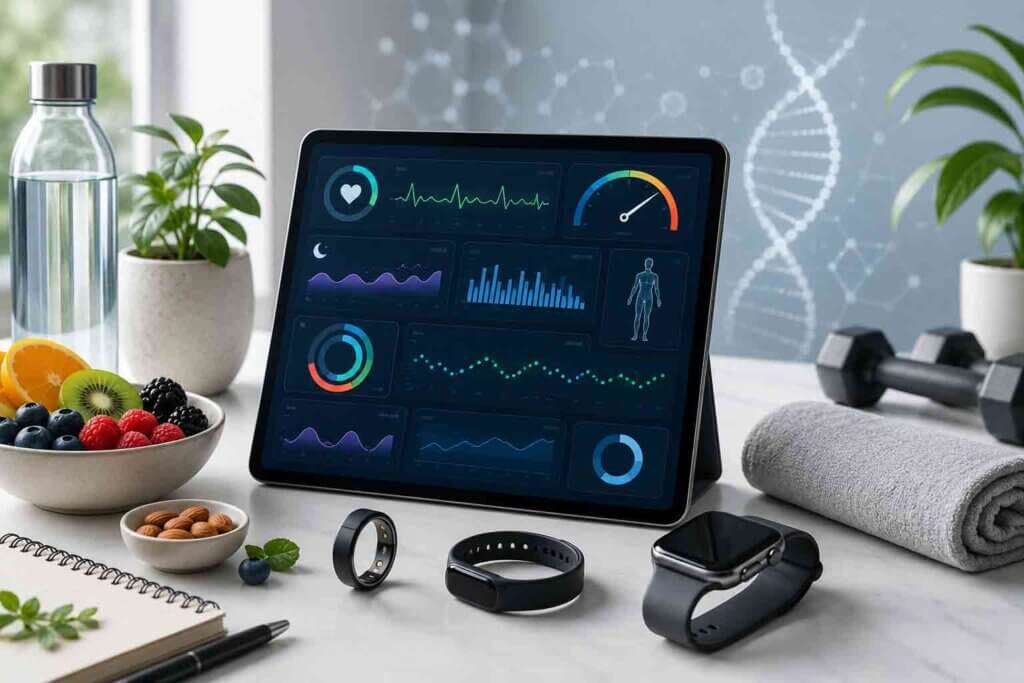

You wake up exhausted after eight hours of sleep. Your resting heart rate is elevated. You feel anxious for no clear reason. And your wearable shows a HRV number that looks nothing like it did six months ago.
For millions of women navigating perimenopause and menopause, this pattern is quietly becoming their new normal — and most have no framework for understanding what it means.
Heart rate variability (HRV) is one of the most clinically significant biomarkers you can track during the menopausal transition. But tracking a number without understanding what shapes it — and what it is genuinely telling you — is an exercise in frustration. This guide explains the biology behind HRV changes in menopause, how to read daily variability without panic, and how blēo’s longevity AI translates raw data into actionable guidance specific to where you are in this transition.
What HRV Actually Measures — and Why It Matters More During Menopause
Heart rate variability is the measure of the time variation between consecutive heartbeats. A higher HRV generally indicates that your autonomic nervous system (ANS) is flexible, adaptable, and well-regulated. A lower HRV suggests the system is under load — whether from physical stress, poor sleep, illness, or hormonal disruption.
The autonomic nervous system operates on two branches: the sympathetic nervous system (the “fight-or-flight” accelerator) and the parasympathetic nervous system (the “rest-and-repair” brake, governed largely by the vagus nerve). A healthy ANS switches dynamically between these two states. HRV captures how smoothly that switching happens.
During the menopausal transition, that switching becomes measurably less smooth — and the reason is biological.
Estrogen receptors are distributed throughout the cardiovascular system and brain. Estrogen, particularly estradiol, actively supports parasympathetic (vagal) activity and helps maintain cardiovascular autonomic balance. As estrogen and progesterone decline and fluctuate across perimenopause and into postmenopause, that supportive influence becomes erratic. The autonomic balance in many women tilts toward sympathetic dominance — a state of chronic, low-level activation that lowers HRV even when life circumstances have not changed.
Research published in Current Cardiology Reports (Arakelyan et al., 2023) links falling estrogen levels to altered sympathovagal balance, while a 2022 study in the Journal of Clinical Sleep Medicine documented measurable ANS changes across the perimenopause and menopause transition. These are not subtle shifts. They show up on your wearable.
The practical implication: a declining or erratic HRV trend during menopause is not a sign that something is wrong with you. It is a sign that your nervous system is adapting to a profound hormonal reorganization. Understanding that distinction is the first step toward reading your data clearly.
How Menopause Specifically Lowers HRV: The Biological Mechanisms
Four interconnected mechanisms explain why HRV tends to decrease during menopause — and why daily variability becomes harder to interpret without a personalized baseline.
1. The Loss of Estrogen’s Protective Influence
Estrogen has vasodilatory effects, modulates neurotransmitters, and has anti-inflammatory and antioxidant properties that protect cardiovascular and autonomic nerve function. As estrogen declines, systemic inflammation and oxidative stress can increase, which compromises autonomic nerve function and suppresses HRV. What is particularly disruptive is not just the absolute decline of estrogen, but the erratic fluctuations of perimenopause, which create unpredictable surges of sympathetic activity.
2. Hot Flashes and Night Sweats Are Autonomic Events
Hot flashes are not simply uncomfortable temperature surges. They represent autonomic dysregulation — episodes of rapid vasodilation triggered by the hypothalamus, which has lost some of its estrogen-guided thermoregulatory calibration. Each vasomotor event is accompanied by a spike in sympathetic activation and a measurable dip in HRV. Researchers have documented HRV changes during hot flashes themselves, linking vasomotor symptoms to real-time autonomic disruption. If you are experiencing multiple hot flashes per night, those are multiple HRV-depressing events occurring while your wearable is collecting your baseline data.
3. Sleep Architecture Disruption
Deep, restorative sleep is one of the most powerful drivers of HRV. Night sweats, temperature dysregulation, insomnia, and sleep fragmentation — all common during menopause — reduce the time your nervous system spends in its most restorative parasympathetic state. Disrupted sleep architecture directly compresses HRV scores, sometimes significantly, and the effect compounds over consecutive nights.
4. Cortisol and Stress Amplification
Declining estrogen and progesterone also alter cortisol regulation. Progesterone has a calming, GABAergic effect on the nervous system, and as it falls, the stress response system becomes more reactive and slower to recover. Elevated or dysregulated cortisol directly suppresses HRV. This is why many women in perimenopause describe feeling “wired but tired” — a nervous system that cannot shift out of alertness mode even when exhausted.
Reading Your HRV Trends: What “Normal” Looks Like During Menopause
One of the most common mistakes women make when tracking HRV during menopause is comparing their current scores to population averages — or to scores they had at 35.
This is the wrong frame entirely.
HRV is inherently personal. It declines with age for both men and women, and that decline accelerates in women during and after the menopausal transition. A 2023 meta-analysis of over 296,000 participants confirmed that age-adjusted normative ranges shift meaningfully by decade. A score of 28 ms RMSSD in a 52-year-old postmenopausal woman may represent excellent autonomic health for her cohort, even if it reads as concerning when compared against a 35-year-old’s benchmark.
What matters far more than absolute numbers is the trend within your own data — and how that trend responds to specific inputs.
The Three Trend Patterns to Recognize
1. The Gradual Downward Shift Over weeks or months, your baseline HRV drops and stabilizes at a new lower level. This is the most common pattern in perimenopause and reflects the underlying hormonal transition. It is not a crisis signal. It is your nervous system finding a new equilibrium. blēo’s Longevity AI tracks this kind of baseline shift and adjusts its coaching recommendations accordingly — rather than generating alerts that create unnecessary anxiety.
2. Acute Day-to-Day Drops A reading that is 10% or more below your rolling 30-day average on a given morning reliably indicates that your body was under significant load the previous day or overnight. In menopause, these acute drops are frequently triggered by: a cluster of night sweats disrupting sleep, high physical exertion without adequate recovery time, alcohol consumption (even modest amounts), acute stress, illness, or a significant hormonal fluctuation. These are actionable signals — meaning a lower-intensity day, additional hydration, and prioritized sleep will typically allow HRV to recover within 24 to 48 hours.
3. Persistent Suppression Without Recovery When HRV remains significantly below your personal baseline for five or more consecutive days without a clear acute cause, that warrants closer attention. This pattern can signal chronic stress load, prolonged sleep disruption, systemic inflammation, or — in some cases — the transition into a new hormonal phase that requires lifestyle recalibration. blēo flags this pattern and generates specific coaching prompts around recovery, stress management, and sleep optimization.
How blēo Interprets HRV Data During the Menopause Transition
Most wearables record your HRV and present the number with a color-coded indicator — green for good, red for low. That approach is largely inadequate for women in menopause, where the standard interpretation framework does not account for hormonal context.
blēo is built differently. As a longevity-focused wearable system, it monitors a comprehensive set of biomarkers — HRV, resting heart rate, sleep stages, blood oxygen saturation, skin temperature, activity, and menstrual cycle tracking — and feeds this data into the Longevity AI, which builds a personalized model of your biological rhythms over time.
Several features are particularly relevant for menopause:
Personalized Baselines, Not Population Averages blēo’s AI learns your individual HRV baseline and recalibrates as that baseline shifts. A drop is interpreted in the context of your normal, not a population norm. This removes a major source of misinterpretation for women whose HRV is evolving through the menopausal transition.
Multi-Signal Context Because blēo tracks skin temperature alongside HRV, the system can identify patterns where a nighttime temperature spike correlates with a morning HRV drop — connecting the dots between an overnight vasomotor event (a night sweat, even one you slept through) and the next day’s lower readiness score. This is meaningful clinical context that a single-metric readout cannot provide.
Trend-Based Coaching Rather than reacting to individual data points, blēo’s coaching is trend-based. Personalized, guided programs target HRV improvement over time through the levers most supported by research: sleep optimization, stress regulation, movement patterns, and nutrition — all calibrated to your current biological age signals, not generic targets.
Proactive Alerts blēo monitors for meaningful changes in your longevity signals and alerts you when a pattern warrants attention, before issues become entrenched. For menopausal women, this means catching extended suppression patterns early and offering targeted interventions.
Daily Habits That Protect HRV During Menopause
Understanding your HRV trends has limited value unless paired with clear, evidence-based actions. Research on menopause and autonomic health consistently supports the following interventions.
Consistent Sleep and Wake Times
Your circadian rhythm is a primary regulator of HRV. Going to bed and waking at consistent times — even on weekends — supports the hormonal signaling that underpins parasympathetic recovery overnight. For menopausal women managing sleep disruption, this consistency is foundational: it minimizes the variability that makes trend interpretation harder and creates a stronger platform for natural HRV recovery.
Zone 2 Cardiovascular Training
Low-to-moderate intensity aerobic exercise (the kind where you can hold a conversation) is one of the most robustly supported interventions for improving HRV in midlife women. A 2024 narrative review reported that women who maintain consistent aerobic training preserve significantly higher HRV than sedentary age-matched peers. This training type directly stimulates vagal tone — the parasympathetic pathway that drives HRV — without adding the recovery debt that high-intensity training can create on top of an already-taxed nervous system.
Controlled Breathing Practices
Slow, paced breathing at approximately five to six breath cycles per minute directly stimulates the vagus nerve and produces measurable, near-immediate HRV increases. Five to ten minutes of this practice before sleep is particularly effective for women whose sympathetic activation peaks in the evening. blēo integrates guided mindfulness and breathing tools specifically designed to lower stress biomarkers and support nervous system regulation.
Alcohol Reduction
Alcohol significantly depresses overnight HRV, even in moderate amounts. For women already dealing with estrogen-mediated autonomic dysregulation, alcohol adds a compounding suppressive effect. If you notice persistent low HRV without a clear cause, examining alcohol intake is one of the highest-yield adjustments you can make.
Temperature Management
Supporting your body’s thermoregulatory environment can reduce vasomotor event frequency and severity overnight — directly protecting your HRV baseline. Strategies include keeping the bedroom cool (around 65–68°F / 18–20°C), using moisture-wicking bedding, and timing intensive exercise earlier in the day to allow core temperature to normalize before sleep.
What blēo Flags as HRV Red Flags During Menopause
While most HRV trends in menopause are explicable and manageable, some patterns warrant discussion with a healthcare provider. blēo’s proactive alerting system is designed to surface these.
Sustained SDNN below 70 ms. A 2025 synthesis of 67 studies involving over 38,000 participants found that resting SDNN below 70 ms was associated with a 1.5 to 2.3-fold higher risk of major adverse cardiovascular events. Women in menopause already face an elevated cardiovascular risk baseline as estrogen’s cardioprotective effects diminish. Persistently low SDNN warrants cardiovascular screening.
HRV drop accompanied by irregular heart rhythm notifications. Estrogen fluctuations can trigger palpitations that are usually benign — but any HRV suppression paired with irregular rhythm detection should be evaluated clinically.
Multi-week baseline decline without lifestyle explanation. If blēo’s trend analysis shows a consistent downward shift that does not correlate with recoverable inputs (sleep, stress, illness, activity load), that pattern may reflect a significant hormonal phase transition or an underlying health change that merits a conversation with your physician.
A Practical Framework: Reading Your blēo HRV Data Each Morning
Here is a simple decision framework for interpreting your daily HRV reading within blēo:
Reading within 10% of your 30-day rolling average → Proceed as planned. Your nervous system is managing its current load. Follow blēo’s daily coaching guidance and support your baseline through consistent habits.
Reading 10–20% below your rolling average → Modify. Shift to lower-intensity movement, prioritize hydration, add a breathing practice, and review the previous night’s data. blēo’s temperature and sleep data will often tell you what happened.
Reading more than 20% below your rolling average → Recover. This is a meaningful signal. Prioritize rest and minimal exertion. Look for a clear cause in the previous day’s data. If this depth of suppression recurs across three or more consecutive mornings, engage blēo’s AI coaching and consider discussing the pattern with your healthcare provider.
Trend declining over 7+ days → Investigate. Bring your blēo trend data to your next clinical appointment. Longitudinal wearable data showing patterns over weeks is considerably more useful to a clinician than a single blood test or a retrospective symptom description.
The Bigger Picture: HRV as a Menopause Health Compass
The menopausal transition is one of the most significant hormonal reorganizations of a woman’s life, and it is also one of the least well-monitored. Most management remains reactive: women experience symptoms severe enough to prompt a doctor’s visit, receive a snapshot blood test, and leave with limited longitudinal insight.
HRV tracking changes that equation. It offers a continuous, passive window into how the autonomic nervous system is navigating the transition — day by day, week by week, across the full arc of perimenopause and beyond.
When tracked through a platform like blēo — one that builds a personalized biological model over time and contextualizes data across multiple biomarkers — HRV becomes something more than a number. It becomes a compass. Not a source of anxiety, but a source of information: one that tells you when your nervous system needs support, when an intervention is working, and when it is time to involve clinical care.
Over 1 billion women are expected to be navigating menopause by 2030. The tools to do so with data, clarity, and confidence are available now. Understanding how to read them is where the real empowerment begins.
Key Takeaways
- HRV declines during menopause due to falling estrogen, sympathetic nervous system upregulation, sleep disruption, and vasomotor events — each of which is biologically explicable, not a sign of personal failure.
- Interpret your HRV against your own rolling baseline, not population averages or your pre-menopausal scores.
- Acute day-to-day dips are most often traceable to night sweats, alcohol, stress, or poor sleep — and are recoverable within 24–48 hours.
- Persistent multi-day or multi-week suppression warrants clinical attention, particularly if it coincides with other cardiovascular signals.
- blēo’s multi-signal approach — combining HRV, skin temperature, sleep staging, and cycle tracking — provides the contextual depth needed to make menopause HRV data genuinely actionable.
- Zone 2 exercise, consistent sleep timing, controlled breathing, and alcohol reduction are the four highest-yield interventions for supporting HRV through the menopausal transition.
Sources
- Arakelyan, S., Munkhbat, G., Zink, A. N., & Johnson, B. D. (2023). Heart rate variability, estrogen, and sympathovagal balance. Current Cardiology Reports, 25(11), 329–339.
- Zink, A. N., Bair, T. L., & Bair, B. D. (2022). Autonomic nervous system changes in perimenopause and menopause. Journal of Clinical Sleep Medicine, 18(7), 1845–1855.
- Addleman et al. (2025). HRV and cardiovascular risk: Synthesis of 67 studies. Applied Psychophysiology and Biofeedback.
- Ramesh, S., et al. (2022). Heart rate variability as a function of menopausal status, menstrual cycle phase, and estradiol level. Physiological Reports, 10(10).
- Springer Nature/Sports Medicine (2026). Wearable-derived HRV across reproductive life stages: A living systematic review.
- Damoun (2024). HRV preservation in lifelong endurance athletes: A narrative review.
- blēo / Longr (2024–2026). Longevity wearable product and AI coaching platform. bleo.ai.
Read more: How to Choose the Best Wearable for Your Health Goals | Top Health Wearables 2026
This article is for informational purposes only and does not constitute medical advice. Consult your healthcare provider before making changes to your health management plan, particularly during the menopausal transition.