Have you ever met someone who is 60 but looks and feels like they are 40? Or maybe someone in their 30s who seems worn out, tired, and older than their years? That is not just luck or genetics. That is the difference between biological age and chronological age playing out in real life. And understanding this difference might be one of the most important things you ever do for your health.
What Is Chronological Age?
Chronological age is the simplest concept. It is the number of years you have been alive since the day you were born. If you were born in 1985, your chronological age in 2025 is 40. No more, no less. It is a fixed number that ticks forward with every passing year, completely regardless of how you live, what you eat, how much you sleep, or how often you exercise.
Chronological age has been the standard measure used in medicine, insurance, and society for centuries. It determines when you can vote, drive, retire, or qualify for Medicare. It is the number on your birthday cake. But here is the thing. Chronological age tells us almost nothing about how your body is actually functioning inside.
What Is Biological Age?
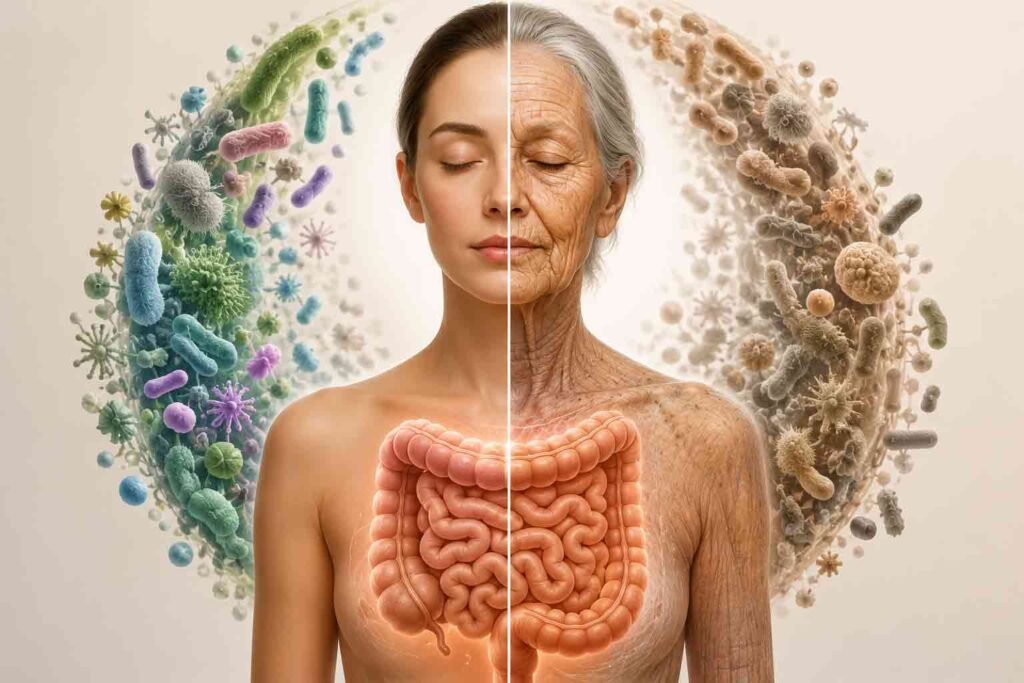
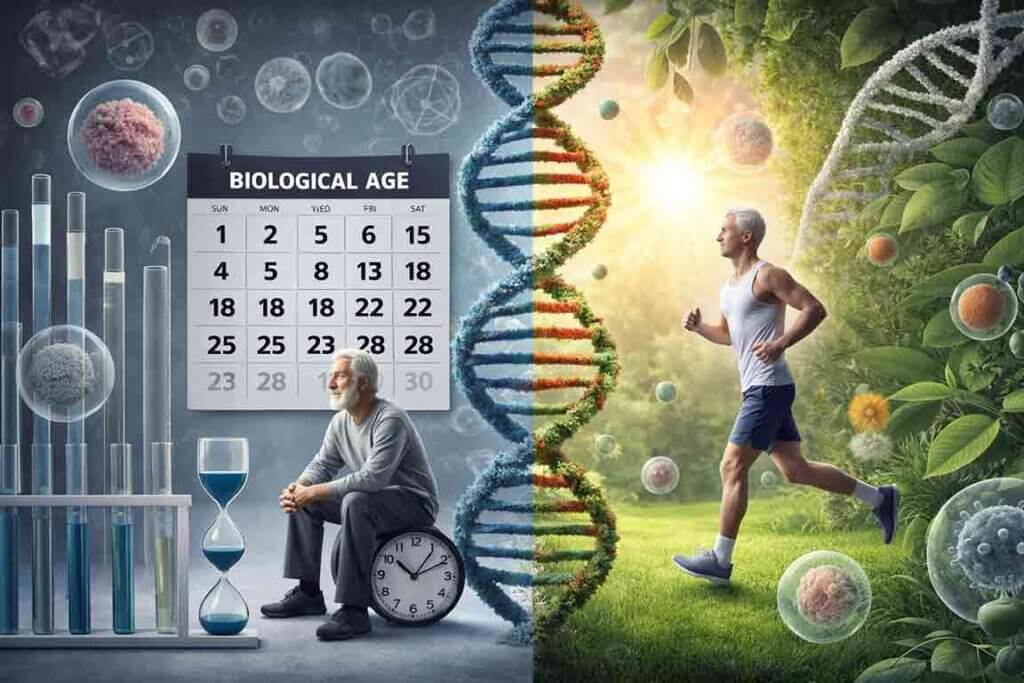
Biological age is a measure of how old your body actually is at the cellular and physiological level. It reflects the condition of your organs, tissues, DNA, and cells, not the calendar. Two people with the same chronological age can have dramatically different biological ages depending on their lifestyle, genetics, stress levels, environment, and health habits.
Scientists measure biological age through several markers, including telomere length, epigenetic clocks (like the Horvath clock), inflammatory biomarkers, metabolic panels, and even cognitive function tests. These measurements give a far more accurate picture of how your body is aging and, crucially, how long you might live.
Biological Age vs Chronological Age: Which One Matters More for Longevity?
Biological age matters significantly more than chronological age for predicting longevity and healthspan. While chronological age is fixed and unchangeable, biological age is dynamic. It can go up or down depending on your choices. Research consistently shows that people with a lower biological age relative to their chronological age live longer, experience fewer age-related diseases, and maintain better physical and cognitive function well into their later years.
A landmark study published in the journal Aging found that individuals whose biological age was younger than their chronological age had a substantially lower risk of mortality from all causes. This makes intuitive sense. If your cells are functioning like those of a younger person, your body is going to perform more like a younger body, and that has profound implications for how long and how well you live.
How Is Biological Age Measured?
Epigenetic Clocks
One of the most powerful tools for measuring biological age is the epigenetic clock. Developed by Dr. Steve Horvath at UCLA, this method analyzes DNA methylation patterns, which are chemical modifications to DNA that change in predictable ways as we age. The Horvath clock can estimate biological age with remarkable precision, sometimes within a year or two of a person’s actual cellular age.
What is fascinating is that the Horvath clock reveals that people of the same chronological age can have epigenetic ages that differ by a decade or more. That ten year gap in biological age translates into real differences in disease risk, cognitive function, and lifespan.
Telomere Length
Telomeres are the protective caps at the ends of your chromosomes. Think of them like the plastic tips on shoelaces. Every time a cell divides, telomeres get slightly shorter. When they become too short, cells can no longer divide and either die or become senescent, meaning dormant and dysfunctional. Shorter telomeres are associated with accelerated aging, increased risk of cancer, cardiovascular disease, and earlier death.
Chronic stress, poor diet, sedentary behavior, and smoking all accelerate telomere shortening. Meanwhile, regular exercise, quality sleep, and strong social connections have been shown to preserve telomere length, effectively slowing your biological aging process.
Blood Biomarkers and Metabolic Panels
Doctors also look at a range of blood markers to assess biological age, including inflammation markers like C-reactive protein (CRP) and interleukin-6, blood glucose levels, lipid profiles, kidney and liver function, and hormone levels. A person whose metabolic and inflammatory markers look youthful is generally aging more slowly than someone whose panels look more deteriorated, regardless of what the calendar says.
Can You Change Your Biological Age?
Yes, and That Is the Game Changer
This is where it gets genuinely exciting. Unlike your chronological age, which is completely out of your control, your biological age is modifiable. Research shows that targeted lifestyle interventions can actually reverse biological aging, not just slow it down. A groundbreaking clinical trial called the TRIIM trial (Thymus Regeneration, Immunorestoration, and Insulin Mitigation) found that participants who followed a specific protocol of diet, exercise, and hormone management experienced an average biological age reversal of about 1.5 years over the course of the study. That is not slowing aging. That is going backward.
Exercise Is the Most Powerful Anti-Aging Tool
If there is one intervention that science agrees on most loudly, it is regular physical activity. Both aerobic exercise and strength training have been shown to reduce biological age. Exercise improves mitochondrial function, which refers to the energy factories of your cells, reduces inflammation, preserves telomere length, and enhances cardiovascular and metabolic health. People who exercise regularly throughout their lives can have biological ages ten to fifteen years younger than sedentary peers of the same chronological age.
Diet and Caloric Quality
What you eat directly influences how fast your cells age. A diet high in ultra-processed foods, refined sugars, and unhealthy fats accelerates biological aging by promoting inflammation and oxidative stress. In contrast, diets rich in whole foods, polyphenols, omega-3 fatty acids, and fiber, think Mediterranean-style eating, have been linked to slower epigenetic aging and longer telomeres.
Intermittent fasting and caloric restriction have also shown promise in animal models and some human studies, activating cellular repair pathways like autophagy, which is the body’s internal housekeeping system that clears out damaged proteins and organelles.
Why Chronological Age Can Be Misleading
It Ignores Individual Variation
One of the biggest problems with relying solely on chronological age is that it completely ignores individual biological variation. Medicine has traditionally used age as a rough proxy for health, but it is a blunt instrument. A 65 year old who runs marathons, eats well, and manages stress effectively is physiologically nothing like a sedentary 65 year old with metabolic syndrome and chronic inflammation. Treating them the same because they share a birthday year is a medical oversimplification.
Chronological Age and Disease Risk Are Not the Same Thing
While chronological age is a risk factor for many diseases, including heart disease, cancer, Alzheimer’s, and diabetes, it is not a cause. The underlying cause of age-related disease is biological deterioration: cellular damage, inflammation, mitochondrial dysfunction, and genetic instability. Chronological age just tracks how long you have had to accumulate that damage. But if you have been actively combating biological aging through lifestyle choices, your disease risk profile can look much younger than your birth certificate suggests.
The Role of Genetics in Biological Age
How Much Is Predetermined?
Genetics do play a role in biological aging. Certain gene variants influence how efficiently your body repairs DNA, manages inflammation, and processes nutrients. Families with a history of longevity often carry protective genetic variants. However, research in epigenetics has made it clear that genes are not destiny. Studies on identical twins, who share virtually identical DNA, show that their biological ages can diverge significantly over time based on lifestyle differences. This tells us that environment and behavior account for the majority of biological aging variation.
Stress, Sleep, and Biological Aging
The Silent Accelerators
Two of the most underappreciated drivers of accelerated biological aging are chronic psychological stress and poor sleep. Chronic stress triggers sustained elevation of cortisol, which promotes inflammation, impairs immune function, and accelerates telomere shortening. Studies have shown that caregivers experiencing prolonged stress have biological ages measurably older than their chronological age.
Sleep is when your body does the majority of its cellular repair work. During deep sleep, the brain clears toxic waste products through the glymphatic system, cells regenerate, and growth hormone is secreted to promote tissue repair. Consistently sleeping less than 7 hours per night is associated with accelerated biological aging and increased risk of nearly every major age-related disease. Prioritizing sleep is one of the simplest and most impactful things you can do to keep your biological age young.
Longevity Hotspots: Lessons From Blue Zones
What People Who Live Past 100 Have in Common
The world’s Blue Zones, which are regions like Okinawa in Japan, Sardinia in Italy, and Loma Linda in California, are home to unusually high concentrations of centenarians. What is remarkable is that these people often have biological ages that are dramatically younger than their chronological ages. Research into Blue Zone populations reveals common threads: plant-rich diets, regular low-intensity movement, strong social connections, a sense of purpose, and effective stress management.
These are not people doing extreme biohacking or taking anti-aging supplements. They are living in ways that minimize biological aging naturally, and they are living to see 100, 105, even 110 years old as a result. Their chronological age is extraordinary, but it is their preserved biological youth that makes it possible.
How to Start Measuring and Improving Your Biological Age
Practical Steps You Can Take Today
You do not need to be a scientist or spend thousands of dollars to start paying attention to your biological age. Several consumer-grade tests now exist. Companies like TruMe, Elysium Health, and Longevity Map offer epigenetic age testing from a simple blood or saliva sample. These tests give you a baseline biological age and help you track changes over time as you adjust your habits.
From a lifestyle perspective, the interventions with the strongest evidence include getting 7 to 9 hours of quality sleep every night, engaging in at least 150 minutes of moderate aerobic exercise per week combined with two or more days of strength training, eating a whole food diet rich in colorful vegetables, legumes, healthy fats, and lean protein, managing chronic stress through mindfulness, social connection, and time in nature, avoiding smoking entirely and limiting alcohol consumption, and maintaining a healthy body weight. These are not revolutionary ideas, but when practiced consistently, they have a measurable and meaningful effect on your biological age.
The Future of Biological Age Research
Science is moving fast in this space. Researchers are developing increasingly sophisticated tools to measure biological age, from proteomics, which is the study of how proteins in the blood change with age, to AI-powered analysis of facial aging patterns. Companies like Calico (backed by Google) and Altos Labs are pouring billions of dollars into understanding the fundamental mechanisms of aging at the cellular level, with the explicit goal of developing interventions that can reverse biological aging in humans.
We are also seeing growing interest in senolytics, which are drugs that selectively clear senescent cells. These are old, dysfunctional cells that secrete inflammatory signals and accelerate aging in surrounding tissue. Early trials of senolytic compounds have shown promising results in animal models, and human trials are underway. The dream of meaningfully extending both lifespan and healthspan, not just adding years but adding healthy vibrant years, is becoming increasingly scientifically plausible.
Conclusion: Biological Age Is the Number That Truly Matters
If you are wondering which number matters more for your longevity and quality of life, the answer is clear. Biological age wins, hands down. Your chronological age is simply a clock on the wall. It ticks forward, and you cannot stop it. But your biological age is a measure of your body’s true vitality, and that number is something you have real power over.
Every time you choose a nutritious meal over junk food, lace up your sneakers for a walk, get to bed on time, or take a few minutes to decompress from stress, you are influencing your biological age. The science tells us that the gap between who you are chronologically and who you are biologically is largely a product of choices, and that is an empowering truth. You may not be able to control the year you were born, but you have far more control over how your body ages than most people realize. Start treating your biological age as the number that actually defines your health, and watch what happens.
Frequently Asked Questions
Q1. Can biological age actually be reversed?
Yes. Research shows that consistent lifestyle changes including exercise, better sleep, and improved diet can measurably reverse biological age, not just slow it down.
Q2. What is the most accurate way to measure biological age?
Epigenetic clock testing, particularly DNA methylation analysis, is currently the most accurate and widely used method for measuring biological age at the cellular level.
Q3. How much does genetics influence biological age?
Genetics plays a role, but studies on identical twins confirm that lifestyle and environment account for the majority of how quickly or slowly a person biologically ages.
Q4. At what age should I start caring about my biological age?
The earlier the better. Biological aging begins in your 20s, and the habits you build in your 20s and 30s have a significant impact on where your biological age lands in your 50s, 60s, and beyond.
Q5. Is biological age testing worth it?
For most people, yes. Knowing your biological age gives you a measurable baseline and real motivation to make the lifestyle changes that genuinely extend healthy life.