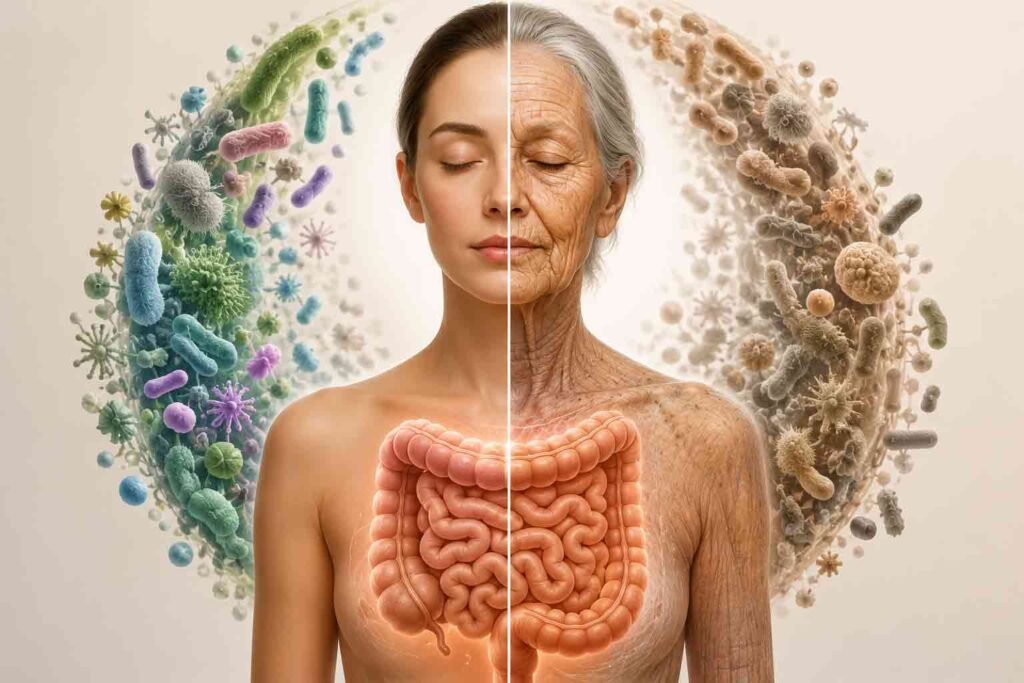

You can spend thousands on serums, supplements, and longevity protocols. But the single most potent anti-aging intervention available to you happens every night — or should — for free, in your own bed.
Deep sleep, specifically stage N3 (slow-wave sleep), is where your body runs its most critical biological maintenance programs. It clears toxic waste from the brain, floods tissues with growth hormone, rebuilds cellular structures, lengthens the life of your chromosomes, and dials down the inflammation that accelerates nearly every age-related disease we know of.
The problem? Most people are getting far less of it than they think. And as we age, the biological machinery that produces deep sleep starts to degrade — quietly, measurably, with consequences that compound over decades.
This article unpacks the science of deep sleep and aging, explains why no supplement or biohack can replicate what slow-wave sleep actually does, and gives you a practical framework for protecting this most underrated asset in your longevity toolkit.
What Deep Sleep Actually Is (And Why Most People Misunderstand It)
Sleep isn’t a uniform state. It’s a structured cycle of distinct stages, each serving different functions. A complete sleep cycle runs roughly 90 minutes, and a healthy adult moves through four to six of these cycles per night.
The stages break down as follows:
- Stage N1 — the lightest sleep, the transition from wakefulness
- Stage N2 — intermediate sleep, where your heart rate slows and body temperature drops
- Stage N3 — deep sleep, also called slow-wave sleep (SWS), characterized by large, synchronized delta brain waves
- REM — rapid eye movement sleep, the dreaming phase, critical for memory and emotional processing
Stage N3 is where the real physiological work happens. During slow-wave sleep, your brain produces sweeping electrical oscillations — delta waves — that coordinate a cascade of repair and maintenance processes. Growth hormone surges. The glymphatic system activates. Cellular autophagy runs at full capacity. Inflammatory markers drop.
Here’s the catch: deep sleep is front-loaded. The majority of your slow-wave sleep occurs in the first half of the night. If you’re cutting your sleep short, going to bed late, or drinking alcohol (which suppresses N3), you’re disproportionately robbing yourself of the most restorative phase.
Most people who get eight hours of sleep spend roughly 1.5 to two hours in deep slow-wave sleep. Anything that consistently reduces that window is quietly accelerating your biological age.
The Aging-Sleep Spiral You Need to Understand
Here’s what makes deep sleep so critical from a longevity perspective: it declines naturally with age, and that decline feeds into every other aging pathway.
Research consistently shows that slow-wave sleep drops by approximately 2% every decade after your early 30s. By the time many people reach their 60s and 70s, deep sleep may represent less than 5% of their total sleep time — or disappear almost entirely. Simultaneously, growth hormone secretion declines exponentially, tracking almost perfectly with the loss of slow-wave sleep.
This isn’t coincidental. The relationship is bidirectional: less deep sleep means less growth hormone, and less growth hormone means poorer sleep architecture. The two systems degrade together.
And the downstream effects are extensive: increased body fat, decreased muscle mass, reduced immune function, impaired glucose metabolism, heightened cardiovascular risk, and accelerated cognitive decline. These aren’t merely associations — they trace mechanistically back to the loss of slow-wave sleep.
Understanding this spiral is the first step toward reversing it.
The Glymphatic System: Your Brain’s Nightly Cleaning Crew
One of the most significant discoveries in sleep science over the past decade is the glymphatic system — your brain’s dedicated waste-clearance network, named after the glial cells that power it.
During deep sleep, cerebrospinal fluid pulses through channels alongside blood vessels in the brain, flushing out metabolic byproducts. The most consequential of these are beta-amyloid and tau proteins — the same proteins that accumulate in the brains of Alzheimer’s patients.
The science here has moved quickly. In October 2024, a landmark study from Oregon Health & Science University became the first to confirm the existence of glymphatic pathways in living human brains through direct imaging during neurosurgery. What had previously been demonstrated only in rodent models now had direct human confirmation.
Earlier in 2024, two papers published in Nature showed that synchronized neuronal firing actively drives glymphatic clearance — with the memorable summary from the researchers themselves: “neurons that fire together, shower together.” The slow-wave oscillations of deep sleep are precisely what coordinates this neuronal synchrony.
A 2024 paper in Nature Aging from Maiken Nedergaard’s group — the pioneer of glymphatic research — documented roughly a 40% decline in glymphatic clearance between young adulthood and the seventh decade of life. The mechanism involves degrading aquaporin 4 channels (the water channels that drive fluid movement), reduced arterial pulsatility, and the loss of deep sleep itself.
This means that for a 70-year-old, the stakes of losing deep sleep are dramatically higher than for a 30-year-old. When the glymphatic infrastructure is already running at 60% capacity, any further disruption from fragmented sleep compounds the problem severely.
The clinical implications are real. A 2024 study in JAMA Neurology found that treating moderate to severe sleep apnea with CPAP therapy reduced cerebrospinal fluid amyloid levels and slowed cognitive decline over two years — suggesting that restoring the conditions for deep sleep can directly alter Alzheimer’s trajectory.
Key takeaway: Deep sleep isn’t just rest for the brain. It’s the brain’s primary biological cleaning window. Skip it consistently, and the toxic debris accumulates.
Growth Hormone: The Anti-Aging Compound Your Body Makes for Free
Human growth hormone (HGH) is among the most sought-after compounds in anti-aging medicine. People pay significant sums for synthetic HGH injections. What most of them don’t appreciate is that the primary natural pulse of growth hormone occurs during the first episode of slow-wave sleep — every single night.
Research going back to a landmark study published in Science (Takahashi et al.) established the direct relationship between slow-wave sleep and growth hormone release. In healthy young men, the sleep-onset GH pulse often represents 50–100% of the total daily growth hormone output. The relationship is linear: more slow-wave sleep activity, more growth hormone secretion.
As aging reduces slow-wave sleep, growth hormone declines in lockstep. A JAMA study by Van Cauter and colleagues demonstrated that this parallel decline directly explains increases in abdominal fat, decreases in lean muscle mass, and reduced exercise capacity in middle-aged and older adults — changes commonly attributed simply to “getting older” that are, in significant part, a consequence of losing deep sleep.
Growth hormone drives tissue repair and regeneration, stimulates collagen synthesis, supports immune function, and maintains skin elasticity. Losing deep sleep means losing the primary signal that triggers these processes nightly.
The irony is complete: the anti-aging intervention people pay most to access is one their body would produce naturally, if only they’d protect the sleep stage that triggers its release.
Cellular Repair, Autophagy, and the Nightly Reset
Beyond the glymphatic system and growth hormone, deep sleep activates a third critical process: autophagy.
Autophagy — literally “self-eating” — is your cells’ internal recycling program. Damaged proteins, dysfunctional organelles, and molecular debris are broken down and repurposed. When autophagy fails, cellular junk accumulates. This accumulation is a hallmark of aging tissues and a driver of cancer, neurodegeneration, and metabolic disease.
Sleep-driven autophagy runs most powerfully during slow-wave sleep, when the body’s energy demands drop and resources can be redirected toward cellular maintenance. Research published in Frontiers in Aging connected sleep-driven autophagy with mitochondrial restoration and enhanced antioxidant defenses — two mechanisms central to slowing cellular aging.
Mitochondria deserve particular attention here. These organelles are both the primary producers of cellular energy (ATP) and a major source of damaging reactive oxygen species (ROS). Sleep loss impairs mitochondrial function by reducing activity in the electron transport chain and promoting mitochondrial fragmentation. The result is more oxidative stress and less energy — a combination that ages cells faster.
During deep sleep, this mitochondrial damage is partially repaired. The oxidative burden drops. Antioxidant defenses are replenished. Cells that were accumulating damage during wakefulness get a chance to recover.
Telomeres, Inflammation, and the Cellular Clock
Two of the most sensitive biomarkers of biological age — telomere length and inflammatory burden — are both directly affected by deep sleep quality.
Telomeres are the protective caps on the ends of your chromosomes. Every time a cell divides, telomeres shorten slightly. When they become critically short, the cell can no longer divide — that’s cellular senescence, the core mechanism of tissue aging. Consistent, high-quality sleep supports the DNA repair processes that help maintain telomere length; chronic sleep loss accelerates shortening.
Research published by NIH-affiliated scientists found that insomnia is associated with shortened telomere length, older epigenetic age, and a pro-inflammatory signal — and that treating insomnia in older adults measurably slowed the biological pace of aging on these markers. One notable study of 672 men and women found that severe sleep apnea was linked to a 10-year acceleration of cellular aging relative to people without the condition, measured by telomere length.
On the inflammation side, poor sleep elevates the body’s production of inflammatory cytokines — signaling molecules that drive chronic, low-grade inflammation. This “inflammaging,” as researchers now call it, is the common upstream pathway to cardiovascular disease, type 2 diabetes, certain cancers, and neurodegenerative conditions. It’s also what produces the dull, puffy, accelerated appearance of skin in chronically sleep-deprived individuals.
Deep sleep is the stage where inflammatory markers fall most significantly. The restorative reset that happens in N3 doesn’t just repair tissue — it actively suppresses the inflammatory cascade that would otherwise quietly erode the body’s systems night after night.
What’s Sabotaging Your Deep Sleep (And You Might Not Know It)
Understanding why deep sleep matters is only useful if you know what’s stealing it. Most deep sleep disruptors are behavioral and environmental — and largely correctable.
Alcohol. Perhaps the most common and misunderstood disruptor. Many people use alcohol to fall asleep faster, not realizing that it suppresses slow-wave sleep in the second half of the night. You may stay asleep, but the architecture of that sleep is profoundly degraded. Even moderate consumption within three to four hours of bedtime measurably reduces N3 time.
Inconsistent sleep timing. Your body’s circadian system controls when deep sleep is initiated. An irregular schedule — sleeping at different times on weekdays versus weekends — undermines the precision of this timing and reduces the amount of slow-wave sleep you access even when total hours are adequate.
Late-night eating and elevated core body temperature. Deep sleep requires a drop in core body temperature. Heavy meals close to bedtime, warm sleeping environments, or inadequate ventilation all work against this. The body cannot enter its deepest sleep stages efficiently when it’s still managing digestion or fighting heat.
Chronic stress and elevated cortisol. Cortisol and deep sleep are in biological opposition. Cortisol rises to wake you; slow-wave sleep requires it to fall. Sustained psychological stress keeps cortisol chronically elevated, directly suppressing N3 sleep and shortening your time in the restorative phases. Research shows that psychosocial stress before even a nap increases sleep latency and reduces early slow-wave activity.
Untreated sleep apnea. This is the most overlooked structural disruptor. Sleep apnea causes repeated micro-arousals throughout the night, fragmenting sleep architecture and preventing sustained entry into N3. Many people with moderate sleep apnea are unaware they have it, attributing their fatigue to stress or aging. If you snore, wake frequently, or feel unrested despite adequate hours, a sleep study is warranted.
Blue light and late screen exposure. Light — particularly the blue-wavelength light from screens — suppresses melatonin production and delays the onset of the body’s sleep-initiating processes. Reduced melatonin means delayed sleep onset and reduced total sleep duration, which compresses deep sleep time.
The Evidence-Based Framework for Protecting Deep Sleep
The good news: most of the evidence-based interventions for increasing slow-wave sleep are accessible, cost-free, and effective. Here’s what the research actually supports.
1. Lock in a consistent sleep and wake time
Circadian consistency is the single highest-leverage habit for deep sleep. Your brain expects to initiate slow-wave sleep at a predictable time relative to your wake signal. Variability disrupts that expectation. Set a fixed wake time — even on weekends — and protect it like an appointment.
2. Time your exercise strategically
Regular physical activity is one of the most reliable pharmacological-grade increases in slow-wave sleep available without a prescription. A 2023 systematic review in Cureus confirmed that aerobic exercise significantly increases slow-wave sleep duration. However, timing matters: a 2025 study in Nature Communications documented that very intense exercise within an hour of bedtime can delay sleep onset. Aim to finish vigorous training at least three to four hours before bed; morning or afternoon sessions are optimal.
3. Build a thermal gradient
Core body temperature drops by roughly 1–2°F in the lead-up to sleep — and your bedroom environment should support this. Keep your sleep environment cool (roughly 65–68°F / 18–20°C), use breathable bedding, and consider a warm shower or bath 60–90 minutes before bed. Counterintuitively, a warm bath accelerates the subsequent drop in core temperature, helping to initiate deep sleep faster.
4. Eliminate or dramatically restrict alcohol
If protecting deep sleep is a priority, the evidence for reducing alcohol is clear. Avoid alcohol within three to four hours of sleep, and consider eliminating it entirely on nights when quality sleep is especially important. The sedative effect is real; the restorative effect is not.
5. Address stress at the source or manage it physiologically
If cortisol is chronically elevated, no sleep hygiene protocol will fully compensate. Slow-wave sleep requires physiological safety signals. Practices shown to reduce cortisol and improve sleep quality include progressive muscle relaxation, mindfulness meditation (supported by systematic review in Annals of the New York Academy of Sciences, 2019), and consistent evening wind-down routines.
6. Create a sleep environment that removes every arousal trigger
Deep sleep is disrupted by any sensory input that triggers a micro-arousal — light, noise, temperature fluctuations, or even a partner’s movement. Blackout curtains, consistent ambient noise (fan or white noise), and a cool room temperature collectively remove the most common arousal triggers. These are not comfort measures; they’re structural conditions for N3.
7. Screen for and treat sleep apnea
If there’s any possibility of sleep apnea — snoring, frequent waking, morning headaches, fatigue despite sufficient hours — get evaluated. CPAP therapy restores sleep architecture, dramatically increases N3 time, and the 2024 JAMA Neurology data shows its effects extend to measurable biomarkers of brain health.
8. Prioritize sleep quantity as the foundation
Deep sleep requires a sufficient runway. Most adults need seven to nine hours of total sleep for the architecture to cycle properly. Chronically capping sleep at six hours may preserve light sleep stages but compresses the deep and REM phases disproportionately. The 90-minute architecture of a sleep cycle means that a single additional cycle — the difference between six and seven and a half hours — can substantially increase slow-wave sleep time.
The Biological Age Question: What Deep Sleep Deprivation Actually Costs
Sleep research is now sophisticated enough to assign a “sleep age” — a biological aging metric derived from sleep architecture — that can diverge significantly from your chronological age. People whose sleep shows well-preserved slow-wave sleep tend to show younger biological markers on multiple axes: cognitive performance, metabolic function, inflammatory burden, and telomere length.
The inverse is equally telling. Chronic fragmentation of deep sleep doesn’t just make you feel older. It measurably accelerates the cellular processes that make you older.
A practical way to frame this: if you’re investing seriously in exercise, nutrition, stress management, and longevity supplements, but you’re consistently getting six hours of fragmented sleep with alcohol-suppressed N3, you are working against your own protocol. The biological repair that every other intervention depends on largely happens in deep sleep. Without that foundation, the rest is noise.
The Bottom Line
Deep sleep is not a luxury or a preference. It’s the primary biological maintenance window your body has for repairing cellular damage, clearing neurotoxic waste, synthesizing anti-aging hormones, regulating inflammation, and maintaining the chromosomal integrity that determines how fast your cells age.
No supplement replicates glymphatic clearance. No IV drip replaces the growth hormone pulse of slow-wave sleep. No anti-inflammatory protocol fully compensates for the chronically elevated cytokines that poor sleep produces.
The anti-aging industry will continue to produce compelling interventions. Many of them are worth exploring. But the hierarchy of impact is clear: at the foundation, before anything else, is the quality of your slow-wave sleep.
Protect the window. Everything else builds on top of it.
Frequently Asked Questions
How much deep sleep do I actually need each night?
Most adults need 1.5 to 2 hours of deep (slow-wave) sleep per night, which typically comes with 7–9 hours of total sleep. Deep sleep is front-loaded into the first half of the night, so cutting your sleep short disproportionately reduces this stage — even if the hours you do get feel adequate.
Does deep sleep really slow biological aging, or is that just correlation?
The mechanisms are well established, not just associative. Deep sleep triggers growth hormone release, activates glymphatic brain waste clearance, drives cellular autophagy, and suppresses inflammatory cytokines — all processes that directly slow the biological markers of aging. Research shows that treating sleep disorders like insomnia and apnea measurably improves telomere length and epigenetic age scores.
Can I make up for lost deep sleep on weekends?
Partially, but not fully. Weekend recovery sleep can reduce some acute sleep debt, but it doesn’t restore the cumulative cellular repair and hormonal output missed during the week. Chronically irregular sleep schedules also disrupt the circadian precision that controls when deep sleep is initiated — making it harder to access even when you have the time.
Is alcohol before bed really that bad for deep sleep?
Yes — it’s one of the most significant disruptors. Alcohol may help you fall asleep faster, but it suppresses slow-wave sleep in the second half of the night. Even moderate consumption within three to four hours of bedtime measurably degrades sleep architecture, reducing the restorative N3 stage when the most critical repair processes run.
What’s the single most effective thing I can do to improve deep sleep?
Lock in a consistent wake time, seven days a week. Circadian consistency is the highest-leverage intervention the research supports — your brain initiates slow-wave sleep at a predictable time relative to your wake signal. Variability in that signal disrupts the entire architecture. Add regular aerobic exercise and a cool sleep environment, and you have the three pillars most consistently backed by evidence.
Related reads:
-
5 Heart Health Signals Every Woman Should Monitor Continuously
-
Benefits of Solfeggio Frequencies: The Complete Guide to Ancient Healing Tones
-
How HRV Tracking Improves Stress Resilience: The Complete Guide
Primary sources: Frontiers in Sleep (2024); Mander et al. (2016); OHSU / Nature Neuroscience (Oct 2024); Nature Aging — Nedergaard Group (2024); JAMA Neurology (2024); Van Cauter et al., JAMA (2000); Takahashi et al., Science; Frontiers in Aging (2025); Nature Communications (2025); Cureus Systematic Review (2023); NIH-affiliated telomere/epigenetic aging research (BEDGEAR / NIH); Science — Nedergaard, “Glymphatic failure as a final common pathway to dementia.”