If you have been paying attention to the health tech space lately, you have probably come across two names that keep showing up together: the Longevity AI app and Blēo. At first glance, it might seem like just another wellness app connected to just another wearable. But once you actually understand what is happening behind the scenes every single day, you start to realize this is something genuinely different. This article breaks down exactly what the Longevity AI app does with your Blēo data, why it matters, and how that daily process is quietly building a picture of your biological age that most traditional health tools simply cannot offer.
What Is the Longevity AI App?
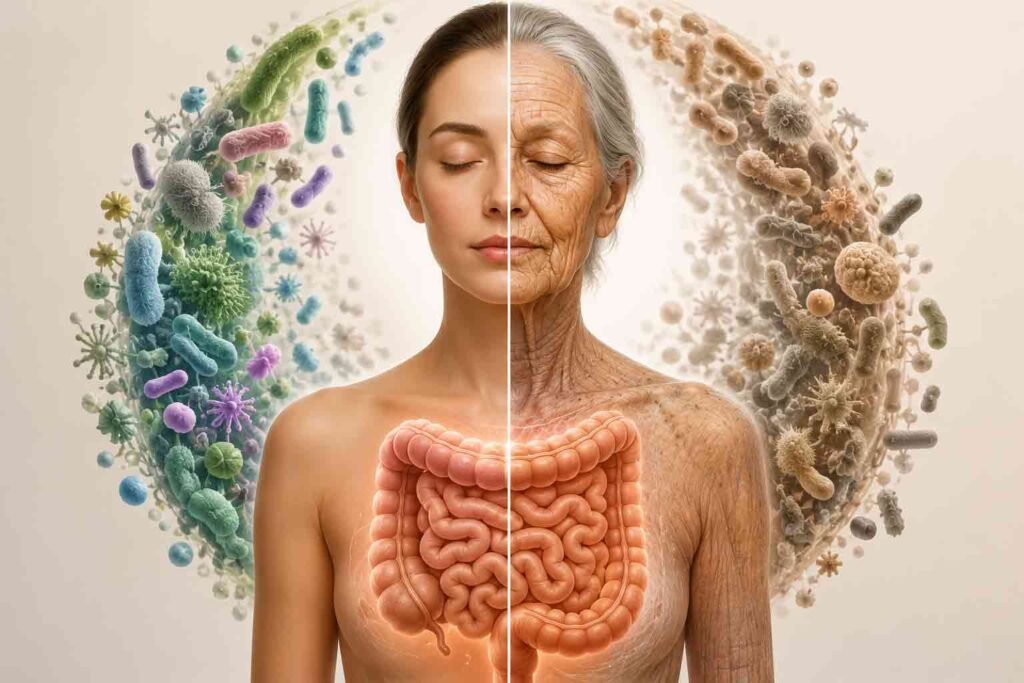
The Longevity AI app is an artificial intelligence powered health platform designed to track, interpret, and act on biomarker data collected from your body over time. Unlike fitness apps that count your steps or remind you to drink water, this app is built around one core idea: understanding how fast your body is actually aging at a biological level, not just a chronological one.
The app does not just collect numbers. It processes them, compares them against population wide data, identifies patterns that emerge over weeks and months, and then translates all of that into insights that are actually usable. The goal is to give you a clearer picture of your biological age and, more importantly, what you can do to influence it.
What Is Blēo and Why Does It Matter?
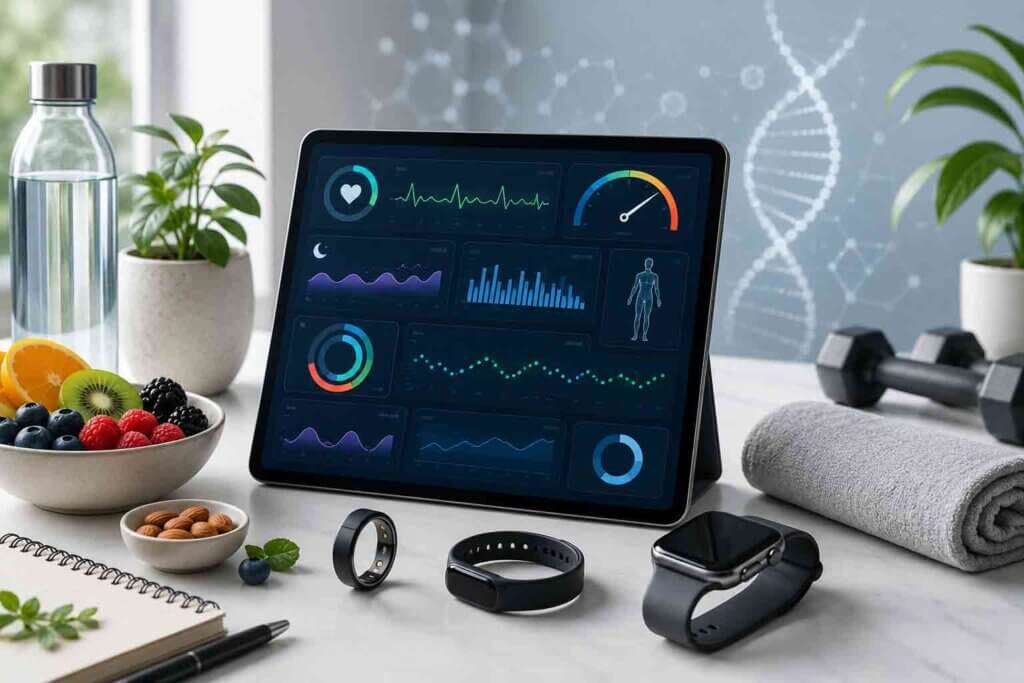
Blēo band and ring is a biosensor device designed to continuously monitor specific blood biomarkers without requiring repeated blood draws. It works subcutaneously, meaning it sits just beneath the skin and samples interstitial fluid to track metabolic and biochemical changes happening in your body in real time.
This is not the same as checking your cholesterol once a year at a clinic. Blēo captures what is happening in your body throughout the day, across different activity states, different meals, different stress levels, and different sleep cycles. That continuous stream of data is what makes the Longevity AI app so powerful, because it finally has the kind of granular, time stamped, context rich information it needs to do something meaningful.
How the Longevity AI App Processes Your Blēo Data Daily
The Morning Sync and Baseline Recalibration
Every morning, when your Blēo device syncs with the Longevity AI app, the first thing the system does is recalibrate your personal baseline. This is not a one time setup. Your baseline shifts subtly every day depending on how well you slept, what you ate the night before, your stress hormones, and a dozen other variables. The AI accounts for this dynamic baseline rather than holding you to a static reference point established weeks ago.
This recalibration is one of the most underappreciated features of the system. It means that when the app flags something as unusual, it is flagging it relative to your recent personal history, not just a generic population average.
Real Time Biomarker Interpretation Throughout the Day
As the day progresses and Blēo continues collecting data, the Longevity AI app is constantly interpreting that incoming stream. Glucose fluctuations, inflammatory markers, oxidative stress indicators, and other biomarkers are being read not in isolation but in relation to each other and in relation to what was happening an hour ago, or yesterday, or last week.
This relational interpretation is where artificial intelligence genuinely earns its place in the system. A human looking at a single glucose reading might not think much of it. But an AI that has seen your glucose patterns across three months of mornings, afternoons, and late nights can immediately recognize that today’s pattern is different, and it can start building a hypothesis about why.
Biological Age Scoring and Daily Updates
One of the most compelling things the Longevity AI app does with your Blēo data is update your biological age score on a daily basis. This score is not a gimmick. It is calculated using a composite of your biomarker trends, your lifestyle inputs, and validated aging clocks that have been developed through longitudinal health research.
The reason daily updates matter is that biological aging is not a linear, slow moving process. Certain days and certain behaviors can accelerate or decelerate your biological age score more than you might expect. Seeing that reflected in a number that actually moves in response to your choices creates a feedback loop that is genuinely motivating in a way that an annual checkup never could be.
What Specific Data Points Does Blēo Capture?
Metabolic Markers
Blēo tracks glucose levels continuously, which gives the Longevity AI app insight into your metabolic flexibility, your insulin sensitivity trends, and your risk profile for metabolic dysfunction. Sustained glucose spikes and high glycemic variability are both associated with accelerated biological aging, so this data stream is central to everything the app calculates.
Beyond glucose, Blēo captures markers related to ketone metabolism and fat oxidation, which gives the app a fuller picture of how your body is sourcing and using energy throughout the day.
Inflammatory Markers
Chronic low grade inflammation is one of the primary drivers of biological aging, and it is notoriously difficult to track in daily life because you often cannot feel it happening. Blēo’s ability to monitor inflammatory biomarkers on an ongoing basis gives the Longevity AI app a window into this otherwise invisible process.
When the app detects an inflammatory trend building over several days, it can surface that information before it becomes a clinical problem, and it can connect it to behavioral inputs like sleep quality, dietary choices, or stress events that you have logged.
Oxidative Stress Indicators
Oxidative stress, which refers to the imbalance between free radicals and antioxidants in your body, is another key accelerant of biological aging. The Longevity AI app uses Blēo’s oxidative stress data to track how well your body is managing this balance and how your lifestyle choices are influencing it in real time.
How the App Turns Raw Data Into Actionable Recommendations
Personalized Daily Protocols
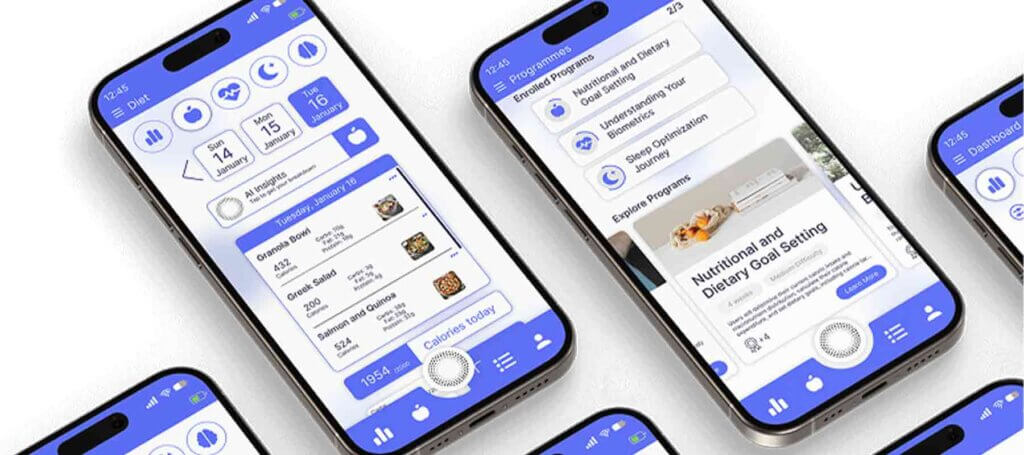
Each morning, after the overnight data has been processed and the baseline recalibration has been completed, the Longevity AI app generates a set of personalized recommendations for the day. These are not generic wellness tips. They are derived directly from what your Blēo data showed over the past 24 hours and how that fits into your longer term biomarker trajectory.
If your inflammatory markers were elevated overnight, the app might recommend adjusting your morning meal composition or reducing your training intensity for the day. If your glucose variability has been unusually high all week, it might suggest a specific dietary change or prompt you to log whether you have been under unusual stress. The recommendations are specific, contextual, and grounded in your actual biology rather than a generalized wellness template.
Longitudinal Pattern Recognition
Where the Longevity AI app really distinguishes itself is in its ability to recognize patterns that play out over weeks and months. This is something that even the most attentive human observer would struggle to do manually with continuous biomarker data. The AI identifies correlations between your behaviors and your biomarker responses that you would never notice on your own.
For example, you might not realize that your inflammatory markers consistently rise three days after a certain type of workout, or that your glucose regulation improves measurably in weeks when you average more than seven hours of sleep. The app finds these patterns, surfaces them in plain language, and then shows you how to use them to make smarter decisions about your daily habits.
Integration With Lifestyle Logging
The Longevity AI app does not work in a vacuum. It integrates your Blēo biomarker data with the lifestyle information you log, including meals, exercise, sleep, stress, and supplements. This integration is what allows the app to move from correlation to something approaching causation in its analysis.
When you log a meal and the app can see what your glucose did in the two hours that followed, it starts building a personalized glycemic response map. When you log your sleep and the app can see how your inflammatory markers shifted overnight, it starts building a picture of how restorative your sleep actually is at a biological level, not just how many hours you were in bed.
Why Daily Data Processing Matters for Longevity
The Problem With Snapshot Health Data
Traditional medicine has always operated on snapshot data. You go to the doctor, they take a blood sample, they compare your numbers against a reference range, and they tell you whether you are normal or not. The problem with this approach is that it completely misses the dynamic nature of biological aging. Your biomarkers fluctuate constantly, and a single reading on a single day tells you almost nothing about the trajectory your body is actually on.
The Longevity AI app solves this by replacing snapshots with a continuous film. Instead of seeing where you are on one day, you see where you have been trending over weeks and months. That trending data is infinitely more useful for making decisions that actually influence how you age.
Early Warning Capabilities
Because the Longevity AI app is processing your Blēo data every single day and comparing it against your personal history and population level reference data simultaneously, it is positioned to detect meaningful deviations from your normal pattern well before they would show up as symptoms or before they would even be noticed in an annual health checkup.
This early warning capability is one of the most significant value propositions of the entire system. Catching a deteriorating metabolic trend three months before it becomes a diagnosable condition gives you a meaningful window to make changes. Most conventional health systems do not offer that window at all.
The Role of AI in Making Sense of Complexity
Why Human Analysis Alone Is Not Enough
The amount of data that Blēo generates on a continuous basis is genuinely beyond what any human analyst could process and interpret in real time. We are talking about thousands of data points per day, each one sitting within a web of relationships with all the other data points collected simultaneously and historically. This is exactly the kind of problem that artificial intelligence is built to solve.
The Longevity AI app’s algorithms have been trained on large scale longitudinal datasets, which means they are not just applying generic rules to your numbers. They are applying pattern recognition that has been refined against real world outcomes in real populations, and they are doing it in the context of your specific biology and your specific history.
Continuous Learning and Personalization
One of the more sophisticated aspects of the system is that it does not stay static. As the app accumulates more of your Blēo data over time, its model of you becomes increasingly refined. The recommendations it generates after six months of data are considerably more personalized and more accurate than the ones it generated in week one, because it has had time to learn your individual biomarker patterns, your individual response curves, and your individual risk profile.
Who Benefits Most From the Longevity AI App and Blēo Combination?
The honest answer is that almost anyone who is interested in genuinely understanding their health rather than just monitoring surface level metrics will find value in this combination. But the people who tend to get the most out of it are those who are willing to engage with the data consistently, log their lifestyle inputs honestly, and act on the recommendations the app surfaces.
High performers who are optimizing for sustained cognitive and physical output benefit enormously because the app gives them a real time feedback loop on how their training, nutrition, and recovery choices are affecting their biology. People who have a family history of metabolic or cardiovascular disease benefit because the app provides early visibility into the biomarker trends that precede those conditions by years. And people who simply want to understand their aging process at a level that goes beyond what a bathroom scale or a fitness tracker can offer will find that the daily data processing the Longevity AI app performs with their Blēo data gives them a completely new lens on their own health.
Conclusion
The Longevity AI app is doing something genuinely new with the data that Blēo captures every single day. It is not just storing numbers or generating pretty graphs. It is recalibrating your personal baseline every morning, interpreting your biomarkers in relational context throughout the day, updating your biological age score based on real trends in your real biology, surfacing personalized recommendations that are grounded in your actual data, and continuously learning your individual patterns to get smarter about you over time.
The combination of continuous biosensing through Blēo and intelligent daily data processing through the Longevity AI app represents a meaningful shift in how people can engage with their own health. Instead of waiting for something to go wrong and then responding, this system gives you the tools to see where your biology is heading and to make informed choices that actually influence that trajectory. For anyone serious about understanding and influencing how they age, that daily data processing loop is not just a feature. It is the whole point.
Frequently Asked Questions
1. What is the Longevity AI app used for?
The Longevity AI app is designed to track your biological age by analyzing continuous biomarker data collected from your Blēo device. It turns that raw data into personalized daily health recommendations.
2. How does Blēo collect health data without blood draws?
Blēo sits just beneath the skin and samples interstitial fluid throughout the day, capturing metabolic and inflammatory biomarkers in real time without the need for repeated clinical blood tests.
3. How often does the app update my biological age score?
The Longevity AI app updates your biological age score daily, reflecting how your recent behaviors, sleep, diet, and stress levels are influencing your body’s aging process on an ongoing basis.
4. Does the app work better over time?
Yes. As the app accumulates more of your Blēo data, its understanding of your individual biology becomes more refined, making its recommendations increasingly accurate and personalized the longer you use it.
5. Do I need to log lifestyle information manually?
While Blēo handles biomarker collection automatically, logging meals, sleep, exercise, and stress helps the app connect your behaviors to your biomarker responses, making its insights significantly more actionable and precise.